Unlocking Traits For Better Seed Watermelon

Greg Howard
18th August, 2025

Unlocking Traits For Better Seed Watermelon

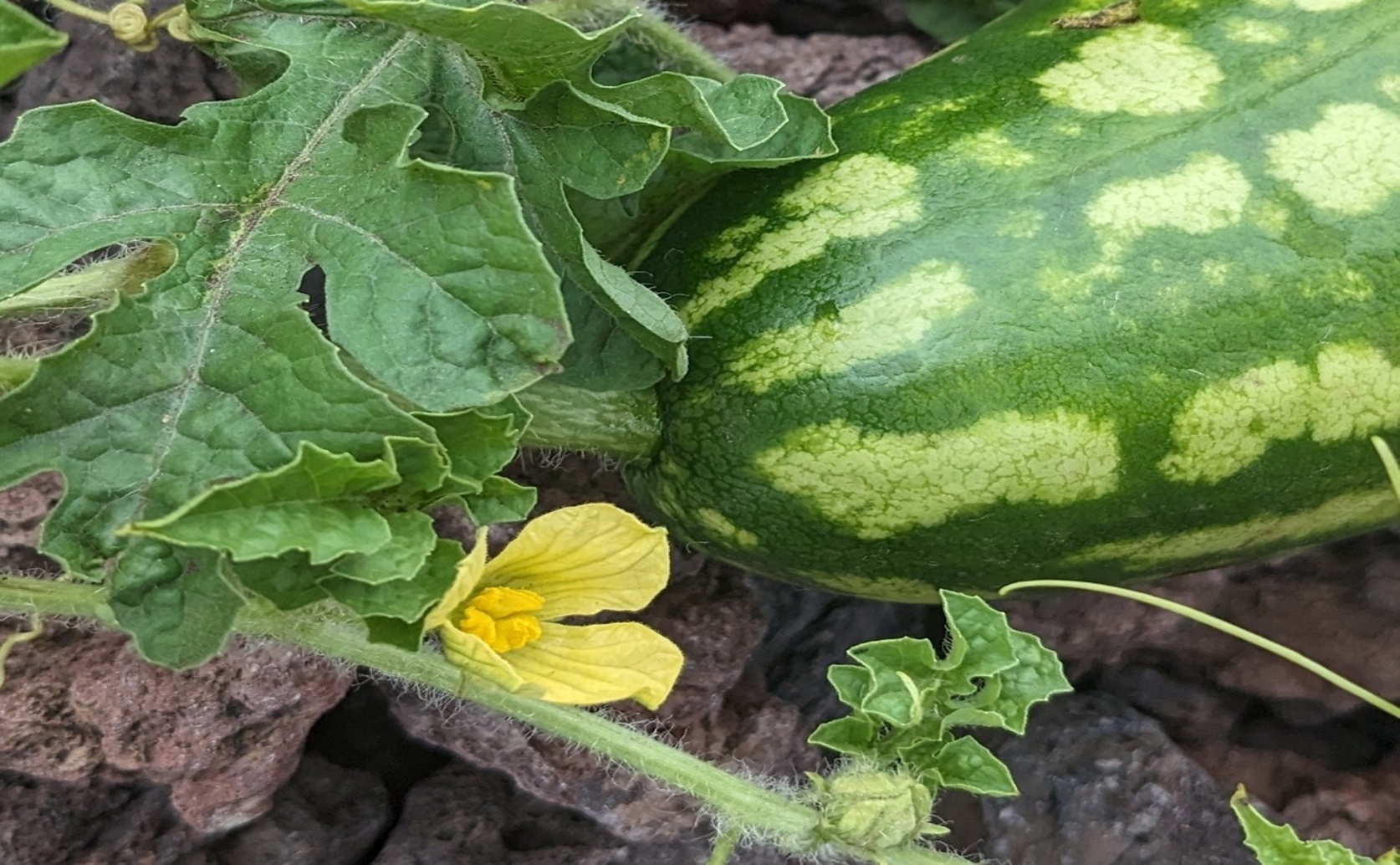
Watermelon (Citrullus lanatus)

Photo adapted from: Tyler Vogel / CC BY (Source)

Key Findings

  • In India's Thar Desert, researchers found significant genetic variation among 138 seed purpose watermelon types, indicating strong potential to breed varieties with higher fruit and seed yields
  • Improving traits like fruit size and number directly boosts seed yield, and these improvements are largely due to genetics, making direct selection effective for breeders
  • The study identified specific watermelon varieties that mature early or produce exceptionally high yields of fruit and seeds, offering valuable resources for future breeding
The Thar Desert, one of the world's largest arid regions, presents significant challenges for agriculture due to its harsh environment and limited water resources. Despite these difficulties, certain plant species have naturally adapted to thrive there. Among these is the seed purpose watermelon, an ancient variety of gourd-family plant known as a C3 cucurbitaceous xerophyte. A xerophyte is a plant specifically adapted to survive in very dry conditions, while C3 refers to a common type of photosynthesis. This watermelon variety is valued for both its seeds and its fruit, making it a potentially crucial resource for food security in such challenging climates. However, to maximize its potential, a deeper understanding of its genetic traits and how they influence yield is necessary. Recent research conducted by the All India Co-ordinated Research Network has undertaken a comprehensive evaluation of this indigenous crop[1]. The study aimed to identify superior genetic lines, or genotypes, of seed purpose watermelon that exhibit desirable characteristics for improved fruit and seed production. This aligns with a broader global recognition that modern agricultural practices, which often prioritize a limited number of high-yield crops, have inadvertently sidelined many indigenous and locally adapted species, classifying them as neglected and underutilised crop species (NUCS)[2]. These NUCS, like the Thar Desert watermelon, often possess inherent resilience and nutritional value, making them vital for addressing food insecurity, especially in regions facing climate change and water scarcity. The researchers evaluated 138 different seed purpose watermelon genotypes, alongside three established control varieties, analyzing various aspects of their growth and yield. This involved a multivariate approach, meaning they simultaneously examined multiple traits such as the time it took for fruits to initiate and mature, fruit diameter, the number of fruits per plant, and the overall fruit and seed yields. Statistical analysis revealed significant differences among the genotypes for all traits studied, indicating a wide range of genetic variation available for selection and improvement. This inherent diversity is crucial for plant breeding efforts. Descriptive statistics further highlighted this variation. For instance, the time from planting to fruit initiation ranged from 27 to 56 days, and fruit yield varied dramatically from 40 to 248.25 quintals per hectare (a quintal is 100 kilograms). Seed yield also showed substantial differences, ranging from 0.40 to 5.28 quintals per hectare. The study found that the observable characteristics (phenotypic variation) were only slightly more varied than the underlying genetic characteristics (genotypic variation) for most traits. This suggests that environmental factors had a relatively minor influence on how these traits were expressed, meaning that improvements observed in the field would largely be due to the plant's genetic makeup rather than specific growing conditions. Crucially, the research identified high levels of variation for seed yield, fruit yield, and fruits per plant. This is significant because it indicates a strong potential for improving these traits through careful selection of the best performing genotypes. The study also found that most traits, with the exception of days to maturity, exhibited high heritability coupled with high genetic advance. Heritability refers to the extent to which a trait can be passed down from parents to offspring, while genetic advance predicts the expected improvement in a trait after one generation of selection. High values for both suggest that these traits are primarily controlled by additive gene action, meaning that the effects of individual genes simply add up, making direct selection based on observable characteristics a very effective strategy for breeders. A key finding was the strong positive associations between several traits. For example, higher seed yield was significantly linked to higher fruit yield, more fruits per plant, larger fruit diameter, and heavier individual seeds. This implies that improving one of these component traits, such as fruit size or number, could lead to a corresponding increase in overall seed yield. Such insights are invaluable for plant breeders, as they allow for more efficient selection strategies. Instead of focusing on seed yield alone, breeders can select for easily measurable traits like fruit diameter, knowing that this will indirectly enhance seed yield. To further categorize the genetic diversity, the researchers used cluster analysis, grouping the 138 genotypes into eight distinct clusters based on their quantitative traits. Principal Component Analysis (PCA), a statistical method used to simplify complex data by identifying the most important patterns, revealed that fruit yield and fruit diameter were the primary drivers of variation among the genotypes. Based on these comprehensive analyses, the study successfully identified several promising genotypes. Some were "extra early" maturing, such as RMK2313, RMK2345, RMK2353, and RMK2324, which could be beneficial for multiple cropping cycles or in regions with short growing seasons. Others, like RMK23123, RMK23127, RMK23130, and the check variety GK-2, were identified as "multi-trait specific," excelling in fruits per plant, fruit yield, and seed yield. Genotypes RMK2348 and RMK2365 showed exceptionally high seed yield, while RMK2355 stood out for combining both extra early maturity and high seed yield. These identified genotypes represent valuable genetic resources that plant breeders can use directly for cultivation or as parents in cross-breeding programs to develop new, improved varieties. This research by the All India Co-ordinated Research Network directly addresses the need for scientific investigation into crops like the seed purpose watermelon, which are often overlooked but hold immense potential, particularly in water-scarce regions. As highlighted in earlier discussions, promoting NUCS requires robust scientific research encompassing agronomy, breeding, and understanding water utilization[2]. This study exemplifies such research by providing reliable information about the agronomic potential of specific watermelon genotypes that can thrive under water-scarce conditions, even though it doesn't explicitly quantify water requirements. By identifying superior lines and understanding the genetic basis of their yield, this work contributes significantly to the knowledge base required to promote these adaptable crops. Ultimately, the findings support the broader goal of enhancing agro-biodiversity, which remains essential for developing sustainable agricultural systems capable of ensuring food and nutrition security in the face of climate change and population pressure.

AgricultureGeneticsPlant Science

References

Main Study

1) Phenotypic profiling and identification of trait specific genotypes of seed purpose watermelon in Thar desert of India

Published 15th August, 2025

Journal: Scientific Reports

Issue: Vol 15, Issue 7, 8 2025


Related Studies

2) The Potential Role of Neglected and Underutilised Crop Species as Future Crops under Water Scarce Conditions in Sub-Saharan Africa.

https://doi.org/10.3390/ijerph120605685


Related Articles

An unhandled error has occurred. Reload 🗙