Unlocking The Best Qualities Of Fragrant Rice

Jenn Hoskins
19th August, 2025

Unlocking The Best Qualities Of Fragrant Rice

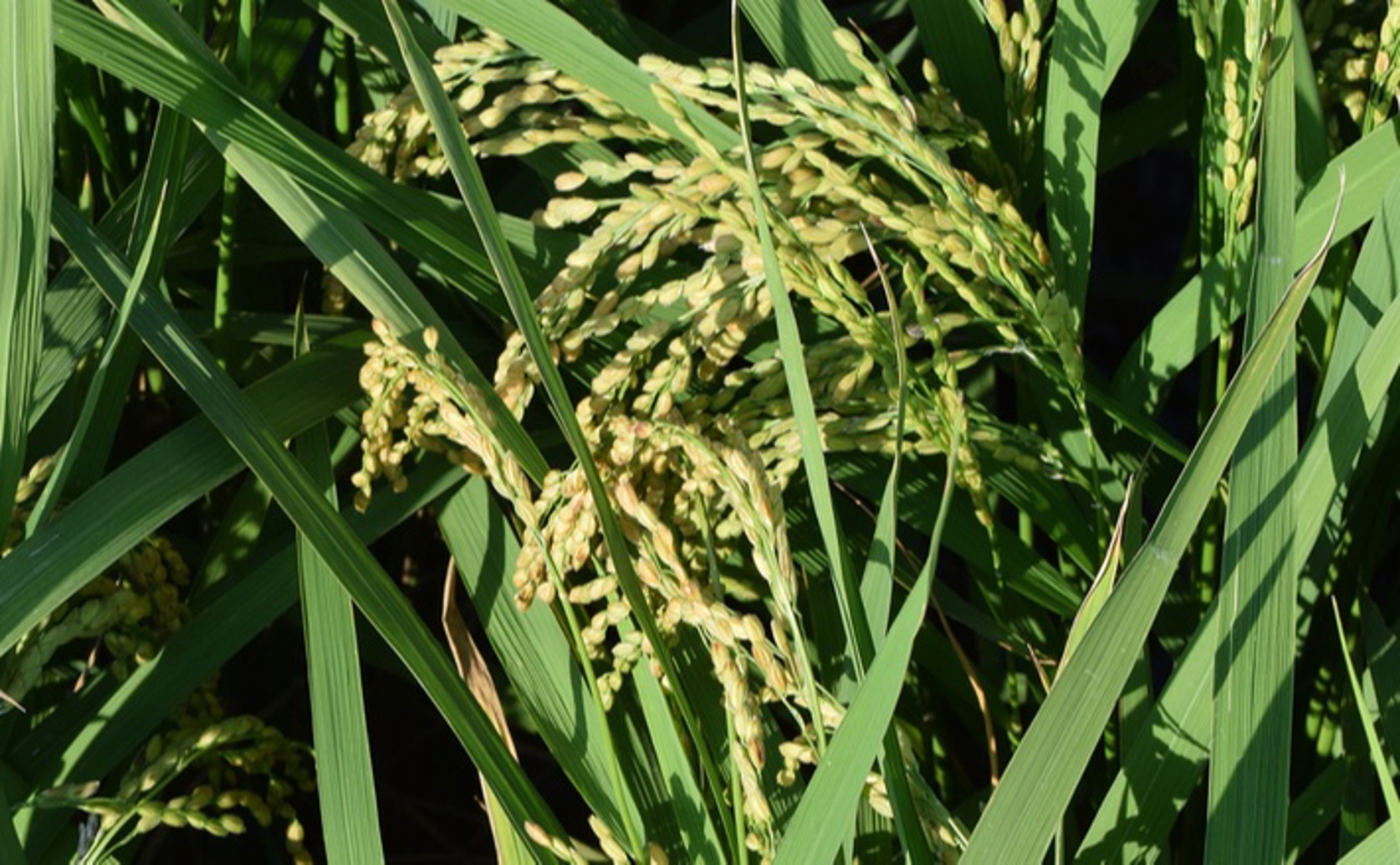
Asian Rice (Oryza sativa)

Photo adapted from: Kim, Hyun-tae / CC BY (Source)

Key Findings

  • Scientists in Bangladesh found that crossing two aromatic rice types creates significant genetic variation, opening doors for better varieties
  • Their study showed "hybrid vigor" in offspring, leading to higher yields, and identified key traits that are easily passed down, making selection effective
  • This research confirms that strategic cross-breeding can develop new aromatic rice varieties with superior yields, helping to meet global food demand
Rice is a fundamental food source for over half of the global population, and with increasing demand due to population growth, there is an urgent need to significantly boost its production and improve its quality. Traditional breeding methods face challenges in achieving these goals, necessitating the development of new, more efficient strategies. Genetic improvement, particularly in specialized varieties like aromatic rice, is crucial for enhancing yield, desired quality traits, and resilience to environmental challenges. Recent research conducted by scientists at Bangladesh Agricultural University[1] investigated the genetic potential for improving aromatic rice. Their study focused on analyzing genetic traits, the phenomenon known as heterosis, and inbreeding depression across two generations (F1 and F2) derived from a cross between two fine and aromatic rice varieties: Kataribhog and BRRI dhan50. The study aimed to identify the genetic parameters that influence key traits in aromatic rice, ultimately paving the way for developing superior varieties. The researchers began by crossing the two parent rice lines and then observing the characteristics of their offspring in the first (F1) and second (F2) generations. This approach allowed them to understand how traits are inherited and expressed. A significant finding was the substantial genetic variation observed among the parent lines and their F1 and F2 offspring. This variation is the raw material for breeders, indicating a diverse genetic pool from which to select desirable traits. The study also revealed strong positive correlations between grain yield per plant and several other important characteristics, such as the number of tillers (stems) per plant, the length of the flag leaf (the uppermost leaf), panicle length (the part of the plant where grains develop), and the number of grains per panicle. This means that if a plant has more tillers or longer panicles, it is likely to produce a higher grain yield. The researchers also assessed the influence of the environment on these traits. They found that the phenotypic coefficient of variation (PCV) was consistently greater than the genotypic coefficient of variation (GCV) for all traits. To explain simply, the phenotypic variation refers to the total observable differences in a trait, while genotypic variation refers only to the differences caused by genes. When PCV is higher than GCV, it indicates that environmental factors, such as soil conditions or weather, play a role in how these traits are expressed, alongside the genetic makeup. Despite environmental influences, the study identified high heritability for most traits, along with a high genetic advance as a percentage of the mean (GAM). Heritability describes the proportion of variation in a trait that is due to genetic factors and can be passed on to offspring. Genetic advance refers to the expected improvement in a trait in the next generation if selection is applied. High values for both suggest that these traits are largely controlled by additive genes, meaning their effects simply add up. This is a positive indicator for breeders, as it implies that selection for these traits would be effective in improving future generations. A key aspect of the research was the investigation of heterosis, often referred to as 'hybrid vigor.' This is the phenomenon where the offspring of two distinct parent lines show superior performance compared to either parent. The study found significant positive heterosis in both the initial cross and its reciprocal (where the parent roles were swapped) for traits directly related to yield, such as the number of tillers, grains per panicle, and overall grain yield per plant. This observation suggests a strong potential for exploiting hybrid vigor in aromatic rice breeding. This aligns with broader efforts in crop breeding; for instance, in pearl millet, breeding programs have successfully used molecular markers to identify 'heterotic groups' of parents that, when crossed, produce hybrids with significantly higher yields, sometimes over 10% more than existing top hybrids[2]. Similarly, in indica rice, researchers have resequenced a large number of accessions, many of which are parents of superior hybrid cultivars, to identify specific genetic variations linked to heterosis. This has led to the identification of numerous loci (specific locations on a chromosome) associated with hybrid vigor[3]. The Bangladesh Agricultural University study also observed subsequent inbreeding depression for these yield-related traits. Inbreeding depression is the opposite of heterosis, where offspring from closely related parents show reduced vigor and performance. The presence of both significant heterosis and inbreeding depression further confirms the potential for developing high-yielding hybrid aromatic rice varieties by carefully selecting diverse parent lines. Furthermore, the study noted a higher estimate of 'transgressive segregation' for grain yield per plant. Transgressive segregation occurs when offspring display traits that are more extreme (either better or worse) than either parent. In this case, it means some offspring had higher grain yields than either Kataribhog or BRRI dhan50, which is highly encouraging for future breeding efforts. The findings from this research underscore the significant opportunities for developing high-yielding aromatic rice through strategic hybridization and subsequent selection. The observed genetic variation, high heritability for important traits, and the clear presence of heterosis provide a strong foundation. This approach is similar to the "rational design" strategy highlighted in other rice breeding efforts, where major genes contributing to grain quality and yield are 'pyramided' or combined from multiple parents to create elite varieties with superior performance, even surpassing leading super-hybrid rice cultivars[4]. By continuing to advance these segregating generations and integrating modern breeding tools, such as the molecular marker techniques used in pearl millet[2] or the resequencing approaches applied to indica rice[3] to identify specific genes linked to desired traits, these findings can lead to the development of superior aromatic rice varieties with enhanced productivity and improved grain quality, contributing to global food security.

AgricultureGeneticsPlant Science

References

Main Study

1) Estimation of genetic parameters in hybrid and F2 generations of aromatic fine rice for breeding improvement

Published 16th August, 2025

Journal: BMC Plant Biology

Issue: Vol 25, Issue 1, 8 2025


Related Studies

2) Identification of heterotic groups in South-Asian-bred hybrid parents of pearl millet.

https://doi.org/10.1007/s00122-019-03512-z


3) Resequencing of 1,143 indica rice accessions reveals important genetic variations and different heterosis patterns.

https://doi.org/10.1038/s41467-020-18608-0


4) Rational design of high-yield and superior-quality rice.

https://doi.org/10.1038/nplants.2017.31


Related Articles

An unhandled error has occurred. Reload 🗙