How Soybean Plants Manage Magnesium During Stressful Conditions

Jenn Hoskins
30th August, 2025

How Soybean Plants Manage Magnesium During Stressful Conditions

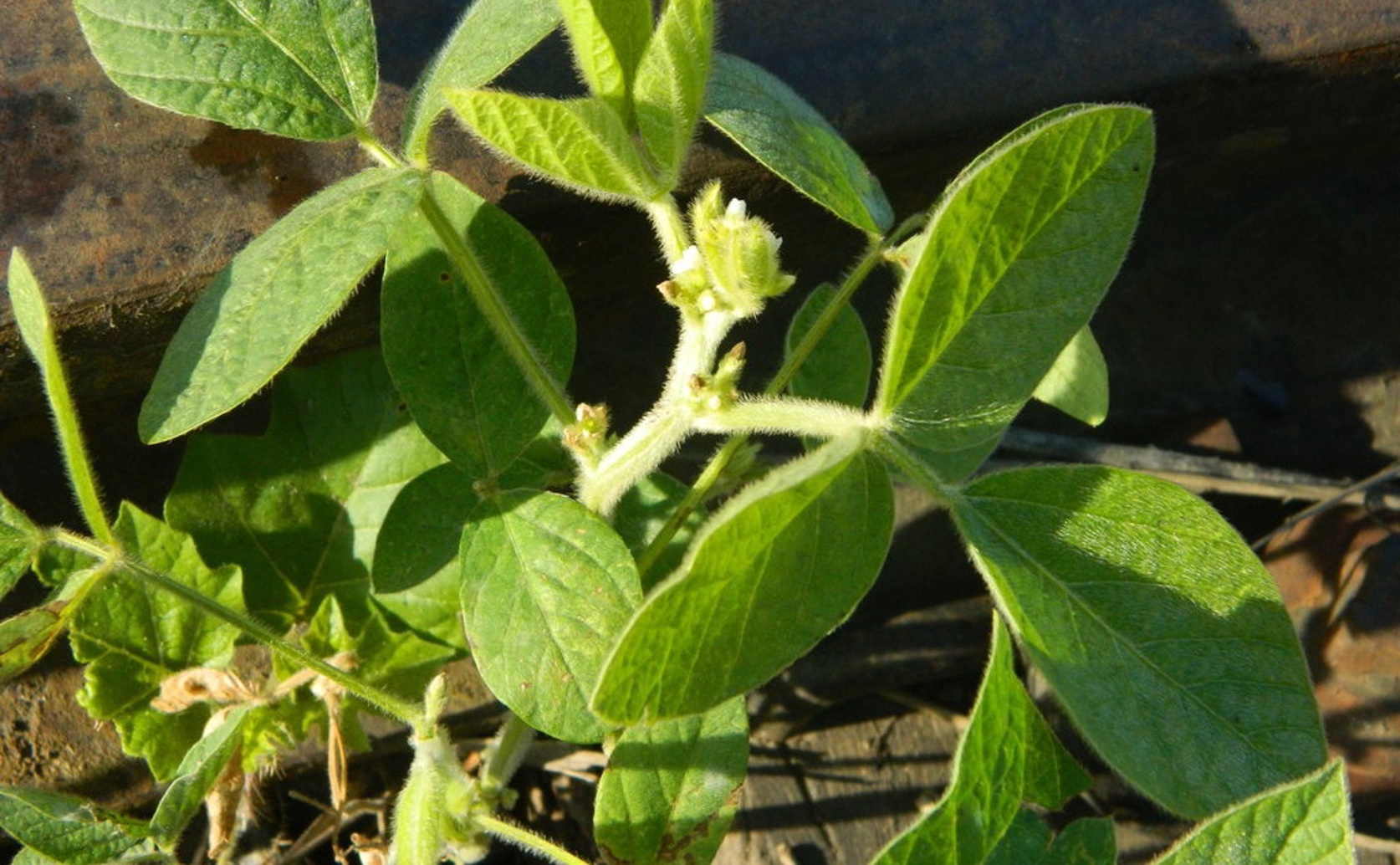
Soybean (Glycine max)

Photo adapted from: Eduardo Luis Beltrocco / CC BY (Source)

Key Findings

  • This study identified 29 magnesium transporter genes (GmMGTs) in soybean, a globally important crop, providing a comprehensive genomic resource
  • Most GmMGT genes are located in the plant cell membrane and are likely involved in magnesium uptake and distribution, essential for plant health
  • Analysis suggests these genes haven’t changed significantly over time, indicating their critical function, and are regulated by various factors like light and stress
Magnesium is a crucial mineral for plant life, playing a key role in processes like photosynthesis and protein creation[2]. However, plants often struggle to efficiently absorb and utilize magnesium from the soil, particularly as it doesn't bind strongly to soil particles and is easily washed away. This deficiency impacts not only crop yields but also human health, as magnesium is vital for numerous bodily functions. Understanding how plants manage magnesium levels is therefore essential for improving food security and nutrition. Researchers at Jashore University of Science and Technology, University of Rajshahi, and the Nuclear Science and Technology Research Institute, IRAN[1], recently undertook a comprehensive study of the MGT gene family in soybean, a globally important crop. MGT genes code for magnesium transporters – proteins that control the movement of magnesium in and out of plant cells. While magnesium transport has been studied in other plants, a detailed analysis of these genes hadn’t been performed in soybean until now. The study identified 29 different MGT genes in the soybean genome, which they named GmMGT. These genes were grouped into three categories – MRS2, CorA, and NIPA – based on their structural similarities. The analysis indicated that most of these GmMGT proteins likely reside in the plasma membrane, the outer boundary of plant cells, suggesting they play a direct role in magnesium uptake and distribution. Further investigation showed that the GmMGT genes share common building blocks and functional areas, hinting at conserved roles across the subgroups. To understand how these genes evolved, the researchers examined patterns of gene duplication, changes in selection pressure, and similarities in genetic organization (synteny). They found evidence of “purifying selection”, meaning these genes haven’t changed drastically over time, likely because their function is critical. Only a limited number of gene pairs showed evidence of duplication. Gene ontology analysis confirmed that the GmMGT genes are involved in basic plant functions like ion transport and maintaining cell location. The team also looked at the regulatory regions of these genes, identifying 53 “cis-acting regulatory elements” (CAREs). These elements act like switches, controlling when and where genes are turned on or off. They found CAREs responsive to light, specific tissues, plant hormones, and various stresses. Importantly, nine major CAREs were particularly prominent in the regulatory regions of two specific GmMGT genes, GLYMA.06G159100 and GLYMA.10G180200, suggesting these genes may be key regulators of magnesium transport. Further analysis revealed that 81 microRNAs (miRNAs) and 29 transcription factor families (TFFs) influence the GmMGT genes, particularly under stressful conditions. This highlights the complex network controlling magnesium homeostasis in soybean. Examining gene activity across 14 different soybean tissues showed that some GmMGT genes were highly active in flowers, while others were less active in nodules. Specific genes like GLYMA.05G168200, GLYMA.10G180200, GLYMA.12G030100, GLYMA.12G168000, GLYMA.16G003900, and GLYMA.20G210300 showed consistently high expression levels. To understand how these genes respond to stress, the researchers analyzed gene activity under both biotic (aphid infestation) and abiotic (dehydration and salinity) stress conditions. They found that 10 GmMGT genes were activated in response to aphid attacks, with GLYMA.02G285600 and GLYMA.13G368400 showing the strongest response. Under dehydration stress, GLYMA.03G159400, GLYMA.05G196600, and GLYMA.15G125900 were upregulated, while GLYMA.04G005200, GLYMA.08G126600, and GLYMA.10G180200 were induced by salinity. This work builds upon earlier research showing the importance of magnesium transport systems in plants[3]. Specifically, the study demonstrates the diversity and complexity of magnesium transport in soybean, identifying a large family of genes involved in maintaining magnesium balance. The findings provide a valuable resource for future research aimed at improving magnesium uptake and utilization in soybean, and potentially other crops, and also ties into the understanding that plants evolve efficient systems to acquire and maintain high magnesium concentrations[2].

AgricultureGeneticsPlant Science

References

Main Study

1) Genome-wide identification and functional characterization of magnesium transporter (MGT) gene family in soybean (Glycine max L.) and their expression profiles in response to aphid infestation, dehydration, and salt stresses

Published 29th August, 2025

https://doi.org/10.1371/journal.pone.0330440


Related Studies

2) Functional dissection and transport mechanism of magnesium in plants.

https://doi.org/10.1016/j.semcdb.2017.08.005


3) Structural and functional comparison of magnesium transporters throughout evolution.

https://doi.org/10.1007/s00018-022-04442-8


Related Articles

An unhandled error has occurred. Reload 🗙