Gene Boosts Tobacco's Resistance to Salt and Drought Stress

Jim Crocker
7th September, 2025

Gene Boosts Tobacco's Resistance to Salt and Drought Stress

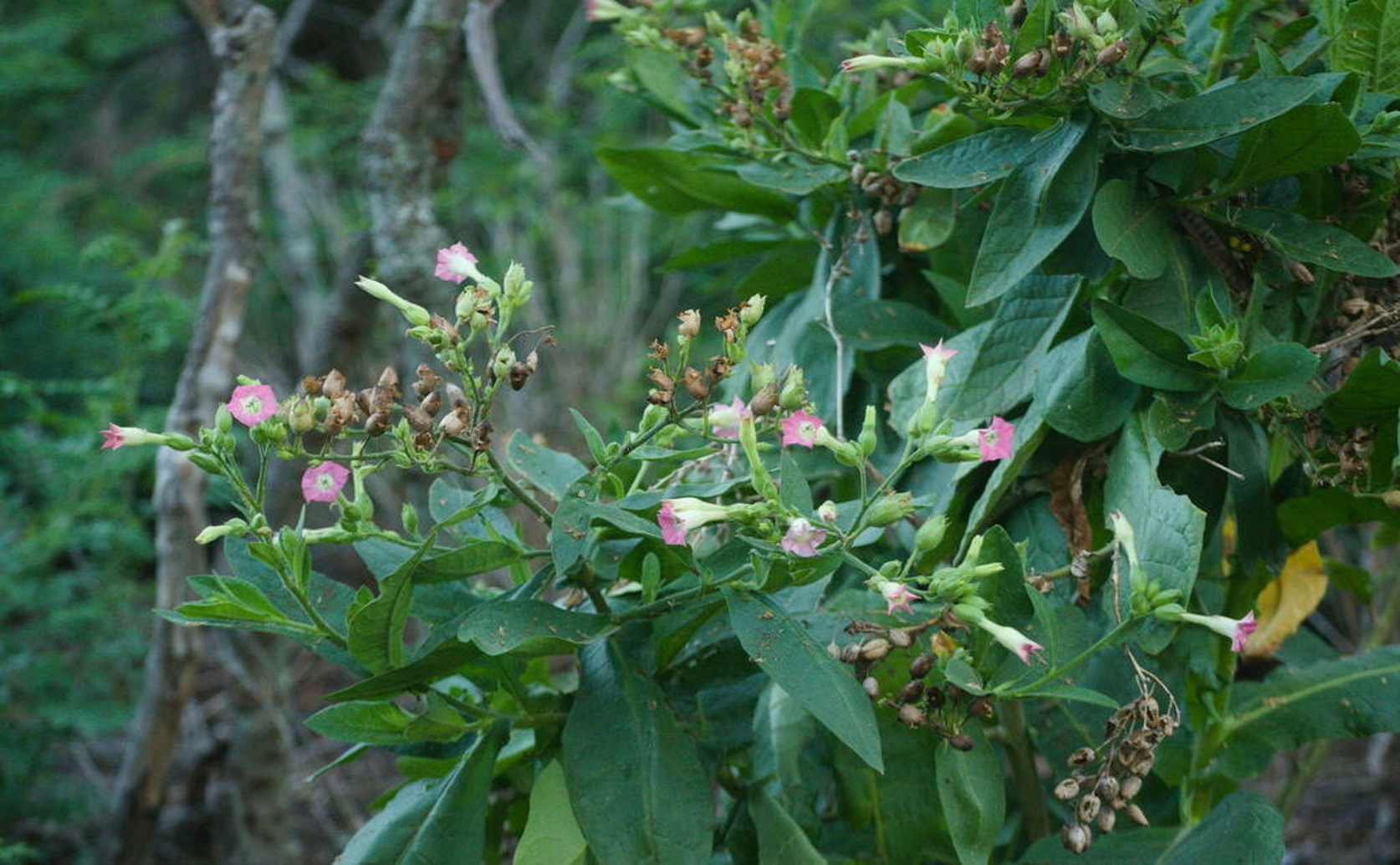
Cultivated tobacco (Nicotiana tabacum)

Photo adapted from: Kevin Faccenda / CC BY (Source)

Key Findings

  • Researchers studied kallar grass and found the LfVP1 gene may help plants cope with salt stress
  • Inserting the LfVP1 gene into yeast cells partially improved their ability to survive in salty conditions, but required another gene to function effectively
  • Tobacco plants with extra LfVP1 grew better under salty conditions, showing increased photosynthesis, water retention, and cell stability
Salinity, or high salt concentration in the soil, is a growing problem for agriculture worldwide, reducing crop yields and threatening food security. Plants struggle in salty conditions because the salt disrupts their ability to take up water and interferes with essential metabolic processes[2]. A key part of how plants cope with salt is maintaining a balance of ions (charged particles) inside their cells and safely storing excess salt in compartments called vacuoles, preventing it from interfering with vital functions. Researchers at the Pakistan Environmental Protection Agency (EPA)[1] have investigated a gene called LfVP1 which plays a role in this process of ion balance. Specifically, LfVP1 codes for an enzyme called H+-pyrophosphatase (H+-PPase), which helps move ions around within the plant cell. The study aimed to determine if increasing the amount of LfVP1 in plants could make them more tolerant to salt stress. To do this, the team first cloned the LfVP1 gene – essentially making a copy of it – and inserted it into yeast cells. Yeast are single-celled organisms often used in research because they are easy to grow and study. The researchers created yeast strains that were deficient in a gene (ena1) important for salt tolerance and then added the LfVP1 gene to see if it could restore their ability to survive in salty conditions. They found that LfVP1 partially helped the yeast tolerate salt, but it needed another gene (nhx1) to work effectively. This suggests that LfVP1 works as part of a larger system to manage salt. Next, the EPA team moved to tobacco plants, a common model organism for plant research. They inserted the LfVP1 gene into tobacco plants, creating what are known as “transgenic” plants – plants that have had their genetic material altered. These transgenic plants were then compared to normal, unaltered tobacco plants (the “wild-type” plants) when grown in salty conditions. The results showed that the transgenic tobacco plants with extra LfVP1 performed significantly better than the wild-type plants. They had higher rates of photosynthesis (the process plants use to convert light into energy), increased stomatal conductivity (the ability of pores on leaves to regulate water loss), more water content in their tissues, and more stable cell membranes. Essentially, the transgenic plants were able to function more normally despite the salt stress. Furthermore, when the seeds of transgenic and wild-type plants were grown in soil with high salt levels, the transgenic plants showed better growth. This research builds on previous work showing that climate change is exacerbating stresses on agriculture, including increased salinity in some regions[3]. As temperatures rise and rainfall patterns change, salt can accumulate in soils, making it harder to grow crops. The study by the EPA team offers a potential solution to this problem by identifying a gene that can enhance a plant’s natural ability to cope with salt. Interestingly, the molecular mechanisms underlying abiotic stress tolerance, like that to salinity, are complex and involve multiple signaling pathways[2]. The EPA team’s work focuses on one specific component – the LfVP1 gene and its role in ion balance – but it’s likely that other genes and pathways are also involved. The observed improvement in photosynthetic levels in the transgenic plants also highlights the interconnectedness of stress responses, as impaired photosynthesis is a common consequence of salt stress[2]. The EPA team’s findings suggest that overexpressing the LfVP1 gene could be a useful strategy for improving the salt tolerance of important crops like rice, wheat, and maize. This is particularly relevant given that yield reductions in rice and wheat due to climate change are already being observed[3][4], and enhancing their resilience to stresses like salinity could help ensure food security in the future.

AgricultureGeneticsPlant Science

References

Main Study

1) Overexpression of Leptochloa fusca H+-pyrophosphatase (LfVP1) gene improves salinity and drought tolerance in tobacco

Published 2nd September, 2025

https://doi.org/10.1080/21645698.2025.2555037


Related Studies

2) Tolerance to drought and salt stress in plants: Unraveling the signaling networks.

https://doi.org/10.3389/fpls.2014.00151


3) Impact of climate change on agricultural production; Issues, challenges, and opportunities in Asia.

https://doi.org/10.3389/fpls.2022.925548


4) Climate trends and global crop production since 1980.

https://doi.org/10.1126/science.1204531


Related Articles

An unhandled error has occurred. Reload 🗙