How Cucumber and Pumpkin Plants Decide if a Graft Will Take

Jim Crocker
7th September, 2025

How Cucumber and Pumpkin Plants Decide if a Graft Will Take

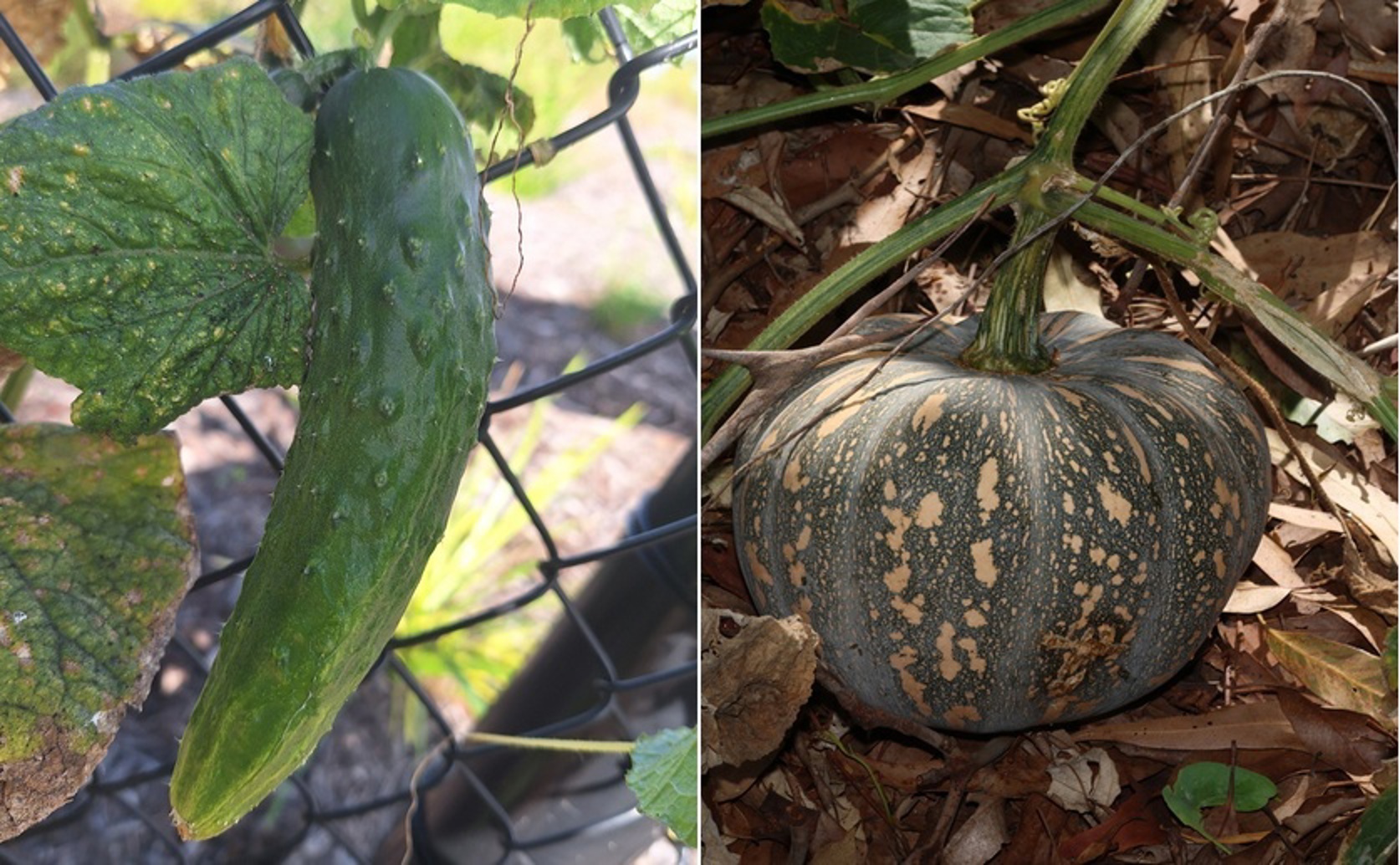
Cucumber (Cucumis sativus, left) and Squash (Cucurbita moschata, right)

Composite: Natural Science News / CC BY-SA. [Sources]
Adapted from photos by:

Key Findings

  • Pumpkin rootstock compatibility with cucumber grafts varies significantly, with soluble solids in the sap positively correlating with success
  • Lower grafting success in pumpkin rootstocks is linked to higher levels of specific flavonoids—nicotiflorin and lonicerin—in their bleeding sap
  • Changes in flavonoid levels within the rootstock, not the cucumber scion, primarily influence grafting compatibility, triggering stress responses in the scion
Grafting, the practice of joining parts of two plants to grow as one, is a common technique used to improve crop health and yield. While successful in many applications, compatibility between the rootstock (the root portion) and scion (the shoot portion) is crucial for success. In cucurbits like watermelon and cucumber, achieving consistent graft success can be challenging due to the complex vascular anatomy[2]. One key factor affecting this success is the compatibility between the two plant types, and recent research from Sichuan Agricultural University[1] has begun to unravel the biochemical basis for this phenomenon in cucumber grafting, specifically focusing on pumpkin rootstock compatibility. The study investigated 30 different pumpkin rootstock varieties, all hybrids, to determine which were most successful when grafted with a specific cucumber variety, FH8. The researchers found significant variation in grafting affinity – some pumpkin varieties readily formed successful grafts, while others struggled. A key observation was the role of “bleeding sap,” the fluid released when the rootstock is cut during grafting. This sap, essentially the plant’s internal fluids, directly impacted wound healing at the graft junction. Correlation analysis revealed that the amount of soluble solids in the bleeding sap positively correlated with grafting success, while the absorbance of light at various wavelengths by the sap negatively correlated. This suggests that the composition of the sap is critical. To pinpoint the specific compounds involved, the researchers analyzed the bleeding sap from three rootstocks with differing compatibility levels using a technique called ultra-performance liquid chromatography-tandem mass spectrometry (UPLC-MS/MS). This sophisticated method identifies and quantifies the various molecules present in a sample. The analysis showed that amino acids were the most abundant component of the bleeding sap. However, the most significant difference between compatible and incompatible rootstocks lay in the levels of flavonoids – a class of plant compounds known for their role in defense mechanisms. Compatible rootstocks contained considerably lower levels of specific flavonoids, including nicotiflorin, lonicerin, isoquercitrin, and isovitexin, compared to incompatible ones. Importantly, these differences were found in the rootstock sap, not in the cucumber scion itself, indicating the rootstock is the primary source of these compatibility-affecting compounds. Further investigation using both transcriptomic (gene expression) and metabolic analysis showed that intergeneric grafting (grafting between different genera, in this case pumpkin and cucumber) triggered changes in several key plant pathways. These included pathways related to responding to abiotic stress (environmental factors like drought or temperature extremes), ribosome function (protein synthesis), and plant hormone signaling. This aligns with earlier research[3] which identified plant hormones, particularly auxins, cytokinins, and gibberellins, as key regulators of graft union development. The findings build upon previous work demonstrating that failed grafts often resemble a plant immune response[4]. In tomato-pepper grafts, researchers observed the activation of defense genes, increased cell death, and a disruption of vascular connection. The current study suggests a similar mechanism may be at play in cucumber grafting, where the presence of flavonoids in the pumpkin rootstock triggers a negative immune-like response in the cucumber scion, hindering the formation of a successful graft union.[4] identified nucleotide-binding and leucine-rich repeat receptors (NLRs) as being upregulated during failed grafting, suggesting that these receptors are involved in detecting a foreign substance and initiating a defense response. While the study did not directly investigate the role of NLRs, the observed flavonoid-mediated incompatibility suggests they could be involved in recognizing compounds within the pumpkin bleeding sap. The study highlights that pumpkin rootstock compatibility with cucumbers is variable and, crucially, linked to the nutrients transported from the rootstock to the scion. Specifically, high levels of flavonoids in the bleeding sap appear to negatively impact graft success. This research provides a foundation for breeding programs aimed at developing pumpkin rootstocks with improved compatibility, potentially by selecting for varieties with lower flavonoid content and optimized soluble solid composition.

AgricultureGeneticsPlant Science

References

Main Study

1) Integrated transcriptomic and metabolic analysis reveal the mechanism controlling cucumber-pumpkin grafting compatibility

Published 2nd September, 2025

https://doi.org/10.1186/s12870-025-07208-z


Related Studies

2) Micrographic View of Graft Union Formation Between Watermelon Scion and Squash Rootstock.

https://doi.org/10.3389/fpls.2022.878289


3) Molecular Responses during Plant Grafting and Its Regulation by Auxins, Cytokinins, and Gibberellins.

https://doi.org/10.3390/biom9090397


4) Graft incompatibility between pepper and tomato elicits an immune response and triggers localized cell death.

https://doi.org/10.1093/hr/uhae255


Related Articles

An unhandled error has occurred. Reload 🗙