
How Plant Self-Poisoning Works: Unlocking the Secrets of Horned Sea Lavender
Jim Crocker
18th September, 2025


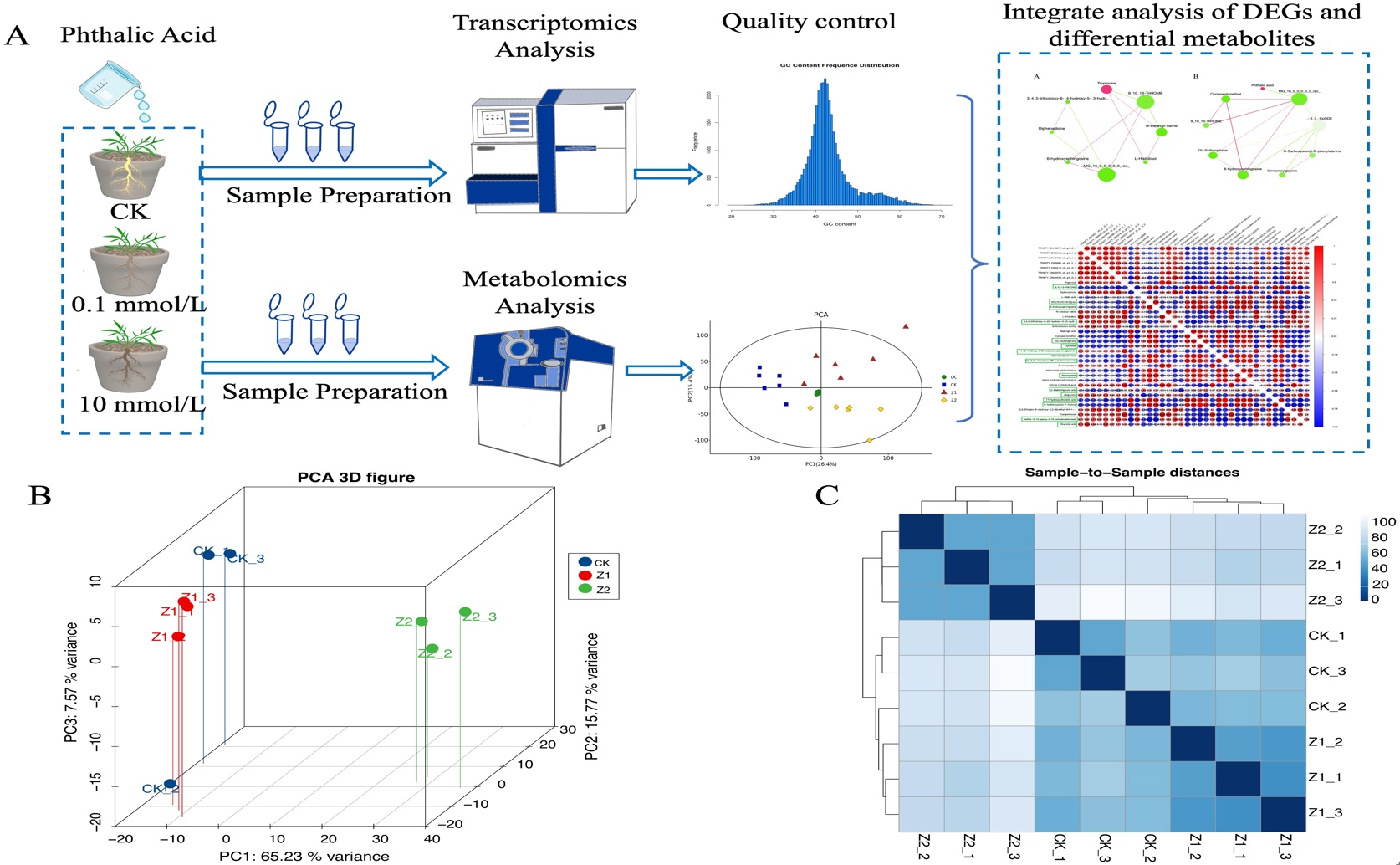
Experimental design and sample relationship analysis. (A) Schematic diagram of experimental design. (B) Plot of principal component analysis between the treated and control samples. (C) Heat map of inter-sample correlation.
Key Findings
- In China, Pugionium cornutum is valuable for erosion control but suffers from autotoxicity, hindering continuous cropping and sustainable production
- Phthalic acid, a key autotoxic compound, significantly alters the plant’s internal chemistry, impacting 892 metabolites
- The plant responds to phthalic acid stress by activating defense pathways like flavonoid and glucosinolate biosynthesis, and regulating transport of molecules via ABC transporters
References
Main Study
1) Integrative transcriptomic and metabolomic analyses provide insights into the mechanism of autotoxicity of Pugionium cornutum (L.) Gaertn
Published 17th September, 2025
https://doi.org/10.1371/journal.pone.0331858
Related Studies
2) Differential proteomic analysis of replanted Rehmannia glutinosa roots by iTRAQ reveals molecular mechanisms for formation of replant disease.
3) Responses of soil microbial communities in the rhizosphere of cucumber (Cucumis sativus L.) to exogenously applied p-hydroxybenzoic acid.
4) Root suberization in the response mechanism of melon to autotoxicity.
Related Articles
 26th February, 2025 | Greg Howard