
How Lamb's Quarters Affect Other Plants with Their Leachates, Decay, and Oils
Greg Howard
2nd May, 2025


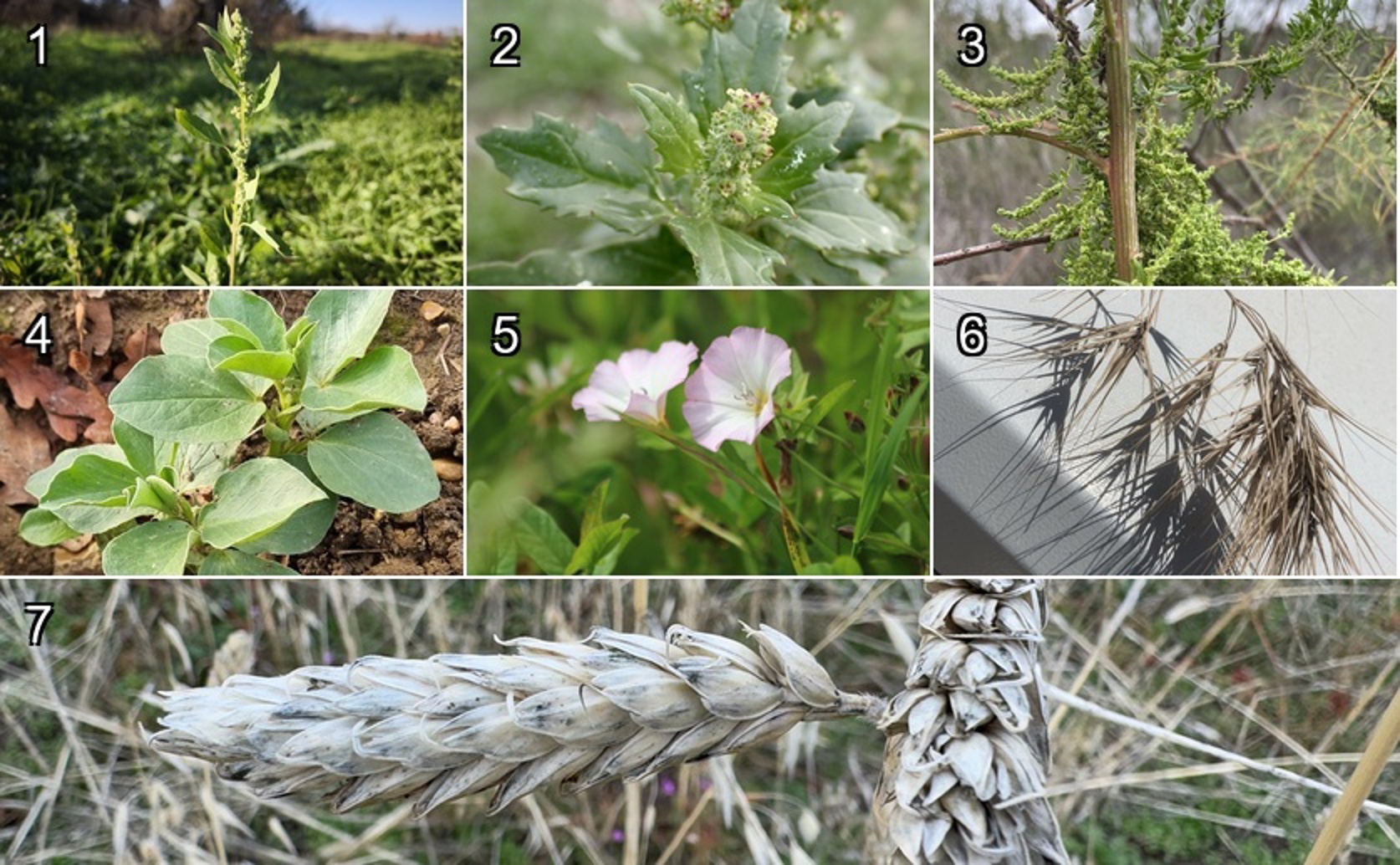
The study reveals that chemical compounds released from common lambsquarters Chenopodium album (1), Chenopodium murale (2), and especially the invasive Chenopodium ambrosioides (3), demonstrate significant allelopathic potential by inhibiting the germination and growth of crops like wheat Triticum aestivum (7) and faba bean Vicia faba (4), as well as common weeds like bindweed Convolvulus arvensis (5) and brome Bromus rigidus (6).
Composite: Natural Science News / CC BY. [Sources]
Key Findings
- Researchers in Türkiye discovered that the aboveground parts of Chenopodium weeds release chemicals that strongly inhibit other plants' growth
- Among the three species studied, C. ambrosioides produced the highest levels of these growth-inhibiting chemicals, making it the most effective
- Extracts from these weeds, especially C. ambrosioides, show promise as natural herbicides for sustainable weed management
References
Main Study
1) Allelopathic pathways and impacts of Chenopodium species via leachates, decaying residues, and essential oils
Published 29th April, 2025
https://doi.org/10.1371/journal.pone.0321782
Related Studies
2) Antioxidative and cytotoxic potential of some Chenopodium L. species growing in Poland.
3) A global perspective on the biology, impact and management of Chenopodium album and Chenopodium murale: two troublesome agricultural and environmental weeds.
4) Essential oil composition and in vitro antibacterial activity of Chenopodium album subsp. striatum.
Related Articles
 6th July, 2024 | Jim Crocker