
Eco-Friendly Mustard Plant's Natural Chemicals and Their Effects on Other Plants
Jim Crocker
6th July, 2024


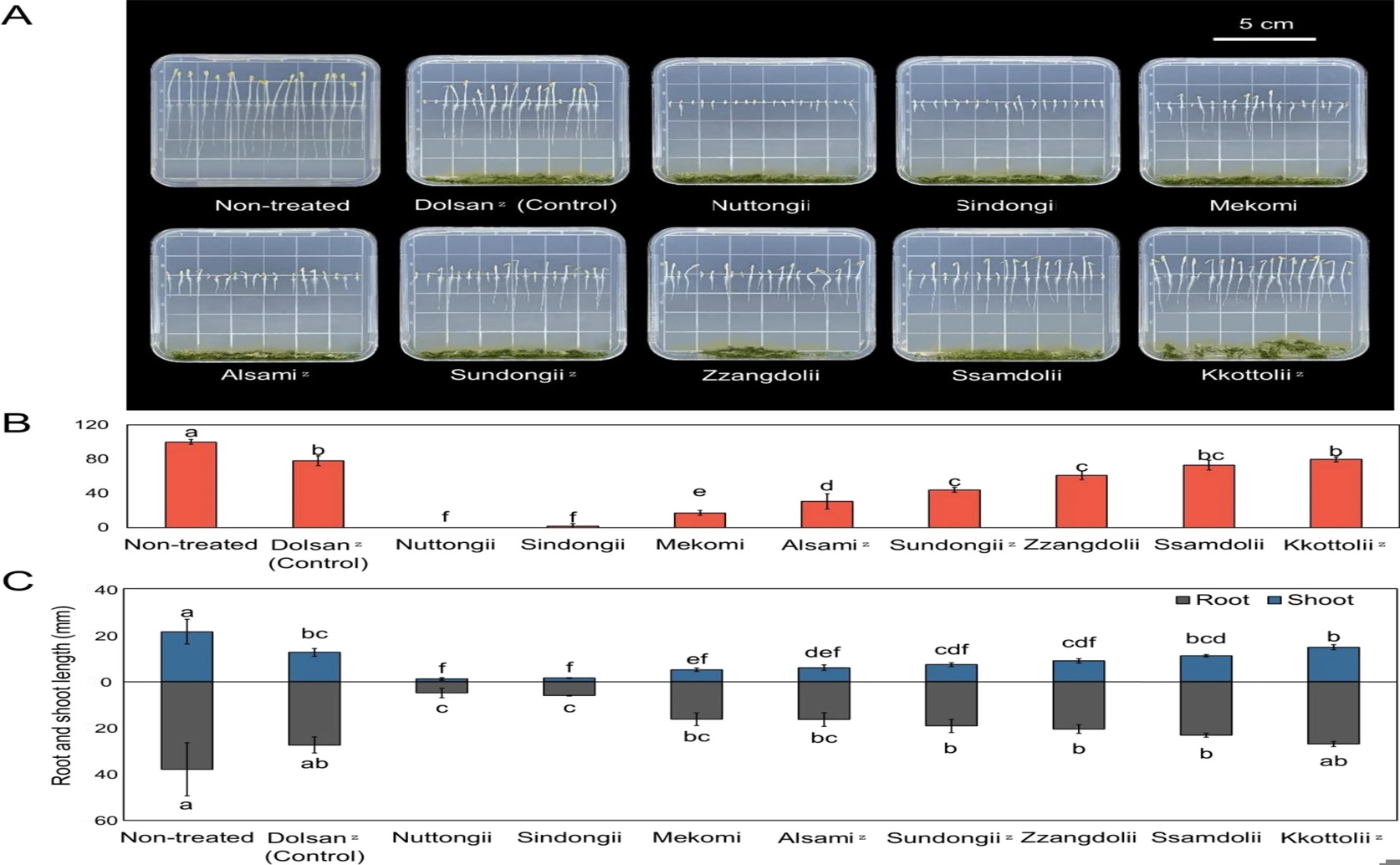
Volatile compounds from various leaf mustard (Brassica juncea) cultivars demonstrated potent and cultivar-dependent allelopathic effects, as shown by the visual impact on lettuce (Lactuca sativa) seedlings (a), and significant inhibition of their germination rate (b) and growth (c).
Key Findings
- Researchers at Korea University studied eight leaf mustard cultivars from Yeosu city, South Korea, for their potential as biofumigants
- The study found that sinigrin and AITC make up 79% and 36% of the total glucosinolate and its hydrolysis products in these cultivars
- The 'Nuttongii' cultivar had the highest AITC concentration, showing significant potential for weed inhibition
References
Main Study
1) Turning glucosinolate into allelopathic fate: investigating allyl isothiocyanate variability and nitrile formation in eco-friendly Brassica juncea from South Korea.
Published 4th July, 2024
https://doi.org/10.1038/s41598-024-65938-w
Related Studies
2) Allyl isothiocyanate affects the cell cycle of Arabidopsis thaliana.
3) Allyl isothiocyanate as a cancer chemopreventive phytochemical.
4) Influence of seasonal variation and methyl jasmonate mediated induction of glucosinolate biosynthesis on quinone reductase activity in broccoli florets.
Related Articles
 8th May, 2024 | Jenn Hoskins