
Willow Trees Influence Soil Health and Diversity
Jenn Hoskins
6th July, 2024


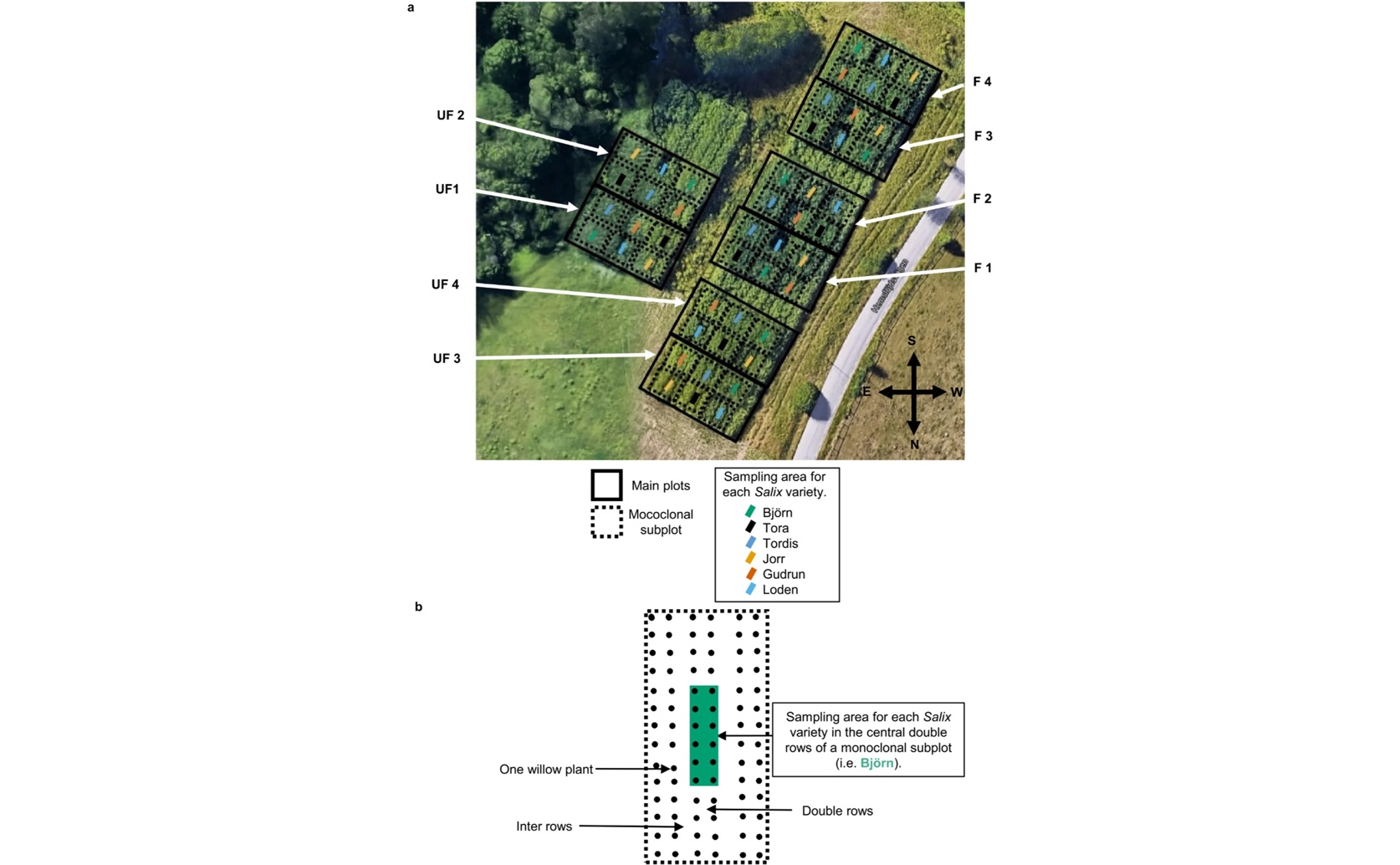
This experimental field trial, featuring six willow (Salix) varieties grown under fertilized and unfertilized conditions (a) in distinct subplots (b), was designed to reveal that different plant species and varieties can significantly alter the molecular composition of the underlying soil organic matter.
Key Findings
- The study by the Swedish University of Agricultural Sciences focused on soil carbon sequestration practices to combat climate change
- Effective soil carbon sequestration can be achieved by addressing yield gaps in cropland soils, enhancing both carbon storage and crop productivity
- Optimizing nutrient management and fostering healthy fungal communities are crucial for improving soil carbon sequestration and overall soil health
References
Main Study
1) Salix species and varieties affect the molecular composition and diversity of soil organic matter
Published 5th July, 2024
https://doi.org/10.1007/s11104-024-06829-x
Related Studies
2) Towards a global-scale soil climate mitigation strategy.
3) Plant stoichiometry at different scales: element concentration patterns reflect environment more than genotype.
4) Ectomycorrhizal Cortinarius species participate in enzymatic oxidation of humus in northern forest ecosystems.
5) Trade-offs for food production, nature conservation and climate limit the terrestrial carbon dioxide removal potential.
Related Articles
 30th April, 2024 | Greg Howard