
How Smooth and Manila Grass and Their Hybrids Handle Cold and Heat Waves
Jim Crocker
4th April, 2025


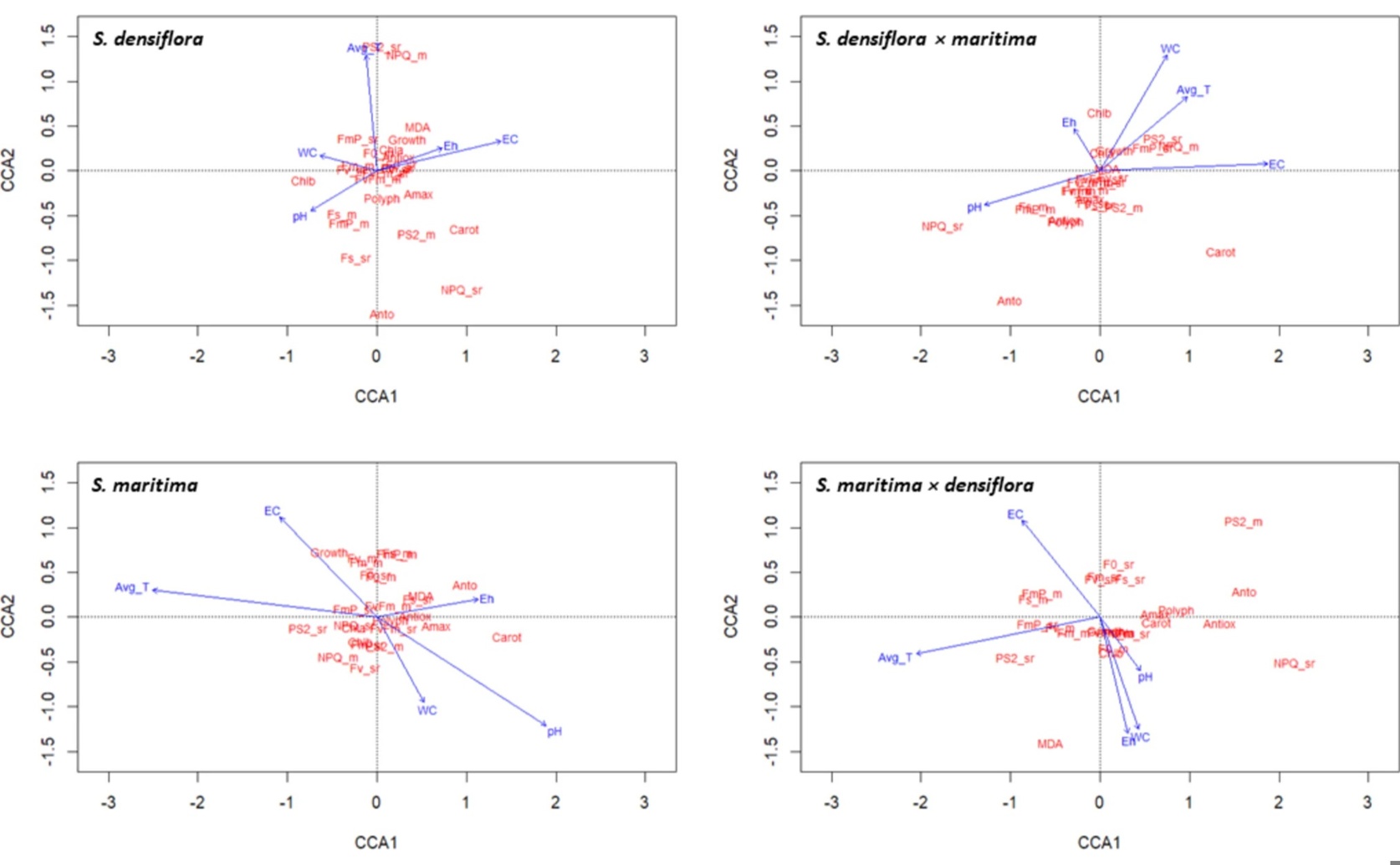
Canonical correspondence analysis reveals that seasonal plant trait variations are primarily driven by air temperature for the native cordgrass (Spartina maritima) and its hybrid S. maritima × densiflora, while the invasive alien cordgrass (S. densiflora) and its reciprocal hybrid respond more strongly to sediment salinity.
Key Findings
- In Guadiana Marshes, hybrid Spartina plants adapt more flexibly to extreme temperatures than their native and invasive parents
- Native Spartina maritima effectively adjusts to seasonal changes, while invasive S. densiflora mainly responds to salinity and less to temperature shifts
- These hybrids could thrive under increasing climate extremes, potentially altering salt marsh ecosystems
References
Main Study
1) Ecophysiological and biochemical responses to cold and heat waves of native Spartina maritima, alien S. densiflora and their reciprocal hybrids
Published 1st April, 2025
https://doi.org/10.1007/s00425-025-04675-4
Related Studies
2) Phenotypic plasticity of invasive Spartina densiflora (Poaceae) along a broad latitudinal gradient on the Pacific Coast of North America.
3) Low genetic diversity contrasts with high phenotypic variability in heptaploid Spartina densiflora populations invading the Pacific coast of North America.
4) Do invasive species show higher phenotypic plasticity than native species and, if so, is it adaptive? A meta-analysis.
Related Articles
 6th July, 2024 | Jenn Hoskins