How Enzymes Affect Antibiotic Resistance and Microbes in Composting Manure

Jim Crocker
30th August, 2025

How Enzymes Affect Antibiotic Resistance and Microbes in Composting Manure

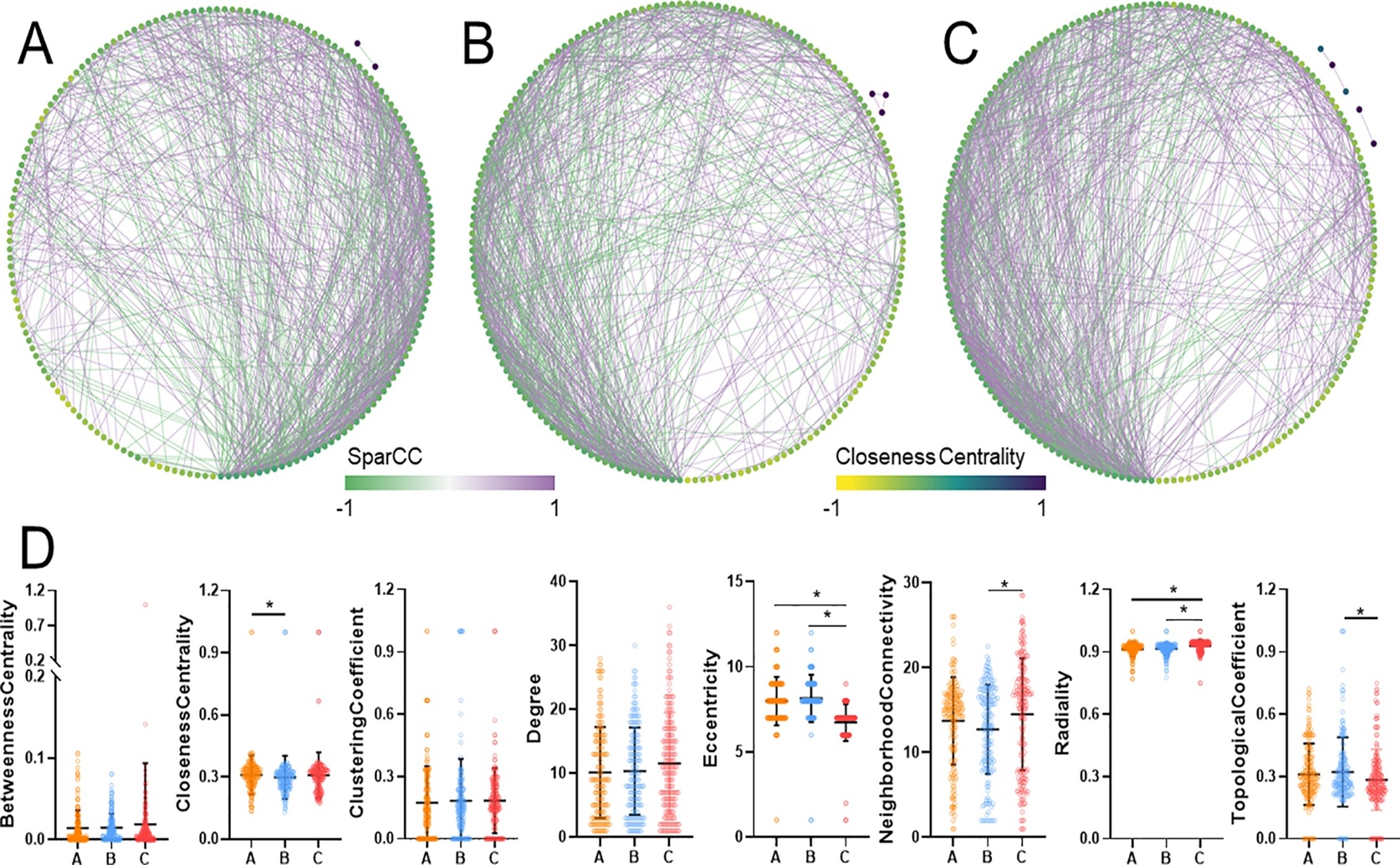
Network analysis demonstrated that the addition of cellulase (b) and xylanase (c) significantly enhanced bacterial community complexity and interaction compared to the control (a), as evidenced by the quantification of topological properties (d).

Image adapted from: Gong et al. / CC BY (Source)

Key Findings

  • This study, conducted in China, investigated how adding enzymes to cow manure composting affects antibiotic resistance genes
  • Adding cellulase sped up decomposition, boosted microbial diversity, and reduced the number of antibiotic resistance genes in the compost
  • Xylanase stabilized the composting process, maintaining consistent temperature and pH, and helped retain vital plant nutrient nitrogen
Antibiotic resistance is a growing global health threat, and surprisingly, the spread of genes that confer this resistance – called antibiotic resistance genes or ARGs – is now being considered not just a consequence of antibiotic use, but a factor contributing to broader environmental changes[2]. These genes can exist within bacteria, but also independently, and can spread between different microorganisms. A key area of concern is how agricultural practices contribute to the environmental spread of ARGs. A recent study conducted by researchers at the Wuhan Academy of Agricultural Science and the All India Institute of Medical Sciences (AIIMS)[1] investigated how adding specific enzymes to the composting process of cow manure affects the levels of these resistance genes. Composting, the natural process of breaking down organic matter, is a common practice in agriculture, but it can also inadvertently become a breeding ground for antibiotic-resistant bacteria and ARGs. The study focused on two enzymes: cellulase and xylanase. Cellulase breaks down cellulose, a major component of plant cell walls, while xylanase breaks down xylan, another complex carbohydrate found in plant material. Both are naturally produced by microorganisms, but can also be added to accelerate decomposition. Researchers monitored various aspects of the composting process over 30 days, including temperature, pH, nutrient levels, microbial community composition, and crucially, the abundance of ARGs. The results showed that adding both enzymes improved the composting process. Cellulase, in particular, sped up the breakdown of organic matter and increased the diversity of microbial life within the compost. Importantly, it also led to a reduction in the number of ARGs. Xylanase was more effective at stabilizing the composting environment – maintaining consistent temperature and pH – and helped retain nitrogen, a vital plant nutrient. These findings build on previous research showing that manipulating the composting process can influence ARG levels. For example, studies have demonstrated that adding Bacillus subtilis can reduce ARGs and harmful bacteria[3]. Similarly, incorporating lignite, a type of coal, into the composting process has been shown to lower ARG abundance[4]. The AIIMS and Wuhan Academy of Agricultural Science study expands on this by identifying specific enzymes that can achieve similar results, and by detailing how these enzymes impact the microbial communities and ARGs. The study also highlighted the close relationship between the types of bacteria present and the ARGs they carry. By analyzing the bacterial communities using 16S rRNA gene sequencing – a method to identify different bacterial species – researchers found that changes in the microbial composition were linked to changes in ARG patterns. This suggests that by optimizing the microbial environment through enzyme additions, it’s possible to reduce the spread of antibiotic resistance. The researchers used several advanced analytical techniques to understand these relationships. Network analysis revealed how different microbial groups and ARGs interact, while redundancy analysis identified the key factors driving changes in ARG abundance. Variation partitioning analysis helped determine the relative contributions of microbial communities, mobile genetic elements (MGEs – which are pieces of DNA that can move between bacteria, spreading ARGs), and environmental factors. The findings are particularly relevant given concerns about ARGs entering the environment from livestock farms[5]. While this study focused on cow manure, the principles could be applied to other types of agricultural waste. By strategically using enzymes like cellulase and xylanase, it may be possible to create more efficient and safer composting processes, reducing the risk of spreading antibiotic resistance and promoting sustainable waste management.

AgricultureBiochemEcology

References

Main Study

1) Impacts of cellulase and xylanase addition on antibiotic resistance and microbial community during dairy manure composting

Published 29th August, 2025

https://doi.org/10.1371/journal.pone.0328055


Related Studies

2) Elevated levels of antibiotic resistance genes as a factor of human-caused global environmental change.

https://doi.org/10.1111/gcb.17419


3) Changes in antibiotic resistance genes and mobile genetic elements during cattle manure composting after inoculation with Bacillus subtilis.

https://doi.org/10.1016/j.biortech.2019.122011


4) Fate of antibiotic resistance genes during high-solid anaerobic co-digestion of pig manure with lignite.

https://doi.org/10.1016/j.biortech.2020.122906


5) Dissemination of antibiotic resistance genes from aboveground sources to groundwater in livestock farms.

https://doi.org/10.1016/j.watres.2024.121584


Related Articles

An unhandled error has occurred. Reload 🗙