
Tiny Particles Improve Plant Drought Survival
Greg Howard
20th August, 2025


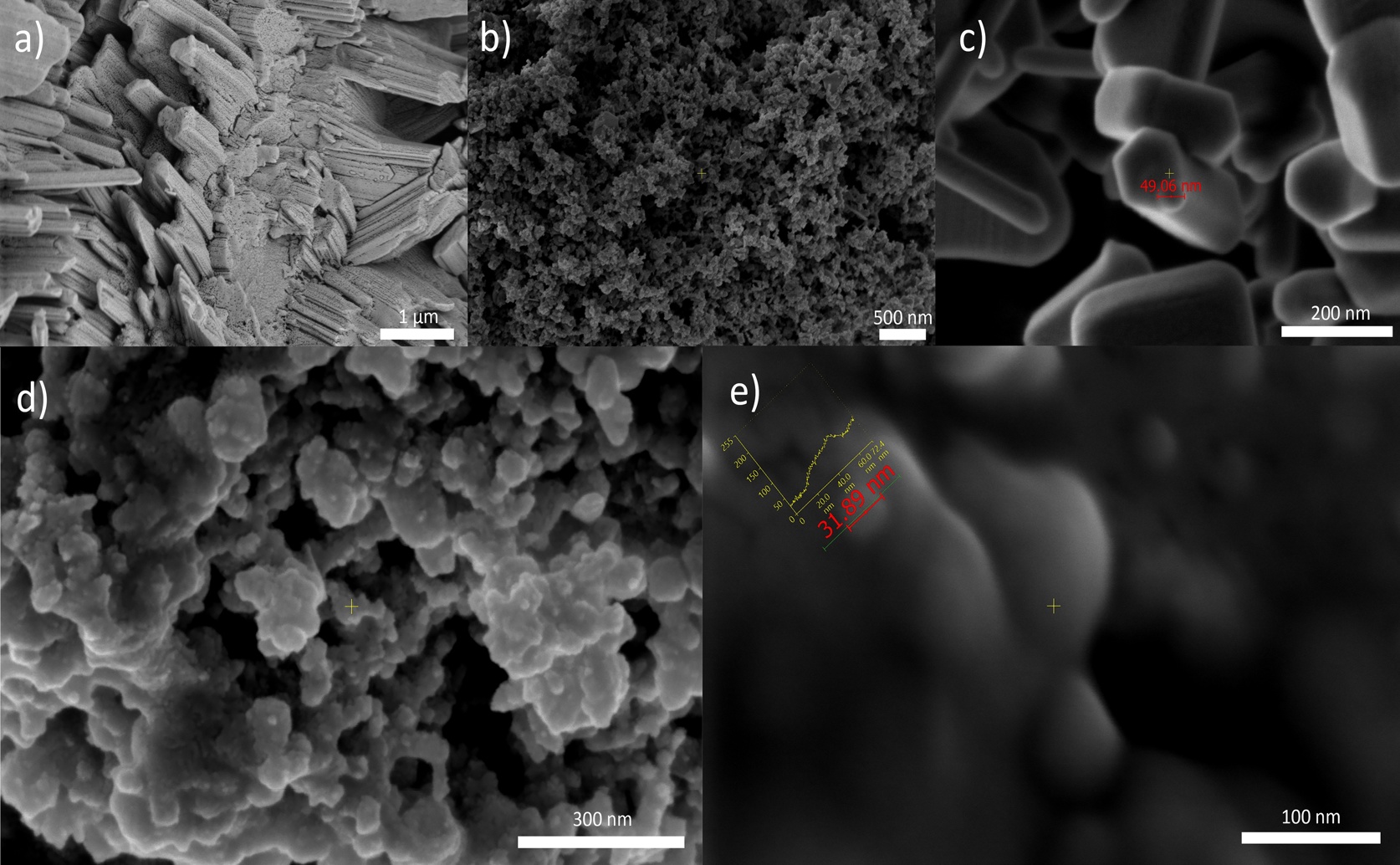
Scanning electron microscopy reveals the distinct structural properties of fullerenol (a) and zinc oxide nanoparticles (b–c), demonstrating the successful formation of a stable, unique aggregate (d–e) for foliar application on Arabidopsis thaliana.
Key Findings
- A study on Arabidopsis thaliana plants showed that applying fullerenol and low-dose zinc oxide nanoparticles to leaves helps them tolerate drought
- These nanoparticles reduce plant stress and improve vital functions like photosynthesis and water use, a first for foliar ZnO nano on this plant
- Crucially, combining both nanoparticles offers a stronger, synergistic protective effect against drought than using either alone
AgricultureBiotechPlant Science
References
Main Study
1) Foliar application of fullerenol and zinc oxide nanoparticles improves stress resilience in drought-sensitive Arabidopsis thaliana
Published 19th August, 2025
https://doi.org/10.1371/journal.pone.0330022
Related Studies
2) Efficacy of nanoparticles as nanofertilizer production: a review.
3) Carbon-based nanomaterials as inducers of biocompounds in plants: Potential risks and perspectives.
4) In Vitro and In Silico Investigation of Water-Soluble Fullerenol C60(OH)24: Bioactivity and Biocompatibility.
5) Nitric oxide-scavenging activity of polyhydroxylated fullerenol, C60(OH)24.
Journal: Nitric oxide : biology and chemistry, Issue: Vol 11, Issue 2, Sep 2004
Related Articles
 28th May, 2025 | Jim Crocker