Advanced AI Detects Cotton Plant Diseases

Jim Crocker
28th May, 2025

Advanced AI Detects Cotton Plant Diseases
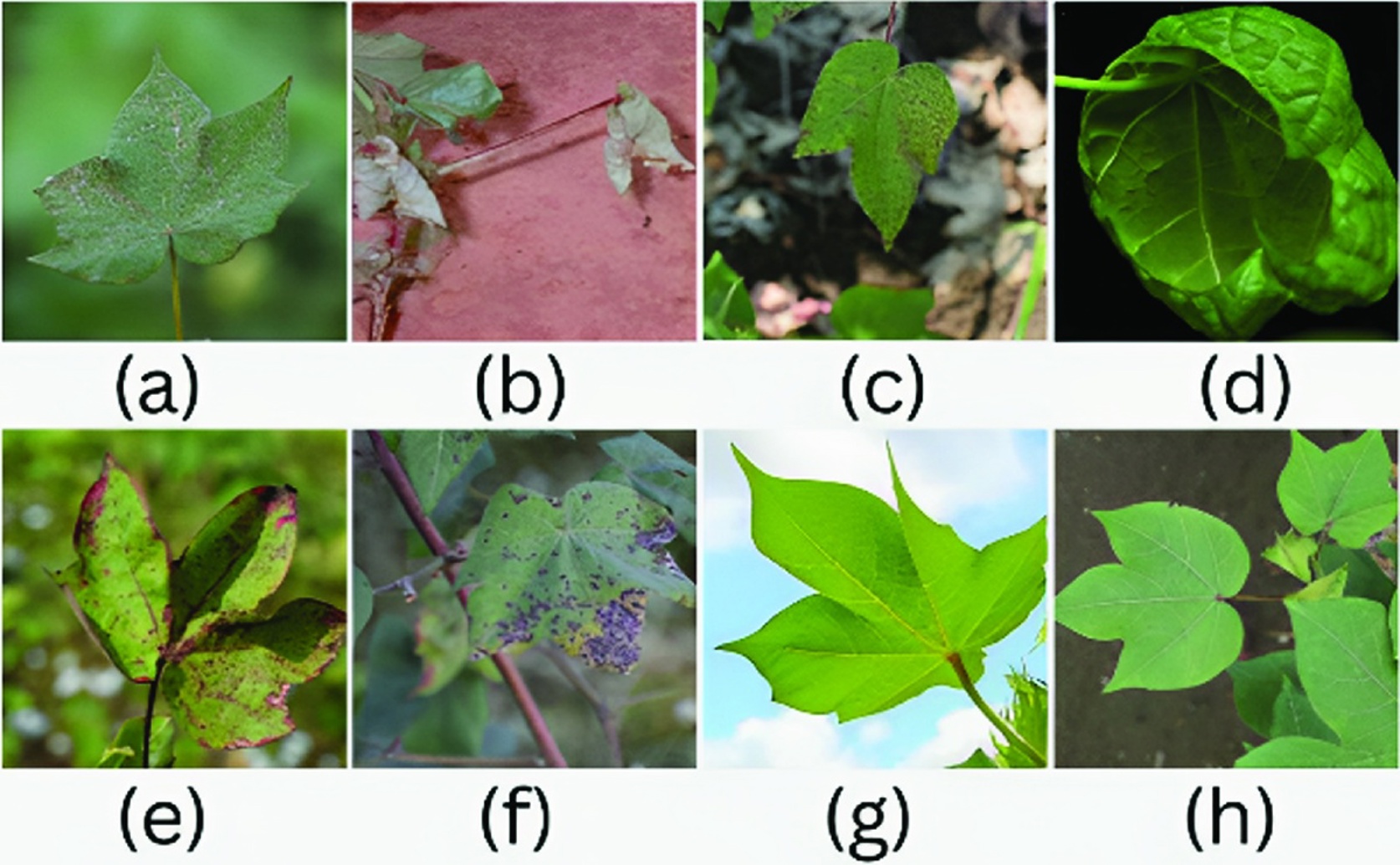
Image Source: © Natural Science News. This image is an artistic rendition.

Key Findings

  • In India, scientists developed an AI tool that accurately detects and identifies six cotton diseases with 97% accuracy
  • The system uses advanced image analysis to quickly and reliably identify diseases, outperforming traditional manual methods
  • This technology enables farmers to respond swiftly to disease outbreaks, enhancing cotton yields and promoting sustainable farming
Cotton is a vital cash crop worldwide, particularly in agriculture-driven economies. However, its production is significantly threatened by various diseases that reduce both yield and quality. Addressing these challenges is crucial for ensuring sustainable cotton farming and economic stability. Recent advancements in technology, particularly in the field of deep learning, offer promising solutions for early and accurate disease detection in cotton crops. A recent study conducted by researchers at Graphic Era Deemed to be University, India[1], has made significant strides in this area. The study focuses on developing an automated method to detect and classify multiple diseases affecting cotton plants. Accurate classification is essential because different diseases require specific management strategies. Traditional methods of disease detection often involve manual inspections, which are time-consuming and prone to human error. Moreover, existing datasets used for training detection models are usually collected under controlled conditions, limiting their effectiveness in real-world scenarios where environmental factors vary widely. Building on previous research, such as the comprehensive review of machine vision applications in agriculture[2] and the exploration of deep learning models for plant disease detection[3], this study introduces a novel approach tailored specifically for cotton crops. Earlier work by King Fahd University of Petroleum and Minerals highlighted the potential of deep learning in outperforming traditional methods for disease classification and detection[3]. Additionally, the creation of a detailed cotton leaf disease dataset by researchers from Khalifa University provided a valuable resource for training and testing machine learning models[4]. This dataset includes thousands of images categorized into various disease classes, forming a benchmark for developing accurate detection systems. The main challenge addressed by the study is the accurate classification of seven classes, which include six specific cotton diseases—Bacterial blight, Curl virus, Fusarium wilt, Alternaria, Cercospora, Greymildew—and a healthy class. One of the primary obstacles in achieving high accuracy is the class imbalance, where some disease classes have significantly fewer samples than others. To overcome this, the researchers employed synthetic data generation techniques. Traditional methods such as scaling, rotating, transforming, shearing, and zooming were used to augment the dataset. Additionally, they introduced a customized StyleGAN (Generative Adversarial Network) to create more realistic synthetic images, enhancing the diversity and volume of training data. After augmenting the data, the study utilized advanced deep learning models to extract features from the images. Specifically, features were combined from MobileNet and VGG16, two well-known convolutional neural networks renowned for their efficiency and accuracy in image processing tasks. MobileNet is designed for mobile and embedded vision applications, offering a balance between speed and performance, while VGG16 is known for its deep architecture and effectiveness in feature extraction. By merging these feature sets, the researchers created a comprehensive feature vector that captured intricate details necessary for distinguishing between different diseases. The extracted features were then fed into three different classifiers: Long Short Term Memory Units (LSTM), Support Vector Machines (SVM), and Random Forest. LSTM is a type of recurrent neural network particularly effective in handling sequential data, which can be advantageous in recognizing patterns over different regions of an image. SVM is a supervised learning model that excels in classification tasks by finding the optimal boundary between classes. Random Forest, an ensemble learning method, builds multiple decision trees and merges their results to improve accuracy and control overfitting. To further enhance the classification performance, the study introduced a StackNet-based ensemble classifier. StackNet combines the probabilistic outputs of the three individual classifiers (LSTM, SVM, and Random Forest) and makes the final prediction based on these combined probabilities. This ensemble approach leverages the strengths of each classifier, resulting in a more robust and accurate prediction system. The researchers trained and tested their method using publicly available datasets, including the comprehensive cotton leaf disease dataset mentioned earlier[4]. The results were impressive, with the proposed method achieving an average accuracy of 97%. This performance surpasses existing state-of-the-art techniques, demonstrating the effectiveness of combining feature extraction from multiple deep learning models with advanced classification methods. This study not only advances the field of agricultural technology but also has practical implications for farmers and the agricultural industry. By providing an automated and highly accurate disease detection system, farmers can quickly identify and respond to disease outbreaks, minimizing crop losses and reducing the need for excessive chemical treatments. This leads to more sustainable farming practices, conserving resources, and lowering production costs. Furthermore, the integration of machine vision and deep learning in precision agriculture, as reviewed in earlier studies[2][3], highlights the growing trend of using artificial intelligence to enhance crop management. The ability to monitor plant health in real-time and make informed decisions based on accurate data can significantly improve agricultural productivity and sustainability. In conclusion, the innovative approach developed by the researchers at Graphic Era Deemed to be University represents a significant advancement in cotton disease detection. By addressing challenges such as class imbalance and leveraging the power of deep learning and ensemble classifiers, the study provides a robust solution that outperforms existing methods. This work exemplifies how integrating cutting-edge technology with agricultural practices can lead to more efficient and sustainable farming, benefiting both producers and the environment.

AgricultureBiotechPlant Science

References

Main Study

1) Multi-convolutional neural networks for cotton disease detection using synergistic deep learning paradigm

Published 27th May, 2025

https://doi.org/10.1371/journal.pone.0324293


Related Studies

2) Machine Vision Systems in Precision Agriculture for Crop Farming.

https://doi.org/10.3390/jimaging5120089


3) Leveraging deep learning for plant disease and pest detection: a comprehensive review and future directions.

https://doi.org/10.3389/fpls.2025.1538163


4) A comprehensive cotton leaf disease dataset for enhanced detection and classification.

https://doi.org/10.1016/j.dib.2024.110913


Related Articles

An unhandled error has occurred. Reload 🗙