AI System Distinguishes Rice Seed Types Using Advanced Neural Networks

Jenn Hoskins
18th May, 2025

AI System Distinguishes Rice Seed Types Using Advanced Neural Networks

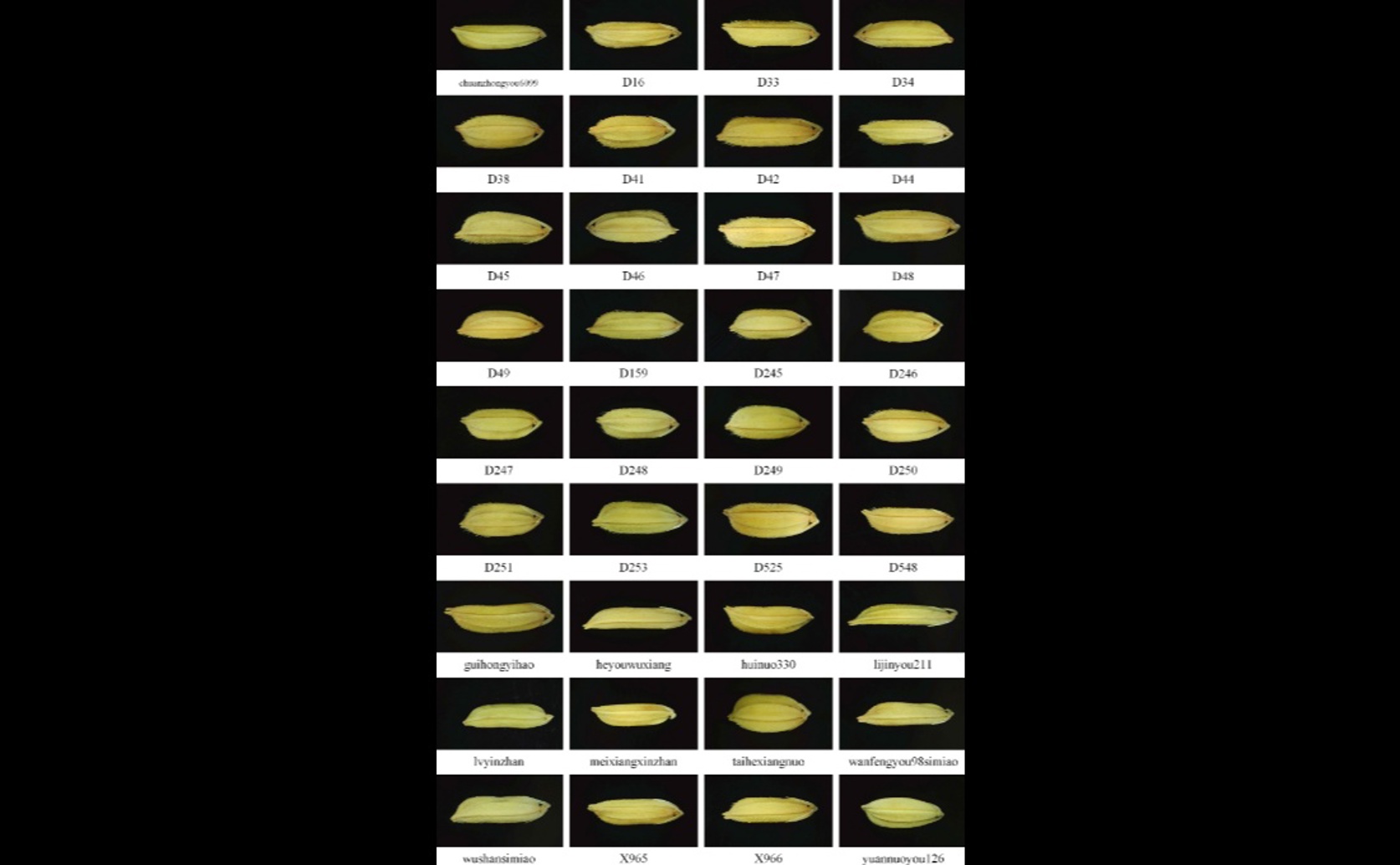
Image Source: © Natural Representative samples of the 36 rice seed varieties comprising the dataset illustrate the subtle inter-class morphological similarities that the proposed RSCD-Net model successfully navigated to achieve superior fine-grained classification accuracy compared to baseline architectures. News. This image is an artistic rendition.

Image adapted from: Zhang et al. / CC BY (Source)

Key Findings

  • Researchers at Kunming University developed RSCD-Net, a new AI tool to accurately identify 36 different rice seed varieties
  • RSCD-Net achieved an 81.94% accuracy rate, surpassing other leading models by up to 24.72%, ensuring more reliable seed classification
  • This image-based method is efficient and accessible, helping farmers improve crop management and increase rice yields
Accurately identifying rice seed varieties is crucial for ensuring high crop yields, quality, and market value. However, this task is challenging due to the subtle differences in seed morphology and the complexity of classification requirements. Traditional image recognition methods often fall short in both accuracy and efficiency, creating a need for more advanced solutions. Researchers from Kunming University of Science and Technology have introduced a novel approach called the Deep Space and Channel Residual Network with Double Attention Mechanism (RSCD-Net) to tackle this problem[1]. This new method aims to improve the recognition accuracy of 36 different rice seed varieties, a significant increase from previous studies which typically focused on fewer varieties. For instance, earlier research developed iRSVPred, a deep learning tool that successfully identified ten major basmati rice varieties with high accuracy using seed images[2]. Another study utilized near-infrared (NIR) hyperspectral technology combined with machine learning and deep learning techniques to distinguish five common rice seed types, achieving over 95% accuracy with some deep learning models[3]. RSCD-Net builds upon these advancements by introducing the Space and Channel Feature Extraction Residual Block (SCR-Block). This innovation enhances the network’s ability to differentiate between similar seed varieties while reducing unnecessary data processing, thereby increasing computational efficiency. The RSCD-Net architecture is composed of 16 layers of SCR-Blocks organized into four convolutional stages, each containing 3, 4, 6, and 3 units respectively. Additionally, the network incorporates a Double Attention Mechanism (A2Net), which broadens the network’s global receptive field. This means that RSCD-Net can better capture subtle differences in seed features, improving its capacity to distinguish between closely related varieties. The performance of RSCD-Net was evaluated using a self-collected dataset, and the results were impressive. The model achieved an average accuracy of 81.94%, surpassing the baseline model by 4.16%. When compared to other state-of-the-art models such as InceptionResNetV2, ConvNeXt, MobileNetV3, and Swin Transformer, RSCD-Net showed superior performance, improving accuracy by 1.17%, 3%, 24.72%, and 13.22% respectively. These improvements highlight RSCD-Net’s effectiveness in handling the fine-grained recognition challenges inherent in rice seed classification. This study not only advances the field of agricultural technology but also addresses some limitations identified in previous research. For example, while iRSVPred achieved high accuracy with a limited number of varieties, RSCD-Net expands the scope significantly by handling 36 varieties. Moreover, unlike the NIR hyperspectral methods that require specialized equipment, RSCD-Net relies on image-based data, making it more accessible and practical for widespread use among farmers and agricultural professionals. The integration of deep learning techniques in agricultural applications has shown promising results, as demonstrated by these studies. Deep learning models, such as those used in[2] and[3], have the ability to learn complex patterns from large datasets, which is essential for accurately identifying different seed varieties. RSCD-Net takes this a step further by optimizing the feature extraction process and enhancing the model’s attention mechanisms, leading to higher accuracy and efficiency. The development of RSCD-Net by the team at Kunming University of Science and Technology underscores the importance of interdisciplinary research in solving agricultural challenges. By combining expertise in computer science and agricultural sciences, the researchers were able to create a tool that not only improves seed classification accuracy but also offers practical benefits for rice farmers. Accurate seed identification can lead to better crop management, higher yields, and improved seed quality, ultimately contributing to food security and economic stability. In summary, the introduction of RSCD-Net represents a significant advancement in the field of rice seed classification. By leveraging advanced deep learning techniques and addressing the limitations of previous methods, this study provides an effective and efficient solution for accurately identifying a large number of rice seed varieties. The success of RSCD-Net highlights the potential of artificial intelligence in enhancing agricultural practices and supports the ongoing efforts to develop more sophisticated tools for crop management and improvement.

AgricultureBiotechPlant Science

References

Main Study

1) Multi-class rice seed recognition based on deep space and channel residual network combined with double attention mechanism

Published 16th May, 2025

https://doi.org/10.1371/journal.pone.0322699


Related Studies

2) iRSVPred: A Web Server for Artificial Intelligence Based Prediction of Major Basmati Paddy Seed Varieties.

https://doi.org/10.3389/fpls.2019.01791


3) Identification of Rice Seed Varieties Based on Near-Infrared Hyperspectral Imaging Technology Combined with Deep Learning.

https://doi.org/10.1021/acsomega.1c04102


Related Articles

An unhandled error has occurred. Reload 🗙