A New Hydroponic Method for Faster Cassava Growth: A First Study

Greg Howard
27th December, 2024

A New Hydroponic Method for Faster Cassava Growth: A First Study

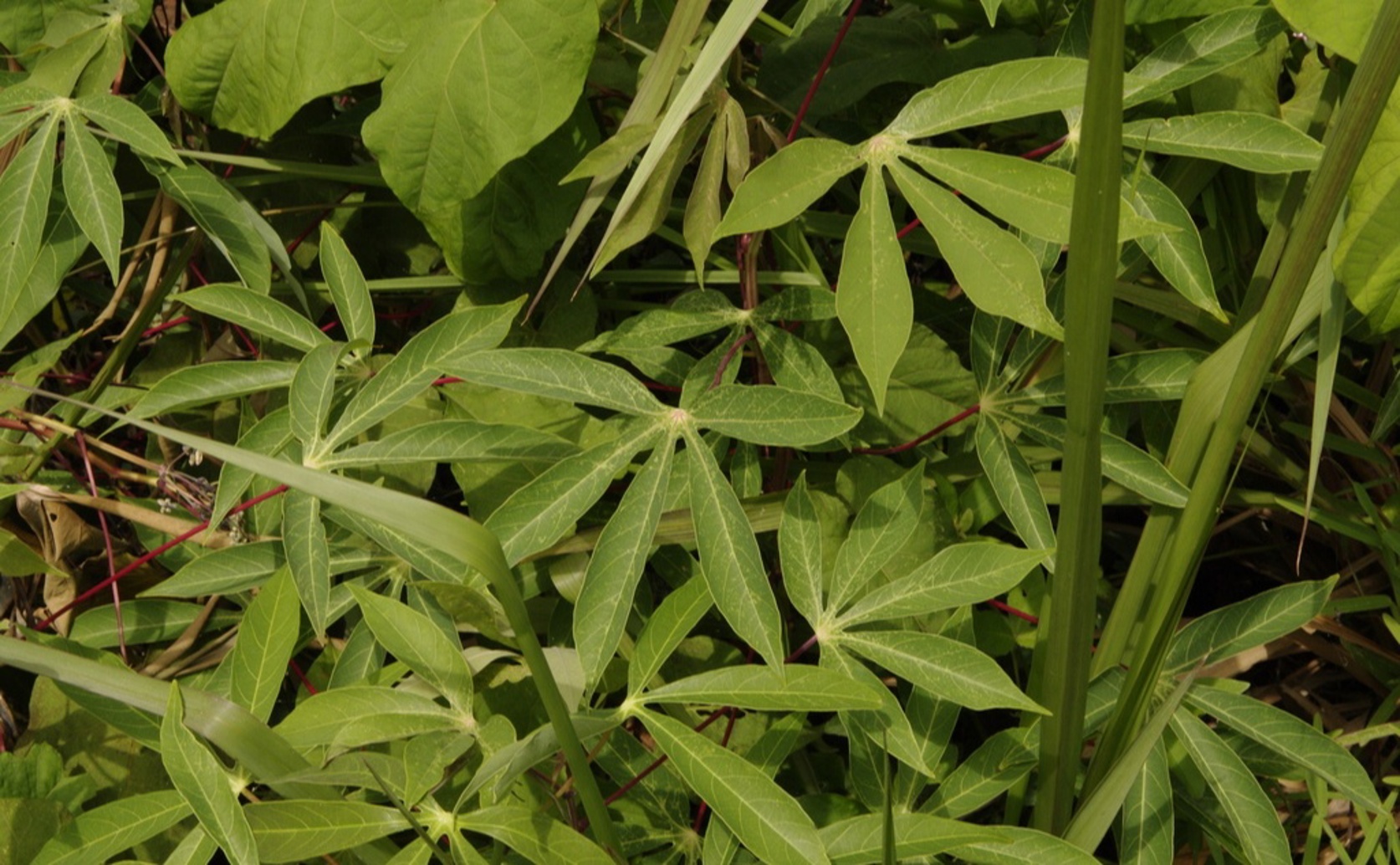
Cassava (Manihot esculenta)

Photo adapted from: Eric Knight / CC BY (Source)

Key Findings

  • The study by the International Institute of Tropical Agriculture focused on improving cassava planting materials to combat viral diseases in Africa
  • Researchers found that up to 75% of the imported substrate KlasmannTS3 can be replaced with local peat without reducing the production of cassava cuttings
  • Combining vermiculite with local peat produced better results than using either material alone, leading to taller plantlets with more leaves and denser root systems
Cassava is a crucial crop in many parts of the world, particularly in Africa, where it serves as a major source of calories for millions of people. However, the productivity of cassava is severely threatened by viral diseases such as cassava mosaic disease (CMD) and cassava brown streak disease (CBSD), which are transmitted by the whitefly Bemisia tabaci[2]. These diseases can devastate cassava crops, leading to significant economic losses. One of the key strategies to combat these viral diseases is to ensure the availability of virus-free planting materials. A recent study conducted by the International Institute of Tropical Agriculture aimed to address the challenge of multiplying and disseminating virus-free planting materials for cassava using Semi-Autotrophic Hydroponics (SAH) technology[1]. SAH technology has shown promise in producing healthy plantlets, but its reliance on imported substrates like KlasmannTS3 (K) poses a sustainability issue. This study evaluated the effectiveness of various substrates, including locally available materials, in supporting the growth and multiplication of cassava plantlets. The researchers tested three single substrates: KlasmannTS3 (K), vermiculite (V), and local peat (P), along with three blended substrates: a combination of 25% K and 75% P (K25P75), a combination of 25% V and 75% P (V25P75), and 10% V and 90% P (V10P90). They measured the growth parameters and cutting production of different cassava genotypes over three plantlet production cycles. The multiplication rate of cuttings from cycle 1 to cycle 2 (R1) and from cycle 2 to cycle 3 (R2) was calculated to assess the efficiency of each substrate. The results showed that K and K25P75 led to similar multiplication rates (R1 and R2), except for the genotype IBA961089A, where K25P75 resulted in a higher R1. Local peat (P) and vermiculite (V) used alone had similar cutting multiplication rates, but these rates were lower than those achieved with the blended substrates V25P75 and V10P90. Substrates that produced more cuttings also resulted in taller plantlets with more leaves and internodes. Additionally, V and its combinations with local peat produced the densest root systems. The study concluded that up to 75% of the imported substrate KlasmannTS3 can be substituted with local peat without compromising the production of cuttings. Vermiculite and peat should be combined rather than used separately for optimal results. This finding is significant as it offers a more sustainable and cost-effective solution for producing virus-free cassava planting materials. The importance of this study is underscored by the context of previous research on the cassava whitefly B. tabaci, which has been identified as a major vector for CMD and CBSD[2]. The genetic analysis of cassava-colonizing B. tabaci in Africa revealed six major populations linked by gene flow, emphasizing the need for effective management strategies to control the spread of these viral diseases[2]. By improving the methods for producing virus-free planting materials, the current study contributes to the broader effort to mitigate the impact of whitefly-transmitted viruses on cassava crops. In summary, this research by the International Institute of Tropical Agriculture demonstrates that locally available substrates can effectively support the growth and multiplication of cassava plantlets, providing a sustainable alternative to imported materials. This advancement is crucial for enhancing the availability of virus-free cassava planting materials, ultimately contributing to the fight against devastating viral diseases in cassava crops.

AgricultureBiotechPlant Science

References

Main Study

1) An alternative Semi-Autotropic Hydroponics (SAH) substrate for cassava rapid propagation: A first study case.

Published 26th December, 2024

https://doi.org/10.1371/journal.pone.0311437


Related Studies

2) Genome of the African cassava whitefly Bemisia tabaci and distribution and genetic diversity of cassava-colonizing whiteflies in Africa.

https://doi.org/10.1016/j.ibmb.2019.05.003


Related Articles

An unhandled error has occurred. Reload 🗙