How Early Life, Our Genes, and Parental DNA Shape Adult Gut and Growth

Jim Crocker
19th June, 2025

How Early Life, Our Genes, and Parental DNA Shape Adult Gut and Growth

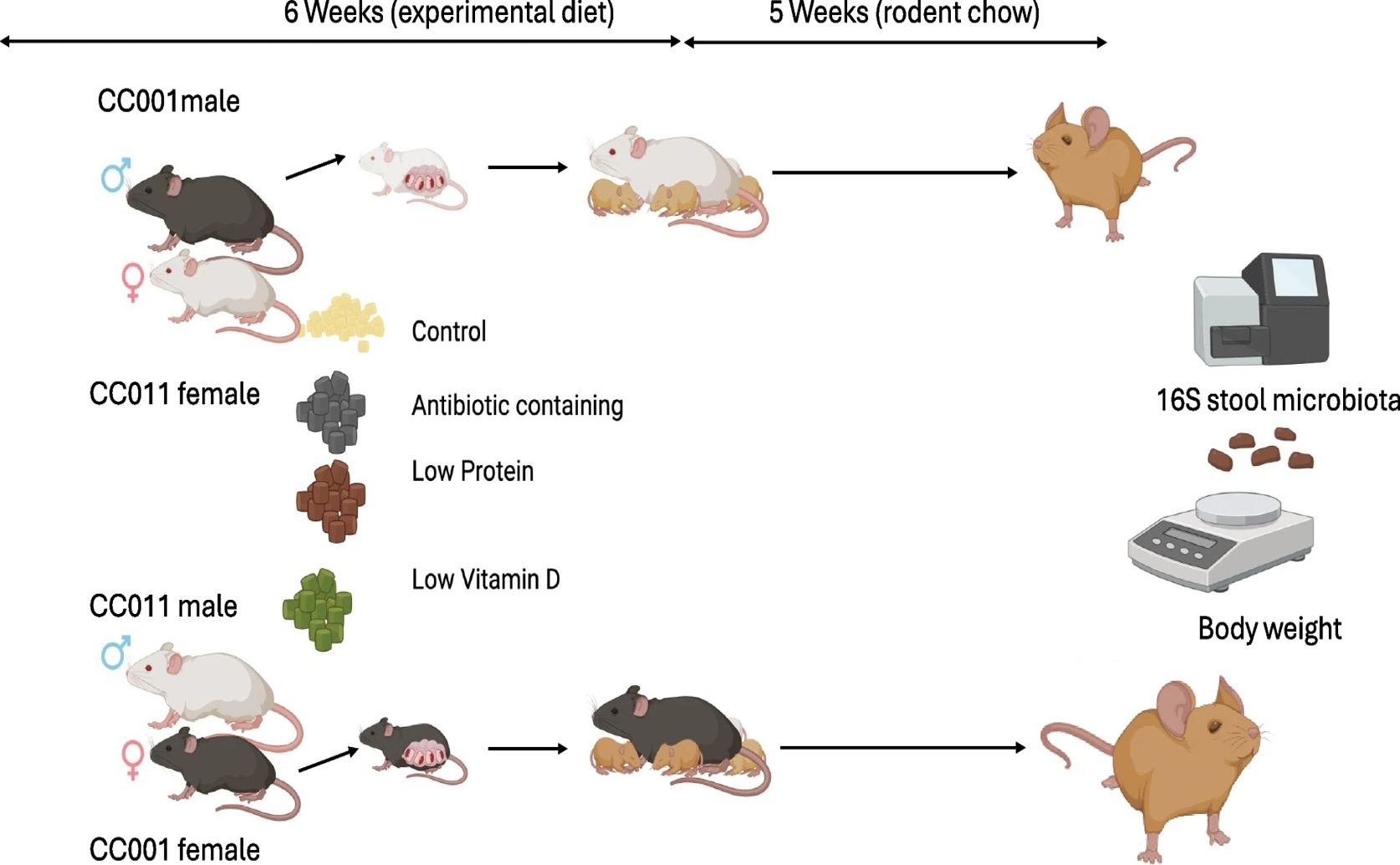
This study utilized a reciprocal crossbreeding design in mice to assess how maternal exposure to antibiotic, low-protein, or low-vitamin D diets during development has lasting impacts on the adult offspring's gut microbiome and bodyweight, ultimately revealing strong modulating effects of both genetics and parent-of-origin.

Image adapted from: Huda et al. / CC BY (Source)

Key Findings

  • Researchers at the University of California Davis found that a mother's diet and antibiotic use during pregnancy and lactation can permanently alter her offspring's gut bacteria and body weight
  • These lasting changes in offspring health and gut microbes depend heavily on the offspring's unique genetic makeup, showing some are more vulnerable
  • The study also revealed that whether certain traits or genetic material came from the mother or father significantly influenced the offspring's gut health and growth
The early environment an individual experiences, particularly during development, has a profound and lasting impact on health throughout life. A significant public health concern is how maternal exposures, such as diet and antibiotic use, influence the establishment of the offspring's gut microbiome – the complex community of microorganisms living in the digestive tract. This microbial community is crucial for various bodily functions, including metabolism and immunity. While it's known that disruptions to this early microbiome can be linked to disease risk, the long-term consequences are not fully understood. Furthermore, individual genetic differences are also thought to play a role in how susceptible someone is to environmentally induced changes in their gut microbiome and subsequent health issues. Our current understanding of how these developmental environmental factors and genetics interact to shape the offspring's long-term gut microbiota and overall health remains limited. To address this gap, researchers at the University of California Davis conducted a study[1] investigating the long-term effects of early exposure to specific dietary challenges on offspring body weight and gut microbes. They used a novel mouse population, where mother mice were fed different purified diets starting five weeks before pregnancy and continuing until the end of lactation. These diets included an antibiotic-containing diet, a low-protein diet, a low-vitamin D diet, or a standard control diet. After weaning, the offspring were all switched to a standardized chow diet, allowing the researchers to observe lasting effects of the early maternal diet. To explore the influence of genetics, they used a sophisticated breeding strategy involving "recombinant inbred intercross" (RIX) mice from the Collaborative Cross (CC) strains. This allowed them to create F1 offspring from "reciprocal crosses," meaning they swapped which parent contributed which genetic line. This setup ensured that F1 offspring within a reciprocal pair were genetically identical except for their sex chromosomes (X and Y) and mitochondrial DNA, which are passed down only from the mother. This allowed the team to investigate what is known as a "parent-of-origin" (PO) effect, where the impact on offspring health might depend on whether a trait or genetic material came from the mother or the father. They then measured the offspring's body weight and analyzed their gut bacterial communities at eight weeks of age using a technique called 16S rRNA gene sequencing, which identifies different types of bacteria present. The study's findings revealed that early developmental exposure to antibiotics and nutritional deficiencies (low protein and low vitamin D) had significant and lasting effects on the offspring's body weight and the diversity and composition of their gut microbiota. Importantly, these effects varied depending on the genetic background of the mice. This suggests that some individuals may be more susceptible to these environmental insults than others due to their unique genetic makeup. The researchers observed changes in several specific types of bacteria, or "genera," including Bacteroides, Muribaculaceae, Akkermansia, and Bifidobacterium. The alteration of Bifidobacterium is particularly noteworthy, as earlier research has shown that the abundance of Bifidobacterium in early infancy can positively influence immune development and enhance the protective efficacy of vaccines by improving immunologic memory[2]. This highlights the broader health implications when early-life factors disrupt the balance of such crucial beneficial bacteria. The research also found a significant parent-of-origin effect on the offspring's gut microbiota and growth. For instance, offspring from one specific reciprocal cross (CC011xCC001) showed increased body weight, greater microbial diversity, and different levels of certain bacteria, such as Faecalibaculum, compared to their genetically similar counterparts from the reversed cross (CC001xCC011). This indicates that factors beyond just the genes themselves, perhaps related to mitochondrial DNA or even the maternal environment during gestation and lactation, can influence these long-term outcomes. These findings from the University of California Davis build upon and expand previous understanding of early-life microbial programming. For example, earlier work has demonstrated that the acquisition of the intestinal microbiota begins at birth, with a stable community developing through a succession of organisms. Disruptions during this maturation, such as low-dose antibiotic exposure, can alter host metabolism and increase body fat[3]. The new study reinforces this by showing that even maternal antibiotic exposure, rather than direct offspring exposure, can have similar lasting effects. Furthermore, the previous research indicated that the altered microbiota, not the antibiotics themselves, played a causal role in these metabolic changes, a concept that aligns with the current study's focus on microbiota composition changes. The process of gut colonization itself is complex, with evidence suggesting it may begin even before birth, with distinct microbial communities found in the placenta and amniotic fluid, followed by continued transfer of microbes from breast milk after birth[4]. The current study underscores how sensitive this early developmental window is, showing that maternal factors like diet and antibiotic use during gestation and lactation can profoundly shape this initial microbial establishment, leading to lasting impacts on offspring health. The varying responses observed among different genetic strains in this study further emphasize that personalized approaches, considering both environmental exposures and genetic predispositions, may be crucial for preventing long-term health issues stemming from early-life microbial disruptions.

NutritionHealthGenetics

References

Main Study

1) The impact of early-life exposures on growth and adult gut microbiome composition is dependent on genetic strain and parent- of- origin

Published 16th June, 2025

https://doi.org/10.1186/s40168-025-02130-w


Related Studies

2) Bifidobacterium Abundance in Early Infancy and Vaccine Response at 2 Years of Age.

https://doi.org/10.1542/peds.2018-1489


3) Altering the intestinal microbiota during a critical developmental window has lasting metabolic consequences.

https://doi.org/10.1016/j.cell.2014.05.052


4) Human gut colonisation may be initiated in utero by distinct microbial communities in the placenta and amniotic fluid.

https://doi.org/10.1038/srep23129


Related Articles

An unhandled error has occurred. Reload 🗙