Enhancing Wheat Grain Nutrition and Yield Through Genetic Diversity

Greg Howard
7th June, 2025

Enhancing Wheat Grain Nutrition and Yield Through Genetic Diversity

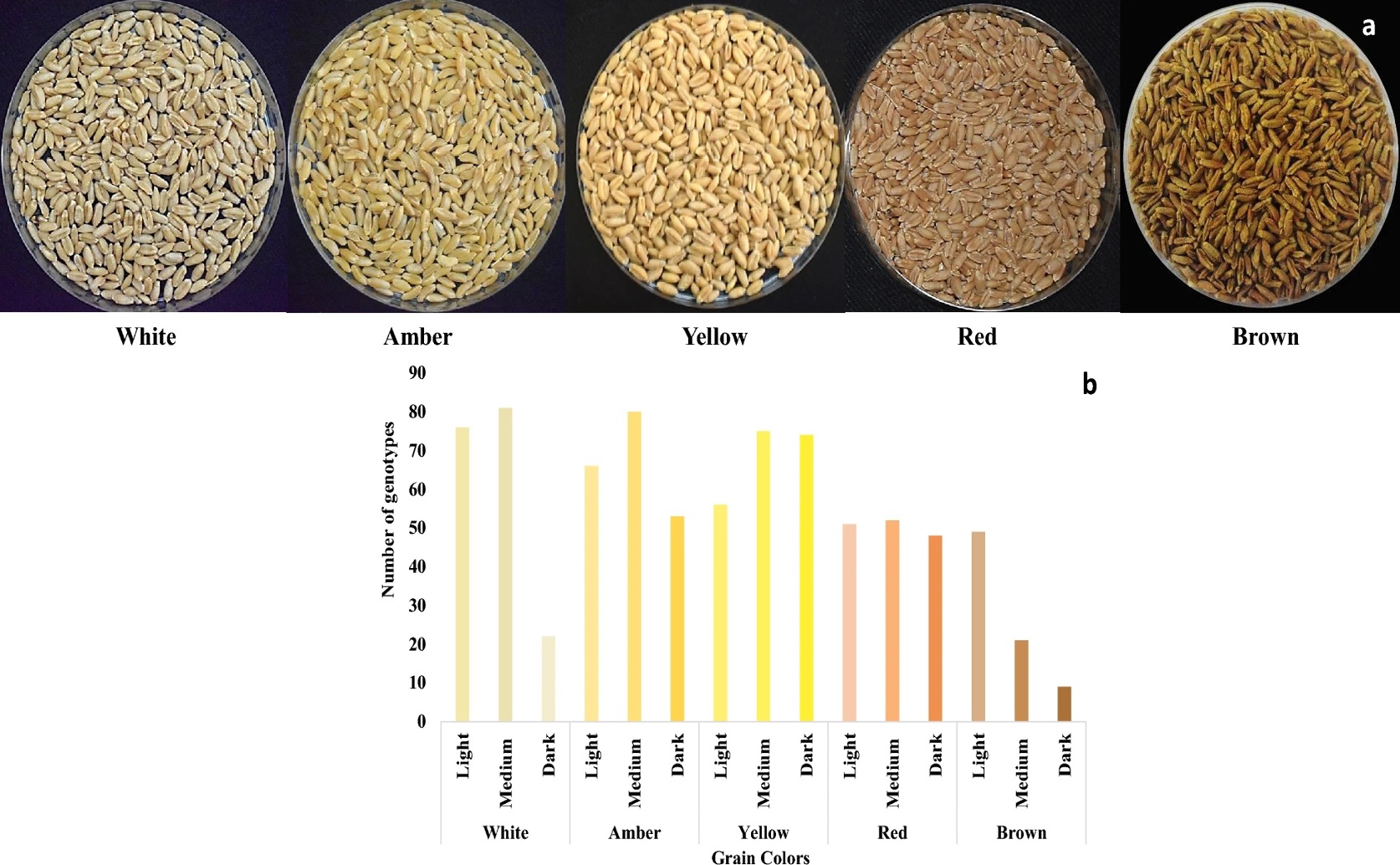
Visual classification of 813 genotypes of wheat (Triticum spp.) and triticale (Triticosecale) demonstrated a wide diversity of grain colors (a) with a prevalence of lighter amber and yellow phenotypes (b), which this study identifies as a reliable morphological marker for high iron and zinc concentrations.

Image adapted from: Hakeem et al. / CC BY (Source)

Key Findings

  • At MNS University of Agriculture, researchers found that lighter-colored wheat grains naturally contain higher levels of iron and zinc
  • They showed these nutrient traits are strongly inherited, meaning breeders can improve wheat nutrition without reducing yield
  • A standout bread wheat variety, TA87, combined high nutrient content, strong yield, and better mineral availability, proving promising for future biofortification
A recent study conducted by researchers at MNS University of Agriculture[1] addresses the global challenge of iron (Fe) and zinc (Zn) deficiencies that affect more than two billion people. These micronutrients are essential for human health, and their lack can lead to various health issues. In addition, the study investigates the role of phytic acid (PA), a phosphorus storage molecule found in grains, which binds to Fe and Zn, reducing their bioavailability—meaning the body’s ability to absorb them. The research explores ways to use natural plant variation to enhance the nutritional content of staple food crops while maintaining satisfactory yields. The study evaluated a large collection of 813 diverse genotypes, including varieties of bread wheat (Triticum aestivum), durum wheat (Triticum durum), and triticale (a wheat-rye hybrid). Initially, the researchers used grain colour as an easily observable trait to screen the collection. Grain colour has been previously linked to nutrient composition, including the concentration of essential minerals. Based on this initial screening, the research team selected a core collection of 26 genotypes for a detailed analysis of micronutrient levels over two growing seasons. From this subset, five contrasting genotypes were chosen to specifically estimate how bioavailable Fe and Zn were in the grain. Results revealed significant variation in the concentration of Fe and Zn across the genotypes. Iron levels ranged from 31 to 54 mg per kilogram of grain while zinc levels varied from 15 to 38 mg per kilogram. Importantly, the study found that the traits related to grain nutrient concentration had high heritability estimates (over 80%) and substantial genetic advance, meaning that these traits are strongly controlled by genetic factors. This suggests that it is possible to breed new wheat varieties with enhanced micronutrient contents consistently. The researchers also identified a strong positive correlation between grain colour and micronutrient levels, implying that grain colour might serve as a simple, visual marker for higher Fe concentrations. In addition to grain nutrient features, the study examined morphophysiological and yield traits, such as plant height and grain yield, which had moderate heritability. This indicates that both genetic and environmental factors influence these traits. The ability to improve grain micronutrient concentration without compromising yield is particularly significant because it means that farmers can produce nutritionally richer crops without facing a penalty in productivity. The study compared these results across different crop types. Bread wheat showed the highest overall performance with Fe concentrations between 34 and 52 mg/kg and Zn levels between 25 and 37 mg/kg, along with favourable molar ratios of PA:Fe (5 to 5.3) and PA:Zn (7 to 7.4). Triticale and durum wheat also showed promise, though their PA ratios were slightly higher, indicating a modest reduction in the bioavailability of Fe and Zn. One standout genotype, identified as TA87 (coded as E‑1), exhibited amber/yellow grain colour, high yield (5020 kg/ha), high levels of Fe (51 mg/kg) and Zn (37 mg/kg), and low PA:Fe and PA:Zn molar ratios. This genotype is being recommended for further breeding efforts aimed at combating micronutrient malnutrition. The findings of this research provide a potential roadmap for biofortification breeding programs. Biofortification is the process of breeding food crops to increase their nutritional value, a strategy that has been discussed widely[2]. Previous studies have also highlighted that dietary deficiencies in essential minerals are a global problem, with efforts like agronomic approaches and genetic enhancements to biofortify crops showing promise[2]. However, past research has sometimes indicated that improvements in yield, such as those associated with recently adopted semi-dwarf varieties of wheat, could be linked to lower mineral concentrations in grains[3][4]. In contrast, the current study from MNS University of Agriculture demonstrates that it is feasible to enhance the bioavailable Fe and Zn levels while sustaining yield performance. The researchers show that proper choice of genetic background can mitigate the negative trade-offs that were observed with semi-dwarf varieties in earlier work[3][4]. The method used in this study is straightforward and practical for plant breeders. By using grain colour as an initial selection marker, farmers and researchers can more easily identify candidate varieties with naturally higher mineral content. When grain nutrient concentration is corroborated with further genetic and biochemical analyses, the approach simplifies the selection process. The clear genetic control over the micronutrient traits, as evidenced by the high heritability values, indicates that improvements in these traits can be reliably passed on to future generations, supporting long-term efforts to enhance the nutritional quality of staple crops. Overall, this study not only supports the previous findings regarding nutrient deficiencies and the challenges in breeding for micronutrient enrichment[2] but also builds on them. It shows that it is possible to balance the benefits of high yield and nutrient density without the need for compromising one over the other. In doing so, it provides a valuable strategy for improving food security and public health on a global scale by tackling micronutrient malnutrition with targeted breeding efforts.

AgricultureNutritionGenetics

References

Main Study

1) Harnessing genetic diversity in wheat to enhance grain nutrition and yield for biofortification breeding

Published 4th June, 2025

https://doi.org/10.1186/s40659-025-00606-5


Related Studies

2) Biofortification of crops with seven mineral elements often lacking in human diets--iron, zinc, copper, calcium, magnesium, selenium and iodine.

https://doi.org/10.1111/j.1469-8137.2008.02738.x


3) Evidence of decreasing mineral density in wheat grain over the last 160 years.

https://doi.org/10.1016/j.jtemb.2008.07.002


4) Genetic impact of Rht dwarfing genes on grain micronutrients concentration in wheat.

https://doi.org/10.1016/j.fcr.2017.09.030


Related Articles

An unhandled error has occurred. Reload 🗙