DNA Sequencing of a New Wilt Disease Fungus

Jim Crocker
3rd May, 2025

DNA Sequencing of a New Wilt Disease Fungus

Functional gene annotation of the Verticillium dahliae strain (huangweibingjun) successfully assigned putative functions to the majority of its genes, with significant overlap across major databases and a core set of 2,761 genes commonly identified by the KEGG, KOG, GO, Swissprot, eggNOG, and NR databases.

Image adapted from: Ninkuu et al. / CC BY (Source)

Key Findings

  • In Henan, China, scientists sequenced a new fungal strain harming cotton, which causes significant crop losses
  • The fungus’s genome includes many proteins that break down plant cell walls, helping it infect plants effectively
  • Understanding its genetics aids in developing strategies to manage and reduce crop diseases, boosting food security
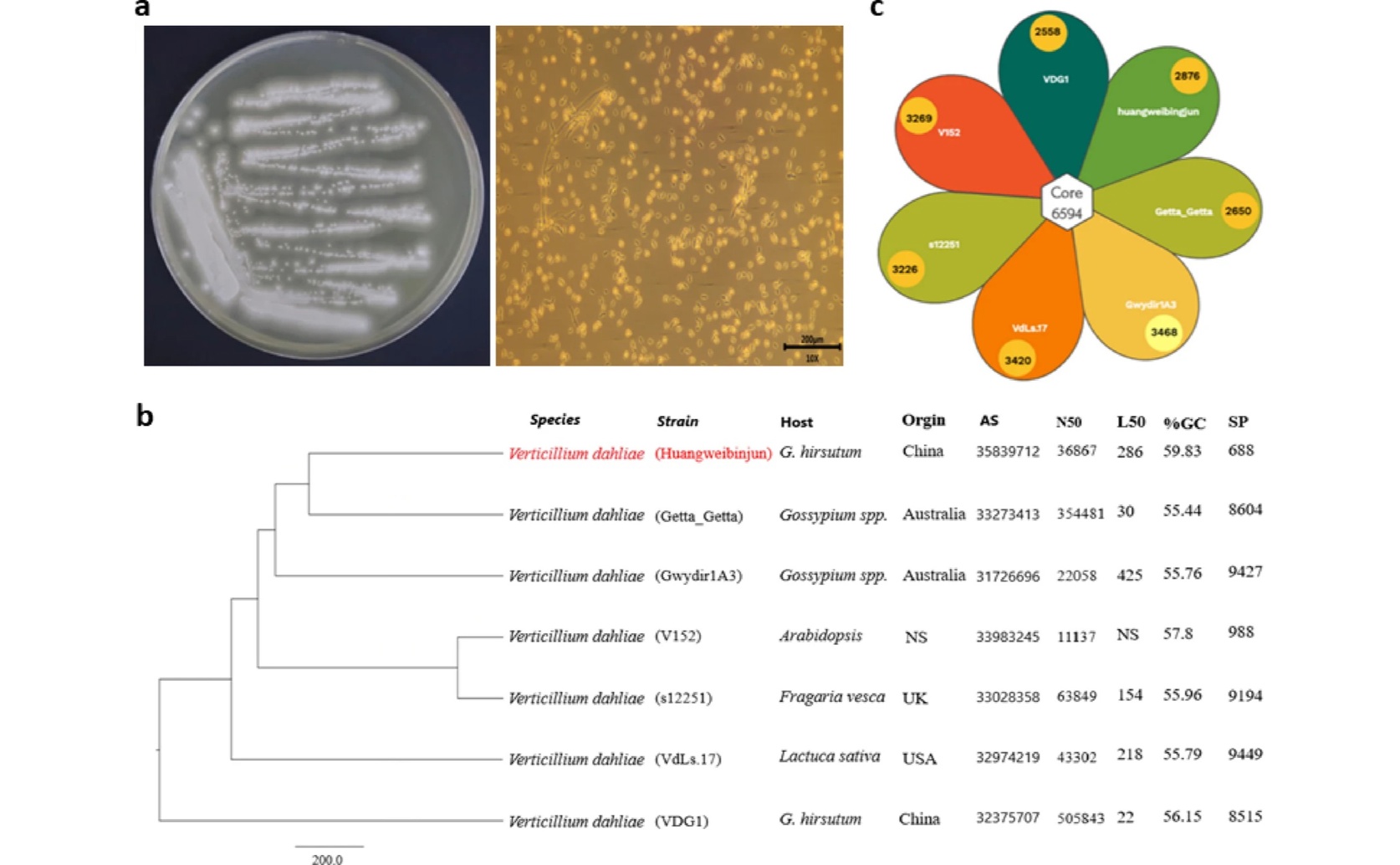
Plant diseases threaten global food security and ecosystem health, with fungal pathogens like Verticillium dahliae causing significant crop losses. In China, V. dahliae has been responsible for a 15–20% reduction in cotton yields[1]. Researchers at Henan University have sequenced the genome of a novel V. dahliae strain named huangweibingjun, isolated from diseased cotton roots in Henan province. The genome spans approximately 35.84 million base pairs and contains six chromosomes, featuring a high diversity of cell wall-degrading secretory proteins. These proteins are crucial for the fungus to penetrate plant cell walls, a common strategy among plant pathogens[2]. Understanding the genetic makeup of huangweibingjun provides insights into its pathogenicity. The genome analysis revealed several virulence-associated genes, which are instrumental in the fungus's ability to cause disease. Additionally, the strain has the capability to synthesize polyketides, terpenoids, and compounds derived from shikimic acid, and it may produce aflatoxins. Aflatoxins are toxic substances that can contaminate crops and pose health risks to humans and animals. This study builds on previous research that highlights the threat of plant pathogenic fungi to agriculture and the environment[3]. Climate change exacerbates these threats by altering pathogen behavior and expanding their geographical range, increasing the risk of disease outbreaks. By sequencing the huangweibingjun genome, researchers aim to better predict and manage the spread of V. dahliae under changing climate conditions. Moreover, the findings align with studies on plant defenses against fungal pathogens. For instance, previous research has demonstrated that plants can produce microRNAs that silence fungal genes essential for virulence[4]. Understanding the genetic mechanisms of V. dahliae enhances the potential for developing targeted resistance strategies in crops. The diverse array of cell wall-degrading enzymes identified in the huangweibingjun genome suggests multiple points of intervention for enhancing plant resistance. The methods used in this study included advanced genome sequencing techniques to accurately map the genetic structure of the huangweibingjun strain. Preliminary metabolic pathway predictions were conducted to identify the biosynthetic capabilities of the fungus, which is essential for understanding its interactions with host plants and its potential to produce harmful compounds. By expanding the genomic knowledge of V. dahliae, this research contributes to the broader effort of mitigating plant disease risks. Integrating these genetic insights with eco-evolutionary theories, as suggested in earlier studies, could improve predictions of pathogen spread and inform effective management practices[3]. Collaboration between scientists and policy-makers is crucial to implement monitoring systems and develop strategies that ensure long-term agricultural productivity and ecosystem sustainability. In summary, the genome sequencing of the huangweibingjun strain provides a foundational resource for further investigations into the pathogenic mechanisms of V. dahliae. This knowledge is essential for developing innovative approaches to protect crops and secure food production in the face of evolving environmental challenges.

AgricultureBiotechGenetics

References

Main Study

1) Genome sequencing of a novel Verticillium dahliae strain (huangweibingjun)

Published 30th April, 2025

https://doi.org/10.1038/s41598-025-99279-z


Related Studies

2) Plant cell wall-degrading enzymes and their secretion in plant-pathogenic fungi.

https://doi.org/10.1146/annurev-phyto-102313-045831


3) Climate change impacts on plant pathogens, food security and paths forward.

https://doi.org/10.1038/s41579-023-00900-7


4) Cotton plants export microRNAs to inhibit virulence gene expression in a fungal pathogen.

https://doi.org/10.1038/nplants.2016.153


Related Articles

An unhandled error has occurred. Reload 🗙