
Exploring Zebularine's Ability to Enhance Crop Growth and Development
Jenn Hoskins
11th January, 2025


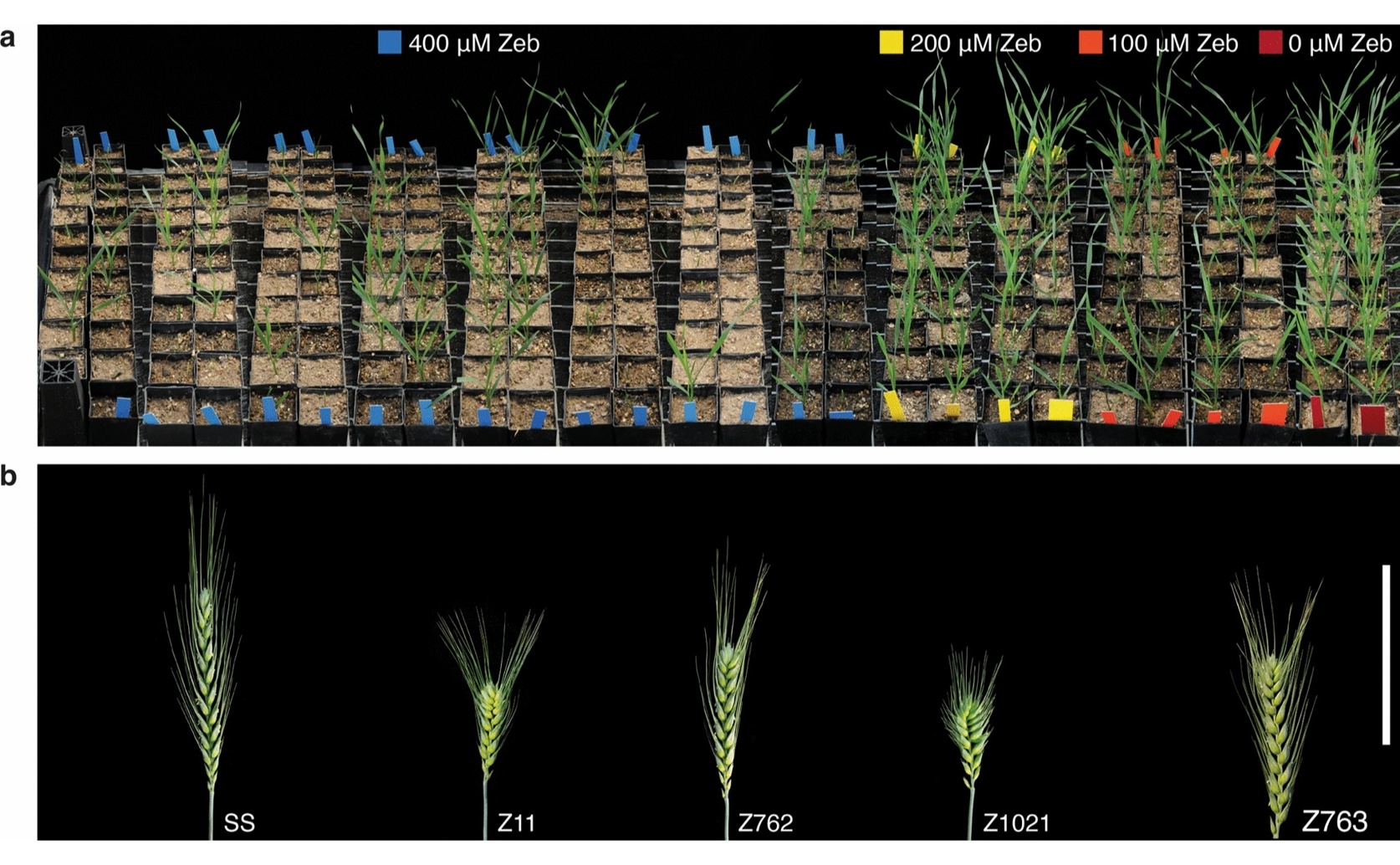
Although zebularine treatment reduced the overall vigor of wheat seedlings (a), it also induced a heritable, compact "clubhead" spike phenotype in several plant families (b), which this study revealed was caused by major chromosomal aberrations rather than the intended epigenetic changes.
Key Findings
- The study by CSIRO explored modifying gene regulation in wheat by disrupting DNA methylation using zebularine (Zeb)
- Zeb-treated wheat plants showed increased spikelet density, suggesting potential yield improvements
- However, Zeb treatment caused significant chromosomal abnormalities, making it unsuitable for breeding purposes
References
Main Study
1) Testing the potential of zebularine to induce heritable changes in crop growth and development.
Published 10th January, 2025
https://doi.org/10.1007/s00122-024-04799-3
Related Studies
2) APETALA 2-like genes AP2L2 and Q specify lemma identity and axillary floral meristem development in wheat.
3) Epigenetic regulation of antagonistic receptors confers rice blast resistance with yield balance.
Related Articles
 4th May, 2024 | Jenn Hoskins