How Farm Loans Influence Food Security in Major Grain Regions

Jim Crocker
1st May, 2025

How Farm Loans Influence Food Security in Major Grain Regions

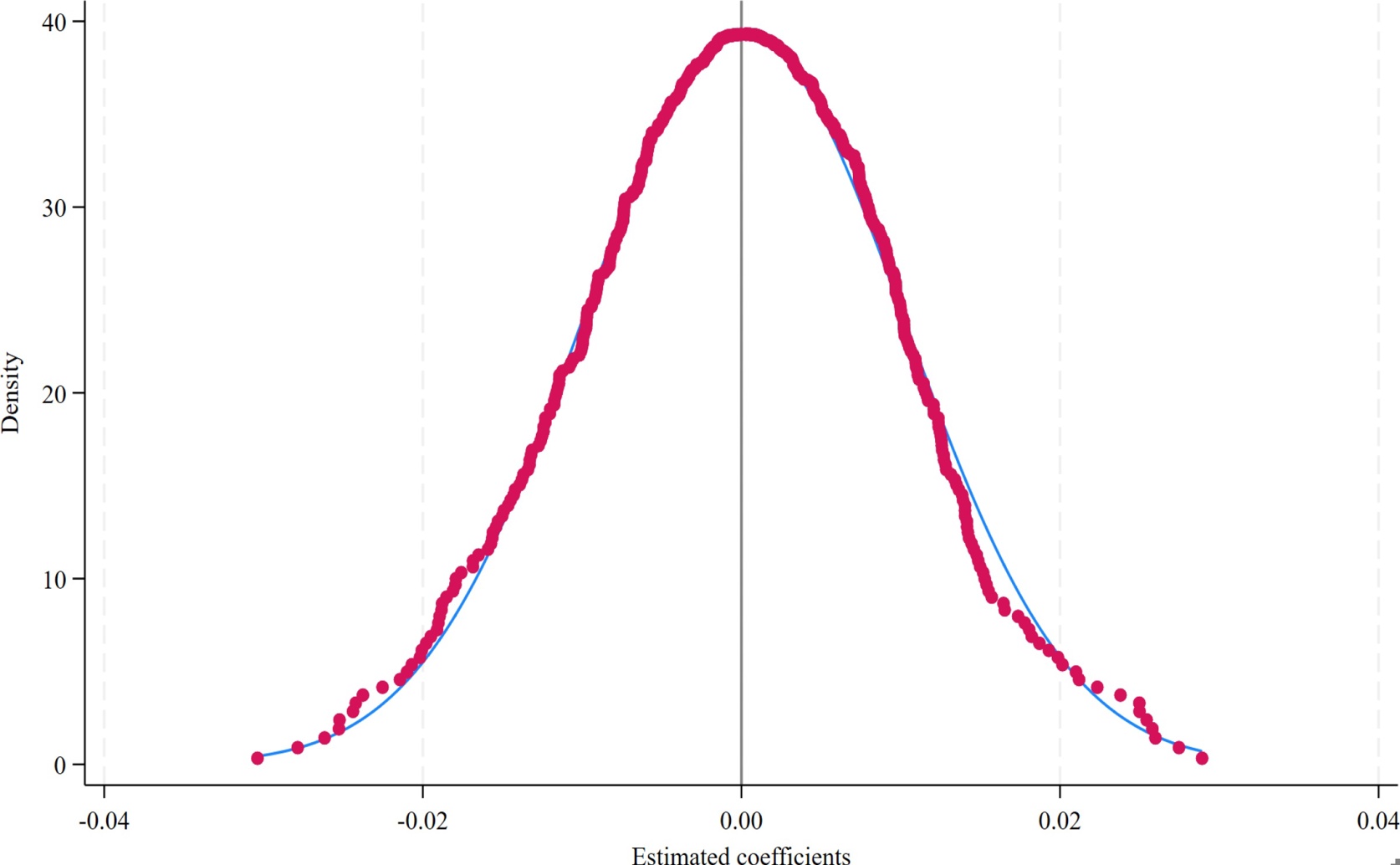
This placebo test confirms that the significant positive impact of the farmland mortgage loan policy on food security is a robust finding, as the actual result falls far outside the distribution of outcomes from 500 random policy simulations.

Image adapted from: Dong et al. / CC BY (Source)

Key Findings

  • In Hangzhou, China, farmland mortgage loans significantly boosted food security in major grain-producing regions
  • The policy enhanced farm mechanization and increased financial support, leading to higher agricultural productivity
  • Benefits were strongest in resource-rich and economically developed areas, showing varied regional impacts
Food security is a critical issue that underpins national stability and the well-being of populations worldwide. In China, a country that has made remarkable strides in increasing food production over the past four decades, ensuring sustainable and secure food supplies remains a top priority. A recent study conducted by researchers at Zhejiang A&F University in Hangzhou, China, explores a novel policy approach to enhance food security through farmland management rights mortgage loans (FMRML)[1]. The study analyzed data from 1,234 counties in China’s primary grain-producing regions between 2010 and 2021. Using a difference-in-differences (DID) model, the researchers examined the impact of the FMRML pilot policy on food security. The results were promising: the policy significantly improved food security in major grain-producing areas. These findings were verified through rigorous parallel trends and placebo tests, ensuring the reliability of the conclusions. One of the key mechanisms through which the FMRML policy enhances food security is by increasing rural mechanization. Mechanization involves using machinery to perform agricultural tasks, which can lead to higher productivity and more efficient farming practices. Additionally, the policy boosts financial support in rural areas, making it easier for farmers to invest in better equipment, seeds, and other necessary inputs. This financial empowerment aligns with findings from a study on agro-financing in Nigeria, which showed that increased access to agricultural finance leads to higher food production[2]. Just as improved financial conditions in Nigeria facilitated greater agricultural yields, the FMRML policy in China provides similar benefits by enabling farmers to modernize and optimize their farming operations. The study also conducted a heterogeneity analysis, revealing that the effects of the FMRML policy vary based on regional resource endowments, levels of economic development, and farmland tenure systems. This means that the policy’s effectiveness depends on local conditions, such as the availability of natural resources, the economic status of the region, and how land ownership is structured. By tailoring policies to specific regional contexts, policymakers can maximize the benefits of FMRML and ensure that food security is robust across diverse areas. These insights build on previous research highlighting the importance of sustainable agricultural practices. For instance, earlier studies have shown that China’s agricultural advancements have come with significant environmental costs, particularly due to nitrogen losses that lead to air and water pollution, greenhouse gas emissions, and adverse effects on human health[3]. The FMRML policy offers a complementary approach by not only boosting food production but also promoting sustainable practices that can mitigate environmental damage. By supporting financial mechanisms that encourage efficient and environmentally friendly farming, the policy helps balance the need for high yields with the imperative to protect natural resources and public health. Moreover, the economic analysis from the main study indicates that the benefits of implementing the FMRML policy far exceed the costs. The comprehensive approach of combining financial support with mechanization leads to substantial improvements in grain yields and nitrogen use efficiency, while also reducing nitrate leaching, runoff, and greenhouse gas emissions. These multifaceted benefits align with the economic advantages observed in[3], where improved nitrogen management strategies in China provided greater benefits than their associated costs. The research from Zhejiang A&F University not only advances our understanding of how financial tools can enhance food security but also offers valuable lessons for other countries facing similar challenges. Policies that allow farmers to mortgage their farmland management rights can provide the necessary financial flexibility to invest in sustainable and productive agricultural practices. This approach is particularly relevant in the context of global efforts to achieve the Sustainable Development Goals, especially Goal 2, which aims to end hunger, achieve food security, and promote sustainable agriculture[2]. In conclusion, the study from Zhejiang A&F University demonstrates that farmland management rights mortgage loans are an effective policy tool for enhancing food security in China’s major grain-producing regions. By increasing rural mechanization and financial support, the policy not only boosts agricultural productivity but also supports sustainable farming practices. The positive outcomes of this policy reinforce the importance of integrated approaches that consider both economic and environmental factors in agricultural policy-making. As countries around the world seek to improve their food security and sustainable agriculture practices, the findings from this study provide a valuable framework for developing effective and economically viable policies.

AgricultureNutritionHealth

References

Main Study

1) How does the farmland management rights mortgage loan affect food security: Based on the evidence of major grain producing areas in China

Published 28th April, 2025

https://doi.org/10.1371/journal.pone.0313881


Related Studies

2) Agro-financing and food production in Nigeria.

https://doi.org/10.1016/j.heliyon.2020.e04001


3) Air quality, nitrogen use efficiency and food security in China are improved by cost-effective agricultural nitrogen management.

https://doi.org/10.1038/s43016-020-00162-z


Related Articles

An unhandled error has occurred. Reload 🗙