Cystatin Antibodies Interfere with Ovary Development in Ticks

Greg Howard
10th May, 2025

Cystatin Antibodies Interfere with Ovary Development in Ticks

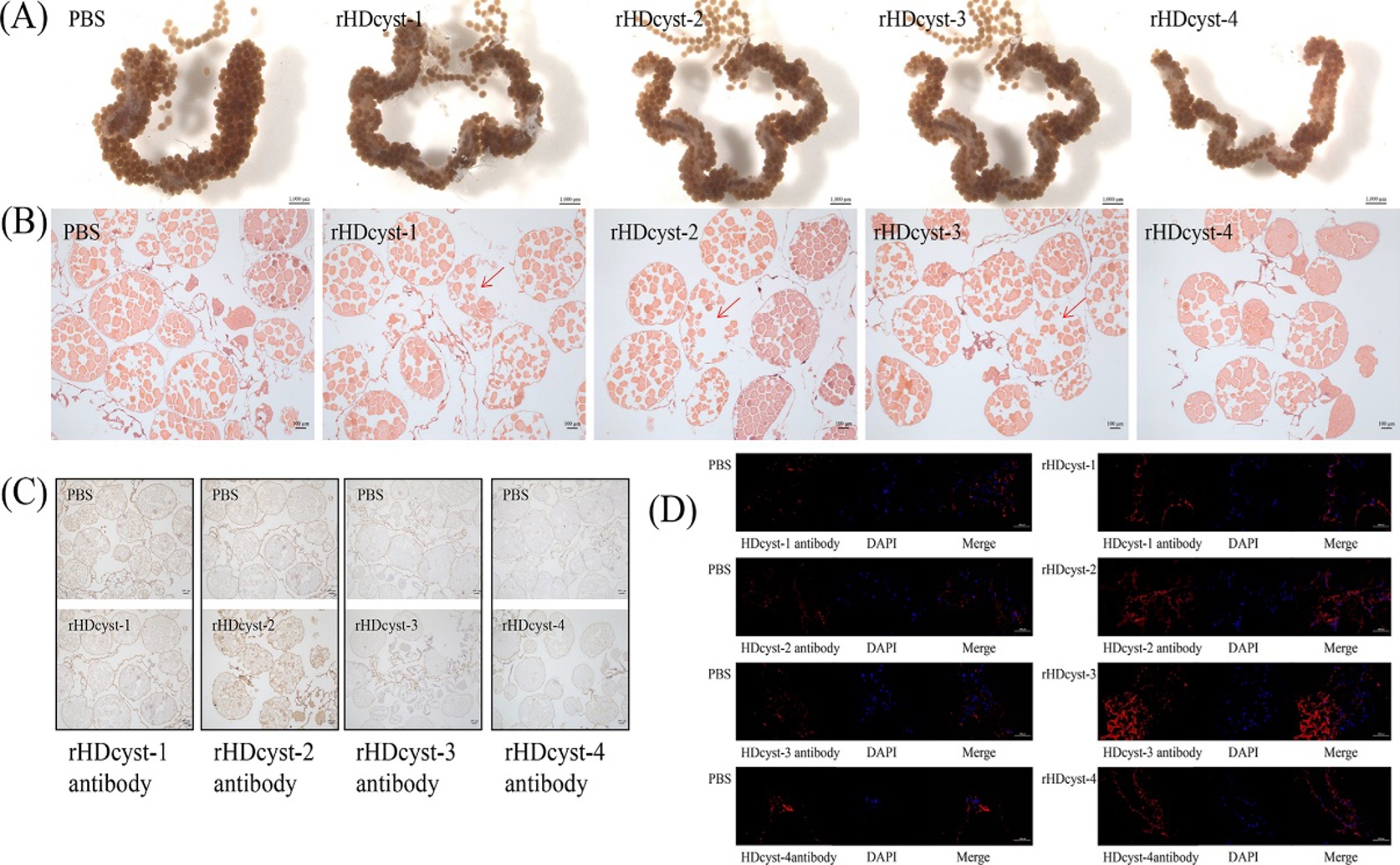
Treatment with cystatin antibodies significantly impaired Haemaphysalis doenitzi ovarian development by reducing egg numbers and size (a) and causing tissue rupture (b), with antibody localization within the ovaries confirmed via immunohistochemical (c) and immunofluorescence assays (d).

Image adapted from: Zhang et al. / CC BY (Source)

Key Findings

  • In Shijiazhuang, China, scientists developed a vaccine that weakens ticks by targeting their reproductive organs
  • The vaccine’s antibodies disrupt essential enzymes in ticks, reducing their ability to detoxify and reproduce
  • This method increases tick mortality, providing a promising new way to control tick populations and prevent disease
Ticks pose significant threats to both human and animal health by transmitting various diseases. The Haemaphysalis doenitzi tick, in particular, has been increasingly identified across China, heightening concerns about its role in spreading zoonotic diseases. Traditional methods of controlling tick populations primarily involve chemical agents, such as pyrethrins, which have been effective but raise concerns about resistance and environmental impact[2]. Researchers at Hebei Normal University in Shijiazhuang, China, have made strides in developing alternative tick control strategies through the use of anti-tick vaccines[1]. These vaccines work by stimulating the host's immune system to produce antibodies that interfere with the tick's growth and reproduction. The study focused on understanding how cystatin antibodies affect the ovaries of Haemaphysalis doenitzi ticks, providing insights into a potential method for reducing tick populations and mitigating disease transmission. In their investigation, the team conducted histological analyses to observe the structural changes in tick ovaries exposed to cystatin antibodies. They found a significant reduction in egg production and noticeable damage to ovarian tissues. This suggests that the antibodies disrupt the normal functioning of the tick's reproductive system. Immunofluorescence experiments further confirmed that cystatin proteins are highly expressed within the tick ovaries, indicating their crucial role in tick physiology. To delve deeper into the molecular mechanisms, the researchers employed proteomics and phosphoproteomics techniques, identifying numerous proteins whose expression was altered by the presence of cystatin antibodies. Specifically, they noted changes in proteins involved in ribosome activity, actin cytoskeleton regulation, RNA transport, the TCA cycle, drug metabolism, and mTOR signaling pathways. Among these, the study highlighted the high expression of tropomyosin and the low expression of glutathione S-transferase (GST) during ovarian detoxification processes. Enzyme activity assays revealed that GST activity was significantly reduced in ticks immunized with cystatin antibodies, suggesting impaired detoxification capabilities. The implications of these findings are substantial. By disrupting key molecular pathways, cystatin antibodies effectively hinder the tick's ability to detoxify harmful substances and reproduce. This aligns with earlier research showing that cystatins play a vital role in the detoxification processes of ticks treated with pesticides like cypermethrin and λ-cyhalothrin, which also affect enzyme activities related to detoxification[2]. Moreover, the reduction in GST activity observed in the current study echoes findings from studies on other natural compounds. For instance, essential oils from plants such as Satureja montana and Callistemon viminalis have been shown to disrupt the reproductive systems of ticks by affecting similar biochemical pathways[3][4]. The study also utilized RNA interference (RNAi) to knock down specific genes, HD-TPMa and HD-GSTa, which further demonstrated increased mortality rates in ticks treated with cystatin antibodies. This genetic approach provided additional evidence that targeting specific proteins involved in detoxification and structural integrity can be an effective strategy for tick control. Integrating these findings with previous research offers a comprehensive view of how natural compounds and targeted biological interventions can complement traditional chemical methods. While chemical agents like pyrethrins have been effective, their overuse has led to resistance, necessitating alternative approaches[2]. The use of natural compounds, such as essential oils, and biological strategies like anti-tick vaccines, presents a promising avenue for sustainable tick management. Additionally, the identification of multiple tick species on Chongming Island, including H. doenitzi, underscores the need for broad-spectrum control measures[5]. Public health practices must adapt to the evolving tick populations by incorporating these new strategies to prevent the spread of tick-borne diseases effectively. In conclusion, the research from Hebei Normal University provides valuable insights into the molecular mechanisms by which cystatin antibodies impede tick reproduction and survival. By targeting critical enzymes and pathways involved in detoxification and ovarian function, this approach offers a novel and effective method for controlling tick populations. When combined with other natural and chemical strategies, it holds the potential to significantly reduce the burden of tick-borne diseases on human and animal populations.

BiochemAnimal Science

References

Main Study

1) Cystatin antibodies interfere with ovary development in Haemaphysalis doenitzi (Acari: Ixodidae)

Published 7th May, 2025

https://doi.org/10.1371/journal.pntd.0013064


Related Studies

2) Functional analysis of novel cystatins from Haemaphysalis doenitzi and evaluation of their roles in cypermethrin and λ-cyhalothrin resistance.

https://doi.org/10.1016/j.pestbp.2024.106075


3) Cytotoxic effects of Satureja montana L. essential oil on oocytes of engorged Rhipicephalus microplus female ticks (Acari: Ixodidae).

https://doi.org/10.1002/jemt.23693


4) Toxic effect of Callistemon viminalis essential oil on the ovary of engorged Rhipicephalus microplus female ticks (Acari: Ixodidae).

https://doi.org/10.1007/s10493-023-00809-z


5) Molecular Identification and Genetic Characterization of Public Health Threatening Ticks - Chongming Island, China, 2021-2022.

https://doi.org/10.46234/ccdcw2023.156


Related Articles

An unhandled error has occurred. Reload 🗙