Important Snakes: How Climate Influences Russell’s Viper Venom

Jim Crocker
13th April, 2025

Important Snakes: How Climate Influences Russell’s Viper Venom

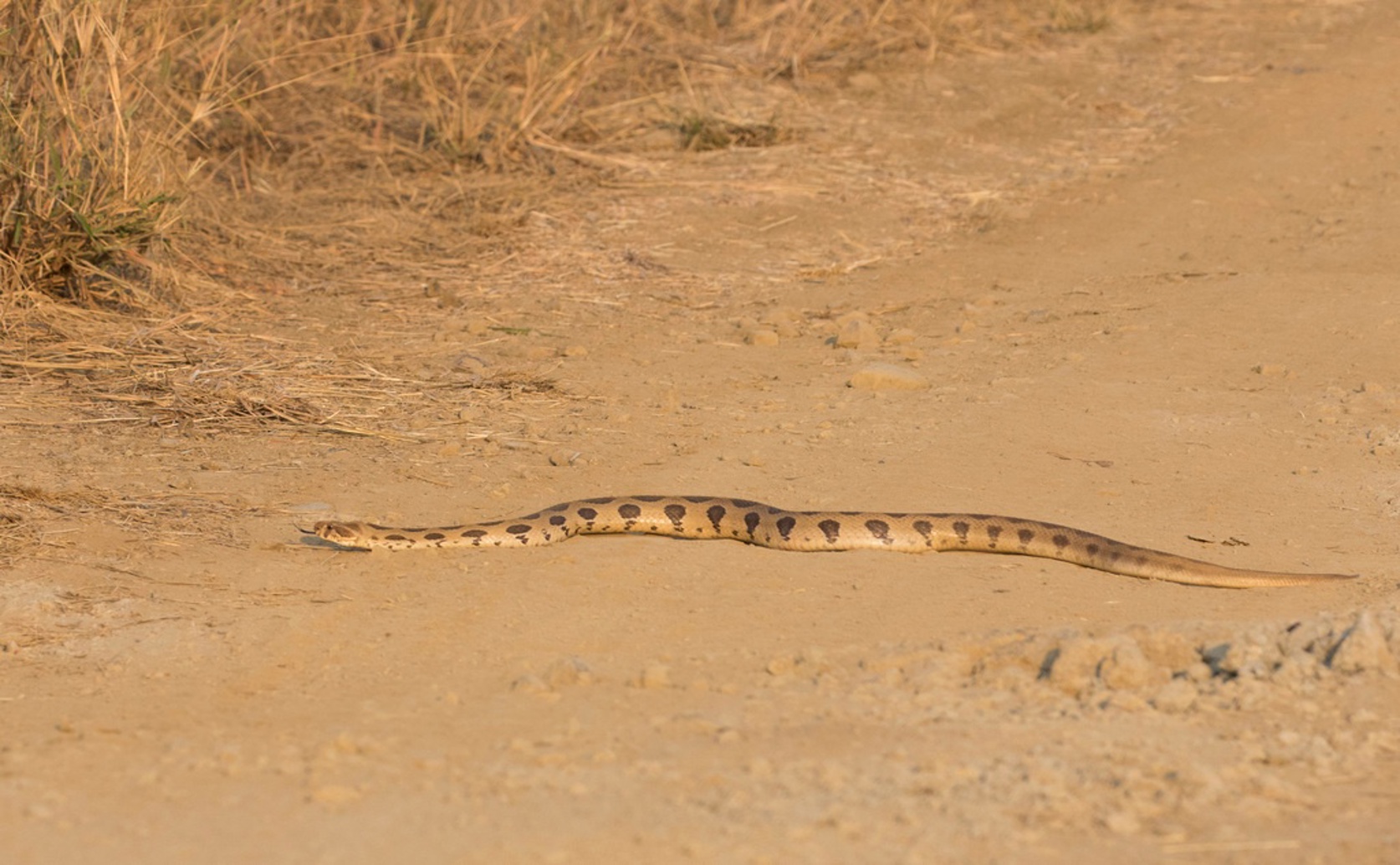
Russell's Viper (Daboia russelii)

Photo adapted from: Ramesh Shenai Jr. / CC BY (Source)

Key Findings

  • *In India, researchers discovered that temperature and rainfall significantly affect the venom of Russell’s vipers.*
  • *These climate-driven venom differences lead to varied symptoms in snakebite victims, impacting treatment outcomes.*
  • *The study produced maps predicting venom types across regions, enabling more effective, region-specific antivenom therapies.*
Snakebites pose a significant public health challenge, particularly in regions like the Indian subcontinent where species such as Russell’s viper (Daboia russelii) are prevalent. Each year, millions suffer from envenomations that can lead to severe health complications or even death. A key factor in the variability of snakebite effects lies in the composition of snake venoms, which can differ greatly between populations of the same species. Understanding what influences these differences is crucial for developing effective treatments. A recent study conducted by researchers at the Indian Institute of Science Bangalore and Universidade Nilton Lins in Brazil[1] investigates how environmental factors shape the venom of Russell’s vipers across India. By analyzing 115 venom samples from various regions, the study aimed to uncover the relationship between climate conditions and venom functionality. Venoms are complex mixtures of toxins, and their composition can vary based on geographic location[2][3]. This variation affects how venom interacts with the body, leading to different symptoms in snakebite victims. Previous research has shown that factors like diet and ecological interactions can drive changes in venom composition[4][5]. Building on this knowledge, the current study focused on how abiotic factors—specifically temperature and precipitation—impact the venom's enzymatic activities. The researchers measured the activity of major venom enzymes, such as proteases and phospholipases, which play critical roles in immobilizing and digesting prey. These enzymes are also responsible for many of the harmful effects observed in snakebite victims. By using multiple regression models, the study assessed how historical climate data correlated with variations in venom activity. Additionally, predictive models were created to map venom types across different regions of India. The findings revealed that both temperature and precipitation significantly influence the enzymatic activities of Russell’s viper venom. Areas with higher temperatures and varying precipitation levels showed distinct venom profiles, suggesting that these climatic factors drive the functional diversity of venom. This aligns with previous studies that highlighted the role of environmental pressures in shaping venom composition[2][4]. Moreover, the study’s predictive maps are a valuable tool for medical professionals. By identifying regions with specific venom types, healthcare providers can tailor antivenom treatments more effectively, improving clinical outcomes for snakebite victims. This approach addresses the challenges posed by venom variability, which can lead to treatment failures if not properly accounted for. The research also contributes to the broader field of venomics, which uses advanced techniques like genomics and proteomics to study venom composition[3]. Understanding the environmental influences on venom not only aids in medical treatment but also provides insights into the evolutionary adaptations of venomous snakes. As venom composition is closely tied to a snake’s diet and ecological interactions, climate-induced changes in venom can reflect shifts in these ecological dynamics[4][5]. In conclusion, the study by the Indian Institute of Science Bangalore and Universidade Nilton Lins underscores the importance of considering environmental factors in venom research. By linking climate conditions to venom functionality, the research offers a pathway to more effective snakebite management and enhances our understanding of venom evolution. This integrative approach, combining ecological data with advanced venom analysis, paves the way for future studies aimed at mitigating the impacts of snakebites and improving therapeutic strategies.

BiochemEcologyAnimal Science

References

Main Study

1) Significant Serpents: Predictive Modelling of Bioclimatic Venom Variation in Russell’s Viper

Published 10th April, 2025

https://doi.org/10.1371/journal.pntd.0012949


Related Studies

2) Causes and Consequences of Snake Venom Variation.

https://doi.org/10.1016/j.tips.2020.05.006


3) Ecological venomics: How genomics, transcriptomics and proteomics can shed new light on the ecology and evolution of venom.

https://doi.org/10.1016/j.jprot.2015.09.015


4) Diet and snake venom evolution.

Journal: Nature, Issue: Vol 379, Issue 6565, Feb 1996


5) Deconstructing a complex molecular phenotype: population-level variation in individual venom proteins in Eastern Massasauga Rattlesnakes (Sistrurus c. catenatus).

https://doi.org/10.1007/s00239-011-9437-4


Related Articles

An unhandled error has occurred. Reload 🗙