Using Oyster Shells to Connect Populations and Restore Habitats

Greg Howard
9th April, 2025

Using Oyster Shells to Connect Populations and Restore Habitats

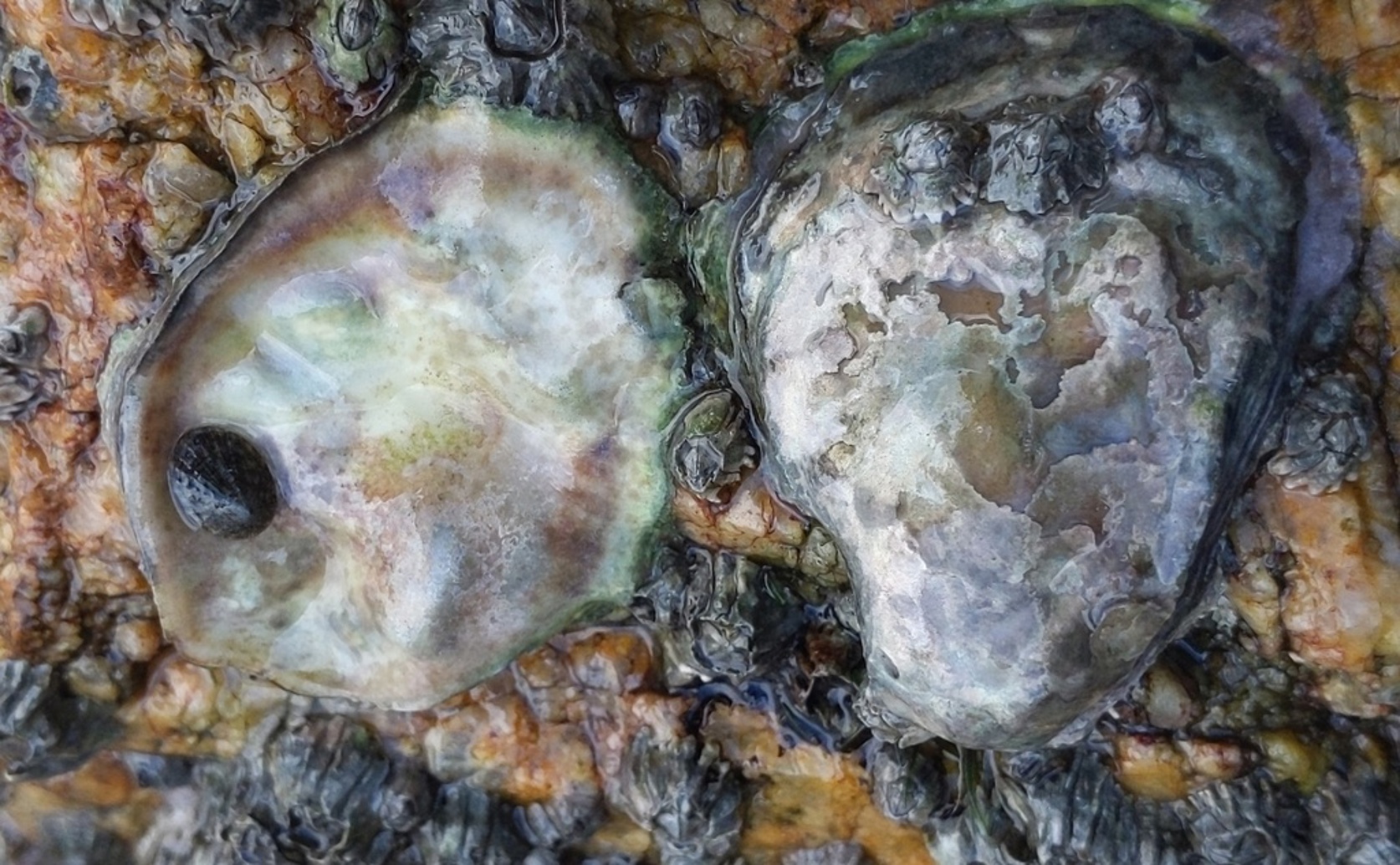
Olympia Oyster (Ostrea lurida)

Photo adapted from: Ken-ichi Ueda / CC BY (Source)

Key Findings

  • In Puget Sound, Washington, scientists used oyster shell chemistry to track the movement of Olympia oyster larvae
  • They accurately identified the larvae's regional origins about 75% of the time, enhancing restoration and conservation efforts
  • The chemical signatures remained stable throughout the breeding season, allowing consistent monitoring of oyster populations
Understanding the movement and connectivity of marine populations is crucial for effective conservation and restoration efforts. The Olympia oyster (Ostrea lurida), native to the west coast of North America, plays a significant ecological and cultural role in regions like Puget Sound, Washington. Unfortunately, Olympia oyster populations have faced severe declines, necessitating ongoing restoration projects. A recent study by the Washington Department of Fish and Wildlife[1] has made strides in addressing the challenges of restoring these vital populations by exploring innovative methods to track larval dispersal and connectivity. Larval stages of marine organisms, including oysters, are notoriously difficult to study due to their small size and the complexity of their behaviors and environmental interactions[2]. Effective restoration hinges on understanding where oyster larvae originate and where they settle, which influences the genetic diversity and resilience of restored populations. Previous research has highlighted the importance of population connectivity—the exchange of individuals between different populations—which is essential for maintaining healthy and sustainable populations[2]. The Washington Department of Fish and Wildlife's study focused on utilizing trace elemental “fingerprints” in oyster shells to trace the movement of larvae across different regions within Puget Sound. By collecting brooded larvae from eight sites grouped into three geographic regions, the researchers analyzed the chemical composition of oyster shells to identify distinct regional signatures. This method builds on earlier approaches that have used physical and chemical markers to study larval dispersal[2][3]. One of the significant findings of the study was the ability to distinguish between the different regions with approximately 75% accuracy based on the shell chemistry. This level of accuracy demonstrates the feasibility of using elemental fingerprinting to address questions related to connectivity among sub-basins within Puget Sound. Such precision in identifying larval sources is a substantial advancement, as previous methods often struggled with lower accuracy and reliability[2]. Additionally, the study found that the regional signatures in oyster shells remained stable within a single reproductive season. This temporal stability is crucial for implementing annual sampling regimes, allowing researchers to consistently monitor larval dispersal patterns over time. The ability to maintain consistent tracking methods year after year enhances the reliability of data used for restoration planning and management. However, the study also identified some limitations. Specifically, settlers of unknown origin collected at two restoration sites could not be confidently assigned to specific source regions. This uncertainty was likely due to methodological constraints, such as the resolution of the elemental fingerprinting technique or the complexity of larval dispersal patterns. Despite these challenges, the study serves as a proof of concept, laying the groundwork for further development and refinement of the technique. Incorporating findings from earlier studies, such as the relationship between gene flow and geographic distance[4], the current research emphasizes the importance of integrating multiple methods to achieve a comprehensive understanding of population dynamics. The study suggests that combining shell elemental fingerprinting with genetic approaches could provide a more robust picture of connectivity and dispersal patterns. This integrated approach aligns with the recommendations from previous research, which advocates for the use of diverse methodologies to capture both short-term dispersal events and long-term population dynamics[2]. Moreover, the study's focus on shell chemistry as a tracking tool parallels research in other marine species, such as the use of otolith chemistry in flatfish to determine nursery habitat use[3]. Both methods rely on the principle that environmental factors imprint chemical signatures on the hard parts of marine organisms, which can then be analyzed to infer movement patterns and habitat use. By demonstrating the applicability of shell elemental fingerprinting in oysters, the study expands the toolkit available for marine conservationists and restoration ecologists. The implications of this research are significant for restoration efforts in Puget Sound and similar ecosystems. By accurately tracking larval dispersal, restoration projects can be better designed to enhance connectivity between populations, ensuring genetic diversity and reducing the risk of local extinctions. Furthermore, understanding connectivity patterns helps in identifying critical habitats that contribute to the resilience of oyster populations, which is essential for long-term conservation success. Future research should focus on improving the resolution and accuracy of elemental fingerprinting techniques to overcome the current limitations in assigning settlers to their specific source regions. Additionally, integrating this method with genetic and demographic data will provide a more comprehensive understanding of population connectivity and resilience. As research institutions like the Washington Department of Fish and Wildlife continue to develop and refine these techniques, the potential for informed and effective restoration efforts grows. In conclusion, the study by the Washington Department of Fish and Wildlife represents a meaningful advancement in the field of marine conservation. By leveraging shell elemental fingerprinting, the research provides valuable insights into the dispersal and connectivity of Olympia oyster populations in Puget Sound. Building on earlier studies, this approach offers a promising avenue for enhancing restoration strategies, ensuring the recovery and sustainability of this culturally and ecologically important native oyster species.

BiochemEcologyMarine Biology

References

Main Study

1) Larval shell chemistry of the Olympia oyster (Ostrea lurida) in Puget Sound, WA to assess population connectivity and restoration planning

Published 8th April, 2025

https://doi.org/10.1371/journal.pone.0320136


Related Studies

2) Recent progress in understanding larval dispersal: new directions and digressions.

https://doi.org/10.1093/icb/icj024


3) Spatial and temporal patterns in the contribution of fish from their nursery habitats.

https://doi.org/10.1007/s00442-009-1282-4


4) ISOLATION BY DISTANCE IN EQUILIBRIUM AND NON-EQUILIBRIUM POPULATIONS.

https://doi.org/10.1111/j.1558-5646.1993.tb01215.x


Related Articles

An unhandled error has occurred. Reload 🗙