Beneficial Microbe Changes Help Coral Larvae Grow Stronger

Jim Crocker
14th January, 2025

Beneficial Microbe Changes Help Coral Larvae Grow Stronger

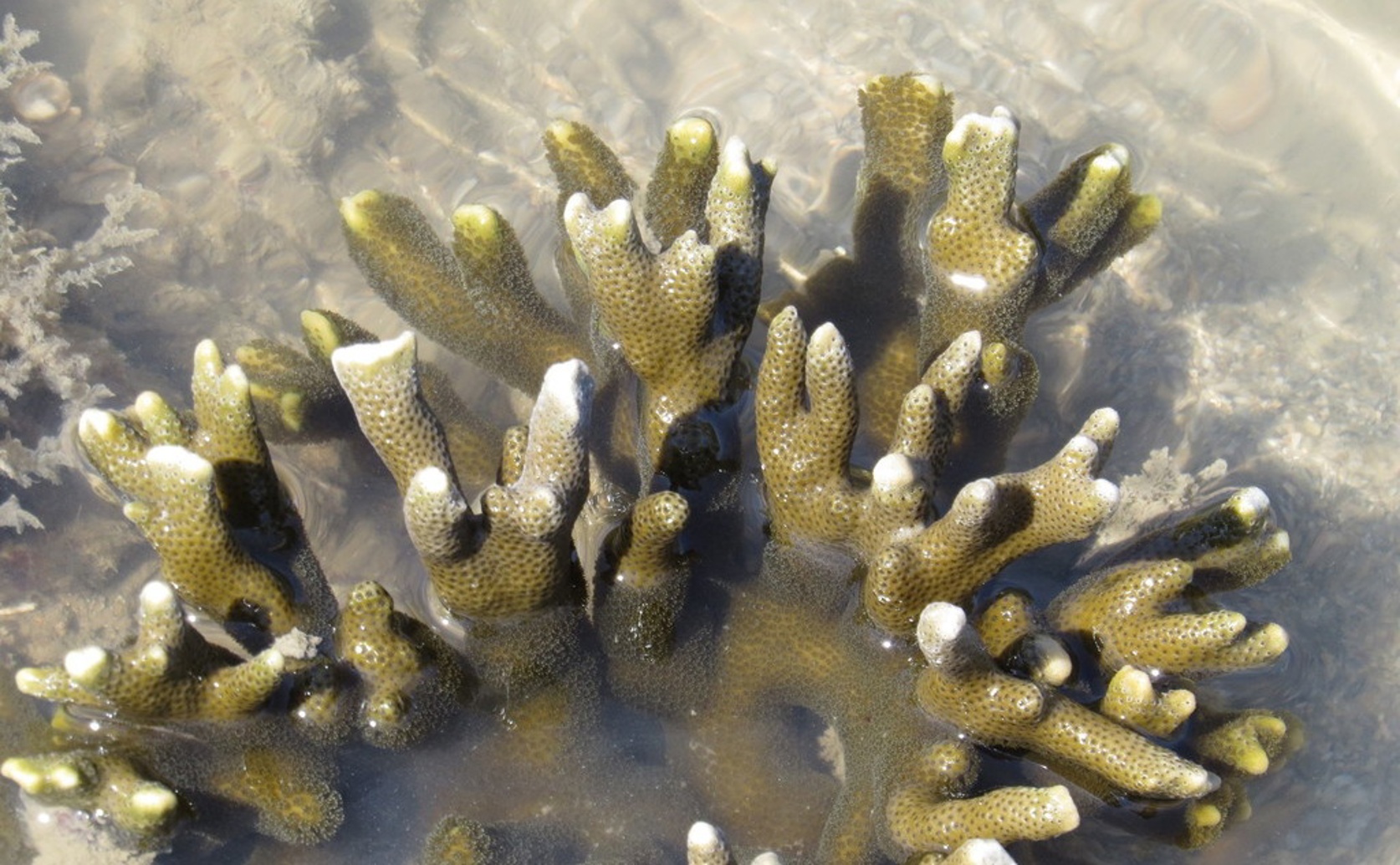
Montipora digitata

Photo adapted from: coenobita / CC BY (Source)

Key Findings

  • Researchers at the University of Southern California studied how changes in symbiont communities might help young corals acclimate to heat stress
  • Heat stress negatively affected coral growth and survival, with larvae showing changes in their symbiont communities to favor more heat-tolerant symbionts
  • Juvenile corals experienced rapid mortality under heat stress and did not show changes in their symbiont communities, making them more vulnerable to warming temperatures
Coral reefs are vital marine ecosystems, but they are increasingly threatened by rising ocean temperatures. The symbiotic relationship between reef-building corals and dinoflagellates (family Symbiodiniaceae) is sensitive to thermal stress, which can lead to coral bleaching and mortality. A recent study conducted by researchers at the University of Southern California[1] has investigated how changes in symbiont communities might help corals acclimatize to heat stress, focusing specifically on the early life stages of the coral Montipora digitata. The study aimed to understand the potential fitness benefits and consequences of changes in symbiont communities under simulated heatwave conditions. It is known that adult corals can sometimes adjust their symbiont communities in response to heat stress through processes known as symbiont shuffling or switching[2]. However, the role of these processes in coral offspring has been less studied. This research sought to fill that gap by exposing both larvae and juveniles of Montipora digitata to heat stress (32°C) and tracking changes in their growth, survival, photosynthetic efficiency, and symbiont community composition over time. The researchers found that heat stress negatively impacted all measured fitness-related traits, including growth and survival, with significant variation among larval families and across life-history stages. Notably, larvae that survived heat exposure exhibited changes in their symbiont communities, favoring symbionts that are more tolerant to stress. This finding aligns with earlier research showing that corals with thermally tolerant algal symbionts are more abundant on reefs affected by climate change[2]. This adaptive shift suggests that these corals could be more resistant to future thermal stress. In contrast, the study found that juvenile corals showed more rapid mortality under heat stress, and their symbiont communities remained largely unchanged regardless of temperature treatment. This suggests that juveniles may lack the flexibility to alter their symbiont communities as an acclimatory response to heat stress, making them more vulnerable to climate warming. This finding is critical as it indicates that the capacity for symbiont shuffling may be modified through ontogeny, with juveniles being less adaptable than larvae. The implications of this study are significant for coral reef conservation. Understanding the mechanisms that enable corals to cope with thermal stress is crucial for predicting their future resilience to climate change. The study highlights the importance of considering different life-history stages when assessing coral responses to environmental stressors. It also underscores the need for further research into the molecular mechanisms that mediate symbiont attraction, accumulation, and selection[3], as these processes play a critical role in the perpetuation of symbioses through host generations. Overall, this research contributes to our understanding of how coral-algal symbioses can adapt or acclimatize to warmer temperatures. By focusing on the early life stages of corals, the study provides new insights into the potential for symbiont shuffling to enhance coral resilience to climate change. This knowledge is essential for developing strategies to protect and restore coral reefs in the face of ongoing environmental challenges.

BiochemEcologyMarine Biology

References

Main Study

1) Symbiont Community Changes Confer Fitness Benefits for Larvae in a Vertically Transmitting Coral.

Published 13th January, 2025

https://doi.org/10.1002/ece3.70839


Related Studies

2) Coral reefs: corals' adaptive response to climate change.

Journal: Nature, Issue: Vol 430, Issue 7001, Aug 2004


3) A complex journey: transmission of microbial symbionts.

https://doi.org/10.1038/nrmicro2262


Related Articles

An unhandled error has occurred. Reload 🗙