
Crystal and Chemical Changes on Cloudy Reefs
Greg Howard
5th March, 2025


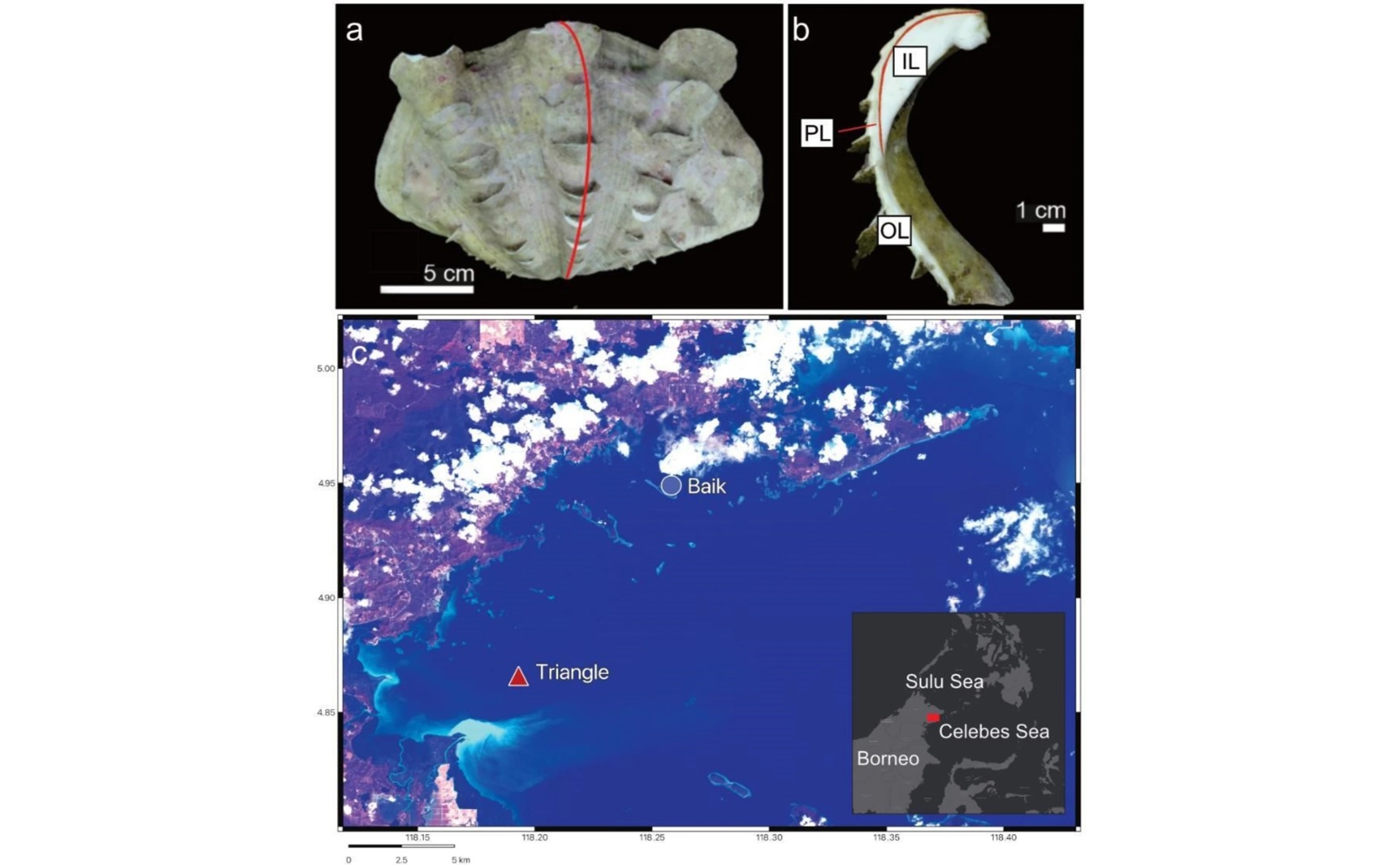
This figure establishes the contrasting high‑ and low‑turbidity reef environments (Triangle versus Baik; c) and the shell regions of the fluted giant clam (Tridacna squamosa; a, b) that form the environmental and anatomical framework for demonstrating turbidity‑driven differences in shell biomineralization throughout the study.
Key Findings
- In the Coral Triangle, giant clams on murky reefs developed more organized shells compared to those in clearer waters
- Clams in turbid areas had shells with stronger structures and fewer magnesium and strontium elements, aiding their survival
- These clams can switch their feeding methods, allowing them to thrive and maintain growth even in challenging, murky environments
References
Main Study
1) Crystallographic and geochemical responses of giant clams on turbid reefs
Published 2nd March, 2025
https://doi.org/10.1038/s41598-025-90614-y
Related Studies
2) Confronting the coral reef crisis.
Journal: Nature, Issue: Vol 429, Issue 6994, Jun 2004
3) Gradients in Primary Production Predict Trophic Strategies of Mixotrophic Corals across Spatial Scales.
4) Borneo coral reefs subject to high sediment loads show evidence of resilience to various environmental stressors.
5) Ocean acidification impacts mussel control on biomineralisation.
Related Articles
 8th March, 2024 | Jim Crocker