
Cancer Gene Signals Drive Tumor Growth in a Carcinoma Model
Greg Howard
29th April, 2025


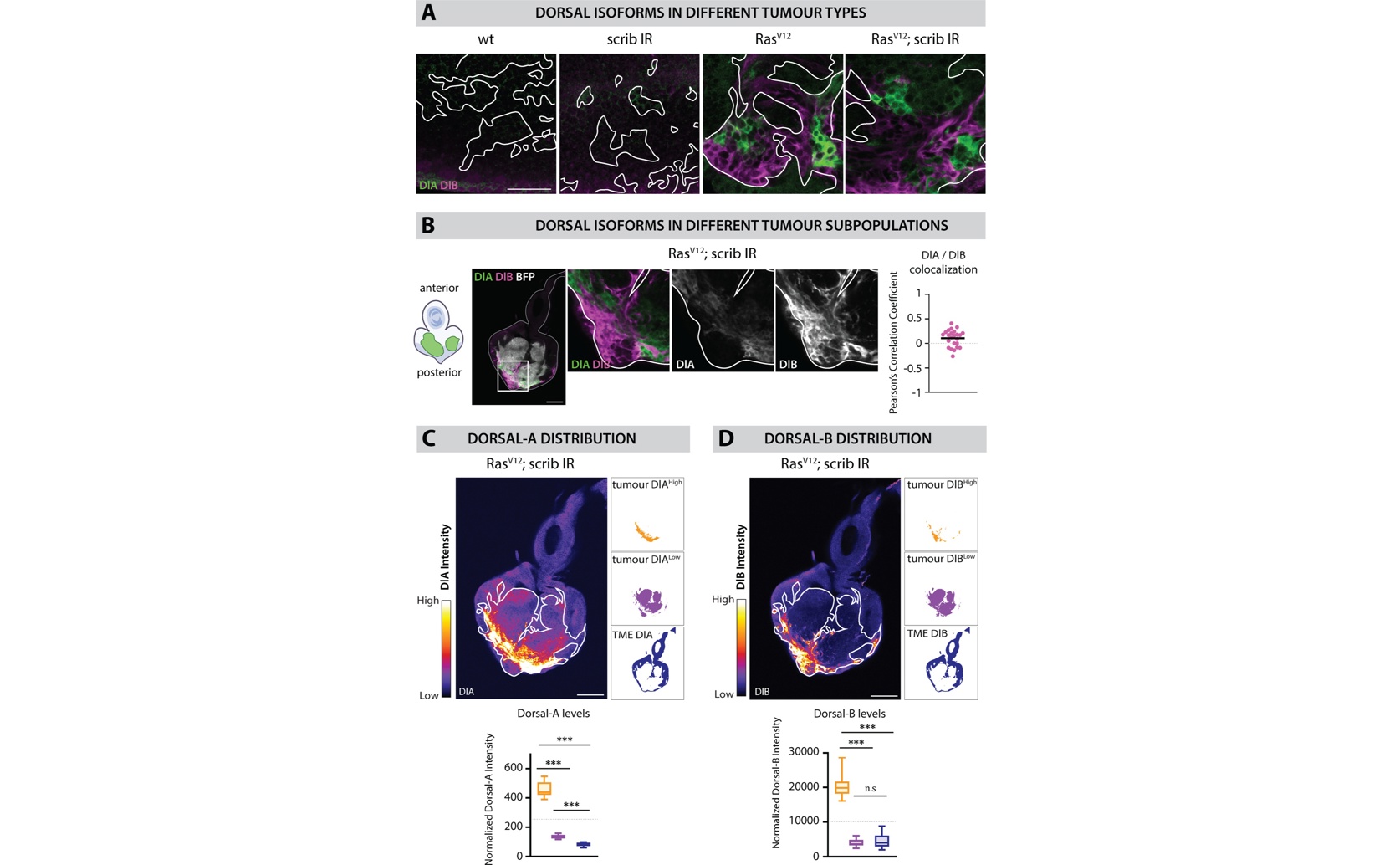
Oncogenic RasV12 drives the aberrant accumulation of two distinct NF-κB Dorsal isoforms, Dorsal-A and Dorsal-B, in separate, non-overlapping cell populations within Drosophila tumors (a, b), creating a heterogeneous expression pattern with both broadly elevated and highly localized zones (c, d).
Key Findings
- Researchers at Fred Hutchinson Cancer Research Center used fruit flies to discover that specific inflammation-related proteins are crucial for tumor growth
- They found that high levels of NF-κB proteins in cancer cells enhance their ability to invade surrounding tissues
- The study identified interactions between proteins Dorsal and Chinmo that help cancer cells survive and spread, pointing to new treatment targets
References
Main Study
1) NF-κB signaling driven by oncogenic Ras contributes to tumorigenesis in a Drosophila carcinoma model
Published 28th April, 2025
https://doi.org/10.1371/journal.pbio.3002663
Related Studies
2) Inflammation and tumor progression: signaling pathways and targeted intervention.
3) Prognostic significance of NF-κB expression in non-small cell lung cancer: A meta-analysis.
4) Role of the NFκB-signaling pathway in cancer.
Related Articles
 10th August, 2024 | Jenn Hoskins