Natural Compound Blocks Protein-Induced Blood Vessel Growth in Liver Cancer

Jenn Hoskins
6th May, 2025

Natural Compound Blocks Protein-Induced Blood Vessel Growth in Liver Cancer

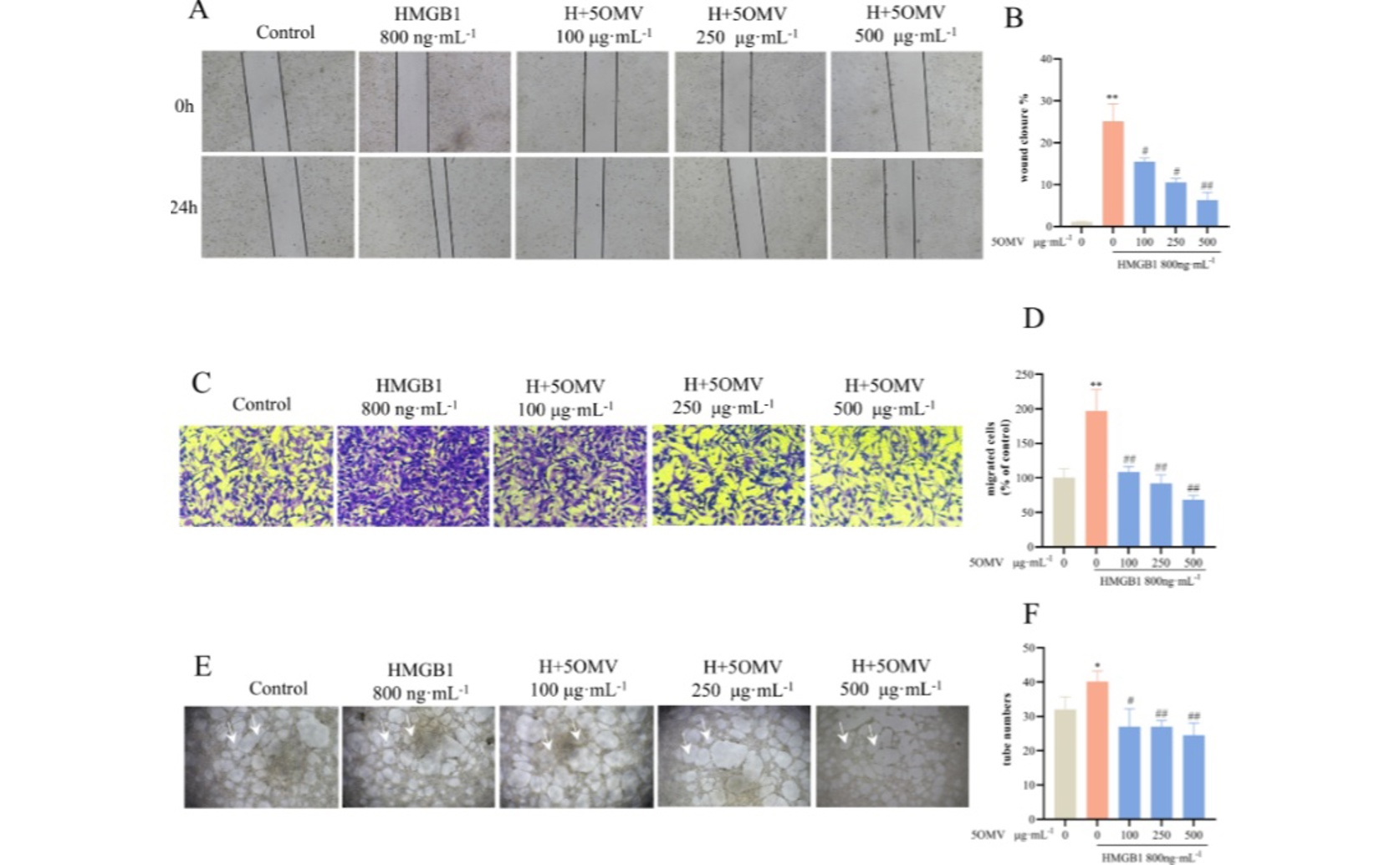
The compound 5-O-Methylvisammioside (5OMV) demonstrates potent anti-angiogenic effects by significantly inhibiting HMGB1-induced cell migration (a–d) and capillary tube formation (e, f) in human umbilical vein endothelial cells.

Image adapted from: Hou et al. / CC BY (Source)

Key Findings

  • A study from Nanjing University of Chinese Medicine found that 5OMV, a natural compound, blocks signals that help liver tumors grow by preventing new blood vessel formation
  • In mouse models, 5OMV significantly reduced tumor size and decreased the number of blood vessels supplying the cancer
  • 5OMV works by disrupting the HMGB1/RAGE/MEK/ERK pathway, which cancer cells use to promote the growth of new blood vessels
Recent advancements in cancer research have highlighted the intricate role of cellular signaling pathways in tumor growth and angiogenesis—the formation of new blood vessels that supply nutrients to tumors. A pivotal study from the Nanjing University of Chinese Medicine[1] explores the potential of 5-O-Methylvisammioside (5OMV), a compound derived from the traditional Chinese medicine plant Saposhnikovia divaricat, in inhibiting angiogenesis driven by the protein High Mobility Group Box 1 (HMGB1). Angiogenesis is essential for tumor progression, allowing cancer cells to receive the necessary nutrients and oxygen to grow and spread. HMGB1 is a protein that has been implicated in promoting angiogenesis and tumor growth. Previous research has established that HMGB1 interacts with various cellular receptors and signaling pathways to facilitate these processes. For instance, HMGB1 has been shown to activate regulatory T cells (Treg) in tumors, suppressing the immune response against cancer cells[2]. Additionally, HMGB1 plays a role in liver cancer by disrupting metabolic homeostasis and promoting tumor progression through interactions with hepatic stellate cells[3]. The study from Nanjing University of Chinese Medicine investigates how 5OMV can counteract the pro-angiogenic effects of HMGB1. The researchers conducted comprehensive in vitro experiments using human umbilical vein endothelial cells (HUVECs), which are a standard model for studying blood vessel formation. They found that 5OMV significantly reduced HMGB1-induced proliferation, migration, and tube formation in these cells. These cellular behaviors are critical for angiogenesis, and their inhibition suggests that 5OMV can effectively hinder the formation of new blood vessels that tumors require for growth. To validate these findings in a living organism, the research team used an orthotopic hepatocellular carcinoma model in C57BL/6 mice. This model closely mimics human liver cancer, allowing for the assessment of tumor progression and angiogenesis in a controlled environment. Treatment with 5OMV resulted in a marked reduction in tumor growth and a decrease in microvascular density within the tumors. Microvascular density is a measure of the number of blood vessels in a given area of tissue and is often used as an indicator of angiogenic activity. The reduction observed in this study confirms the anti-angiogenic potential of 5OMV in vivo. Mechanistically, the study delved into the molecular pathways affected by 5OMV. The researchers identified that 5OMV downregulates both the total and phosphorylated forms of RAGE (Receptor for Advanced Glycation End-products), MEK, and ERK in HUVECs and tumor tissues. RAGE is a receptor that HMGB1 binds to, initiating a cascade of signaling events that promote angiogenesis and tumor progression. The MEK/ERK pathway is a key signaling route involved in cell division, survival, and differentiation. By inhibiting these molecules, 5OMV disrupts the signaling necessary for HMGB1-induced angiogenesis. This study builds upon earlier findings that highlight the critical role of HMGB1 in various aspects of cancer biology. For example, HMGB1's involvement in activating Treg cells through the production of thymic stromal lymphopoietin (TSLP)[2] and its role in metabolic regulation within liver cancer[3] underscore its multifaceted contributions to tumor growth and immune evasion. The current research adds another layer by demonstrating how targeting HMGB1-mediated pathways can disrupt angiogenesis, offering a potential therapeutic strategy. Furthermore, the findings resonate with previous studies on the interplay between inflammation and angiogenesis. One study identified a novel pathway where HMGB1 internalization in endothelial cells promotes angiogenesis through the release of VEGF-A and endoglin, essential factors for blood vessel formation[4]. The inhibition of HMGB1 by 5OMV aligns with these insights, suggesting that reducing HMGB1 activity can impair the angiogenic processes necessary for tumor sustenance and growth. The implications of this research are significant for the development of cancer therapies. By targeting the HMGB1/RAGE/MEK/ERK signaling axis, 5OMV presents a promising approach to inhibit tumor angiogenesis and progression. This strategy not only addresses the direct growth of cancer cells but also disrupts the supportive environment that tumors create for themselves. Given the universal silencing of the gluconeogenic enzyme FBP1 in liver tumors[3], combining 5OMV with other metabolic interventions could potentially enhance therapeutic efficacy. In conclusion, the study from Nanjing University of Chinese Medicine provides compelling evidence that 5OMV can effectively inhibit HMGB1-induced angiogenesis in hepatocellular carcinoma. By targeting key components of the HMGB1 signaling pathway, 5OMV offers a novel therapeutic avenue for limiting tumor growth and progression. As research continues to unravel the complexities of HMGB1's role in cancer, compounds like 5OMV could play a crucial role in the next generation of cancer treatments, offering hope for more effective and targeted therapies.

MedicineHealthBiochem

References

Main Study

1) 5-O-Methylvisammioside inhibits HMGB1-induced Angiogenesis of hepatocellular carcinoma through RAGE/MEK/ERK signaling pathway

Published 5th May, 2025

https://doi.org/10.1371/journal.pone.0322056


Related Studies

2) Tumor-derived high-mobility group box 1 and thymic stromal lymphopoietin are involved in modulating dendritic cells to activate T regulatory cells in a mouse model.

https://doi.org/10.1007/s00262-017-2087-7


3) FBP1 loss disrupts liver metabolism and promotes tumorigenesis through a hepatic stellate cell senescence secretome.

https://doi.org/10.1038/s41556-020-0511-2


4) Internalization of HMGB1 (High Mobility Group Box 1) Promotes Angiogenesis in Endothelial Cells.

https://doi.org/10.1161/ATVBAHA.120.315151


Related Articles

An unhandled error has occurred. Reload 🗙