Changes in Gene Activity in Celiac Disease and the Effect of a Gluten-Free Diet

Jenn Hoskins
3rd May, 2025

Changes in Gene Activity in Celiac Disease and the Effect of a Gluten-Free Diet

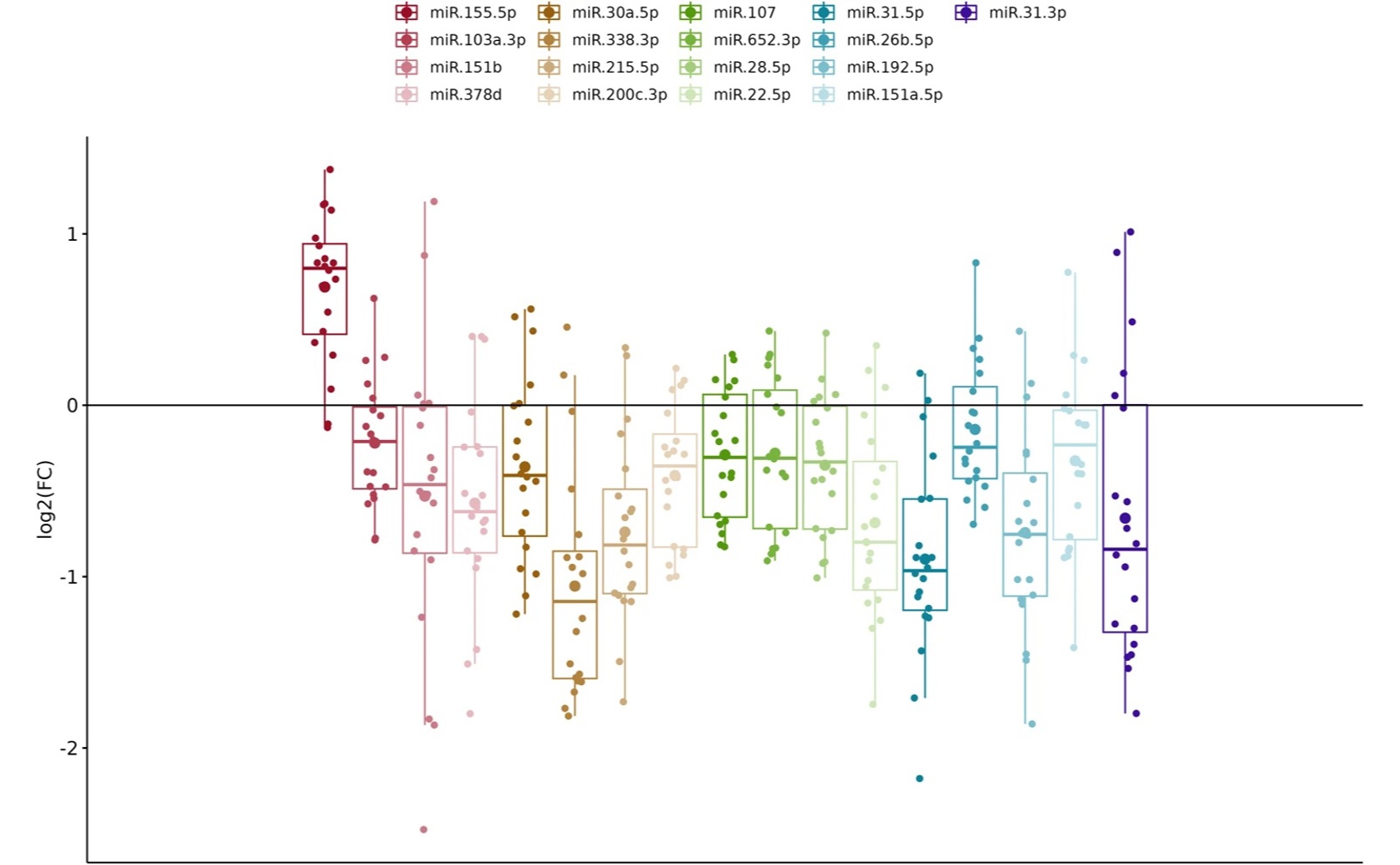
In pediatric patients with active celiac disease, duodenal tissue shows a distinct microRNA expression profile characterized by the significant upregulation of hsa-miR-155-5p and downregulation of several other miRNAs compared to healthy controls.

Image adapted from: Kolkova et al. / CC BY (Source)

Key Findings

  • Researchers in Slovakia discovered that children with celiac disease have different levels of specific small molecules in their intestines
  • These molecules are involved in causing inflammation and immune system changes that contribute to the disease
  • Adhering to a gluten-free diet helps return these molecule levels to normal, supporting the healing of the intestine
Celiac disease (CD) is an autoimmune disorder where the ingestion of gluten leads to damage in the small intestine, causing symptoms like diarrhea, bloating, and malnutrition. Despite affecting about 1% of the US population, many cases remain undiagnosed[2]. Understanding the underlying mechanisms of CD is crucial for developing better diagnostic and treatment strategies. Recent research from Comenius University in Bratislava, Slovakia[1] has shed light on the role of microRNAs (miRNAs) in CD. miRNAs are small molecules that regulate gene expression, influencing various biological processes. When miRNAs function improperly, they can contribute to diseases, including CD. The study focused on analyzing the expression of specific miRNAs in the duodenal tissue of children with active CD, those following a gluten-free diet (GFD), and healthy controls. Researchers collected samples from 20 newly diagnosed CD patients, 17 CD patients on a GFD, and 29 individuals without the disease. Using real-time PCR, they measured the levels of different miRNAs in these tissues. Eight miRNAs were found to be significantly dysregulated in CD patients. Specifically, miR-155-5p was increased, while hsa-miR-22-5p, hsa-miR-192-5p, hsa-miR-338-3p, hsa-miR-31-5p, hsa-miR-31-3p, hsa-miR-215-5p, and hsa-miR-378d were decreased. These miRNAs are involved in regulating pathways related to inflammation, immune response, and the integrity of cell junctions, all of which are important in CD pathogenesis. The study also examined how a GFD affects these miRNA levels. For most of the dysregulated miRNAs, adherence to a GFD restored their expression to levels similar to those in healthy controls. Notably, miR-31-3p increased in CD patients on a GFD and was negatively correlated with the duration of the diet, suggesting a role in the healing process of the intestinal lining. These findings build on previous genetic studies that identified numerous loci associated with CD. For instance, research has shown that over 40 genetic regions outside the major histocompatibility complex (HLA) are linked to CD, highlighting the disease's complex genetic architecture[3][4]. The current study adds another layer by demonstrating how genetic regulation at the miRNA level contributes to the disease. Moreover, the role of miRNAs in maintaining intestinal health has been supported by studies on miRNA function in the gut. For example, the deletion of the miRNA-processing enzyme Dicer1 in mice leads to disorganized intestinal epithelium and impaired barrier function, resulting in inflammation[5]. This aligns with the current study's findings, where dysregulated miRNAs in CD patients are implicated in disrupting intestinal integrity and immune responses. By identifying specific miRNAs involved in CD, the research provides potential targets for new therapies. Modulating the levels of these miRNAs could help restore normal intestinal function and reduce inflammation in CD patients. Additionally, miRNAs could serve as biomarkers for diagnosing CD or monitoring the effectiveness of a GFD. This study highlights the importance of miRNAs in the development and management of CD, offering insights that complement existing genetic and immunological research. By integrating genetic susceptibility with miRNA regulation, scientists can better understand the intricate mechanisms driving CD and develop more effective interventions. Furthermore, the identification of miRNAs related to CD progression and response to dietary changes underscores the potential for personalized medicine approaches in managing the disease. Tailoring treatments based on an individual's miRNA profile could enhance the effectiveness of interventions and improve patient outcomes. Overall, the research from Comenius University advances our knowledge of CD by linking genetic factors with miRNA-mediated regulation. As studies continue to uncover the roles of various miRNAs, new opportunities for diagnosis, treatment, and prevention of CD will emerge, ultimately benefiting those affected by this challenging autoimmune disorder.

MedicineHealthBiochem

References

Main Study

1) Altered miRNA expression in duodenal tissue of celiac patients and the impact of a gluten-free diet: a preliminary study

Published 30th April, 2025

https://doi.org/10.1007/s11033-025-10534-y


Related Studies

2) Celiac disease: pathogenesis of a model immunogenetic disease.

Journal: The Journal of clinical investigation, Issue: Vol 117, Issue 1, Jan 2007


3) Dense genotyping identifies and localizes multiple common and rare variant association signals in celiac disease.

https://doi.org/10.1038/ng.998


4) Identification of Non-HLA Genes Associated with Celiac Disease and Country-Specific Differences in a Large, International Pediatric Cohort.

https://doi.org/10.1371/journal.pone.0152476


5) MicroRNAs control intestinal epithelial differentiation, architecture, and barrier function.

https://doi.org/10.1053/j.gastro.2010.07.040


Related Articles

An unhandled error has occurred. Reload 🗙