Beyond Antibodies: A Key Protein Protects Pregnancy

Jenn Hoskins
26th April, 2025

Beyond Antibodies: A Key Protein Protects Pregnancy

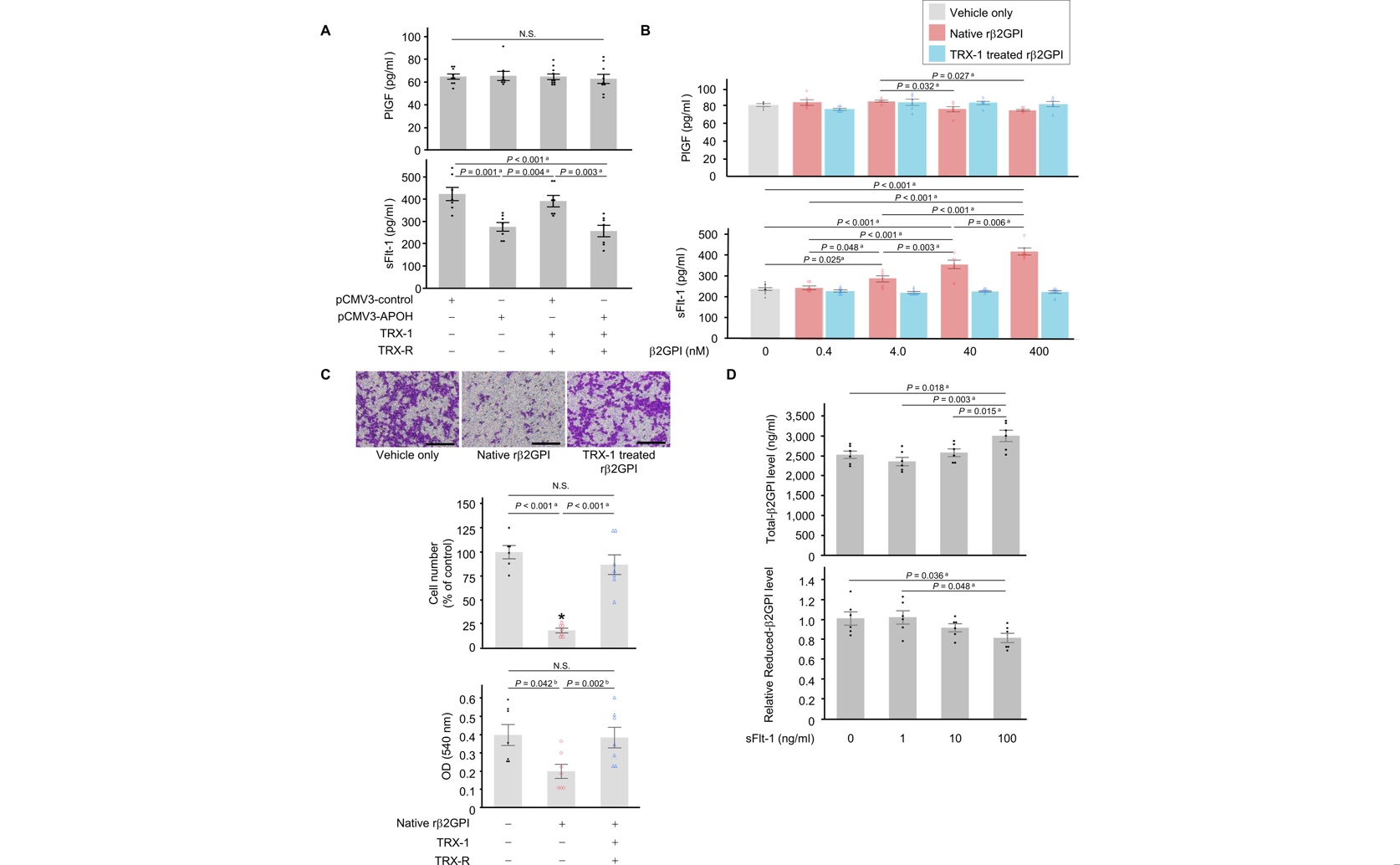
The redox state of β2GPI critically impacts placental health, as the oxidized form impairs trophoblast cell migration (c) and stimulates secretion of sFlt-1 (b), a key protein in pre-eclampsia that then promotes more oxidized-β2GPI production by liver cells (d), while the reduced form suppresses sFlt-1 (a).

Image adapted from: Yagi et al. / CC BY (Source)

Key Findings

  • In a study by Osaka University and Universidad de Murcia, researchers discovered that the protein β2GPI is linked to pre-eclampsia in pregnancy
  • The oxidized form of β2GPI disrupts placental cell movement and raises levels of sFlt-1, a marker associated with pre-eclampsia
  • The hormone progesterone increases the beneficial reduced form of β2GPI, which may help support healthy placental development
Beta-2-glycoprotein I (β2GPI) is a protein found abundantly in human blood, yet its full range of functions remains unclear. Understanding β2GPI is particularly important because it is the primary target of autoantibodies in antiphospholipid syndrome (APS), an autoimmune disorder associated with blood clots and pregnancy complications[2]. Recent research from Osaka University and Universidad de Murcia, Spain[1] sheds light on the role of β2GPI in pregnancy, specifically its involvement in pre-eclampsia, a serious condition characterized by high blood pressure and damage to organs during pregnancy. Pre-eclampsia affects approximately 5-8% of pregnancies worldwide and can lead to significant health risks for both the mother and the baby. The exact causes of pre-eclampsia are not fully understood, but it is believed to involve abnormal development of the placenta and improper blood flow to this vital organ. The study conducted by researchers at Osaka University and Universidad de Murcia aimed to explore how different forms of β2GPI influence placental function and contribute to the development of pre-eclampsia. β2GPI exists in two main forms: oxidized and reduced. These forms differ based on the presence or absence of certain chemical bonds called disulfide bonds, which affect the protein's shape and function. Previous research has shown that β2GPI plays roles in regulating the immune system and the complement system, which helps the body fight infections[3]. Additionally, β2GPI can switch between different shapes, allowing it to interact with various molecules in the blood[2][3]. However, its specific role in the placenta and its connection to pre-eclampsia were not well understood until now. The researchers focused on trophoblast cells, which are essential cells in the placenta that help form the barrier between the mother’s blood and the developing fetus. By studying these cells, the team investigated how β2GPI functions differently in the placenta compared to the liver, where it is primarily produced. They discovered that trophoblast cells predominantly secrete the reduced form of β2GPI, whereas liver cells mainly produce the oxidized form. This distinction suggests that β2GPI may have specialized roles in different parts of the body. One of the key findings of the study was the impact of oxidized-β2GPI on trophoblast cells. The researchers found that when β2GPI is in its oxidized form, it significantly inhibits the migration of trophoblast cells. Cell migration is crucial for the proper development of the placenta, as it allows these cells to invade the uterine lining and establish a strong blood supply for the fetus. Additionally, oxidized-β2GPI was shown to increase levels of a protein called soluble fms-like tyrosine kinase-1 (sFlt-1) in the placenta. Elevated sFlt-1 is a known marker of pre-eclampsia and is associated with reduced blood vessel formation in the placenta. Further investigation revealed a feedback loop involving sFlt-1 and β2GPI. Excessive levels of sFlt-1 led to an increase in the secretion of oxidized-β2GPI from liver cells. This suggests that high sFlt-1 levels can promote the oxidation of β2GPI, potentially exacerbating the negative effects on the placenta and contributing to the development of pre-eclampsia. The study also found that women with pre-eclampsia have higher levels of oxidized-β2GPI in their blood compared to those without the condition, reinforcing the link between β2GPI oxidation and pre-eclampsia. The role of progesterone, a hormone vital for maintaining pregnancy, was also examined. The researchers discovered that progesterone increases the levels of reduced-β2GPI in both trophoblast and liver cells. This hormone-mediated increase in the reduced form of β2GPI may help support healthy placental development by promoting cell migration and reducing sFlt-1 levels. These findings highlight the delicate balance between the oxidized and reduced forms of β2GPI and their impact on placental health. Integrating these results with earlier studies, it becomes evident that β2GPI is more versatile than previously thought. While earlier research highlighted its role in immune regulation and its structural flexibility[2][3], the current study expands our understanding by linking specific forms of β2GPI to placental function and pre-eclampsia. This connection opens new avenues for potential therapeutic interventions. For instance, targeting the oxidation of β2GPI or regulating sFlt-1 levels could offer new strategies to prevent or treat pre-eclampsia. The methods used in this study involved analyzing β2GPI forms in different cell types and examining their effects on cell behavior and protein expression. By comparing trophoblast cells with liver cells, the researchers were able to identify the distinct roles of oxidized and reduced β2GPI. Additionally, measuring β2GPI levels in women with and without pre-eclampsia provided clinical relevance to their findings. In summary, the study by Osaka University and Universidad de Murcia provides significant insights into the role of β2GPI in pregnancy and its potential contribution to pre-eclampsia. By distinguishing between the oxidized and reduced forms of β2GPI and their effects on placental cells, the research advances our understanding of the molecular mechanisms underlying this complex condition. This knowledge not only enhances our grasp of β2GPI’s functions but also paves the way for developing targeted treatments to improve pregnancy outcomes and maternal health.

MedicineHealthBiochem

References

Main Study

1) Beyond antibodies: Beta-2 glycoprotein I as the unsung guardian of pregnancy

Published 25th April, 2025

https://doi.org/10.1371/journal.pone.0321405


Related Studies

2) The role of beta-2-glycoprotein I in health and disease associating structure with function: More than just APS.

https://doi.org/10.1016/j.blre.2019.100610


3) β₂-glycoprotein I, the major target in antiphospholipid syndrome, is a special human complement regulator.

https://doi.org/10.1182/blood-2011-02-339564


Related Articles

An unhandled error has occurred. Reload 🗙