
How Cells Move Fluids and Nutrients and How Blood Circulates
Jenn Hoskins
22nd April, 2025


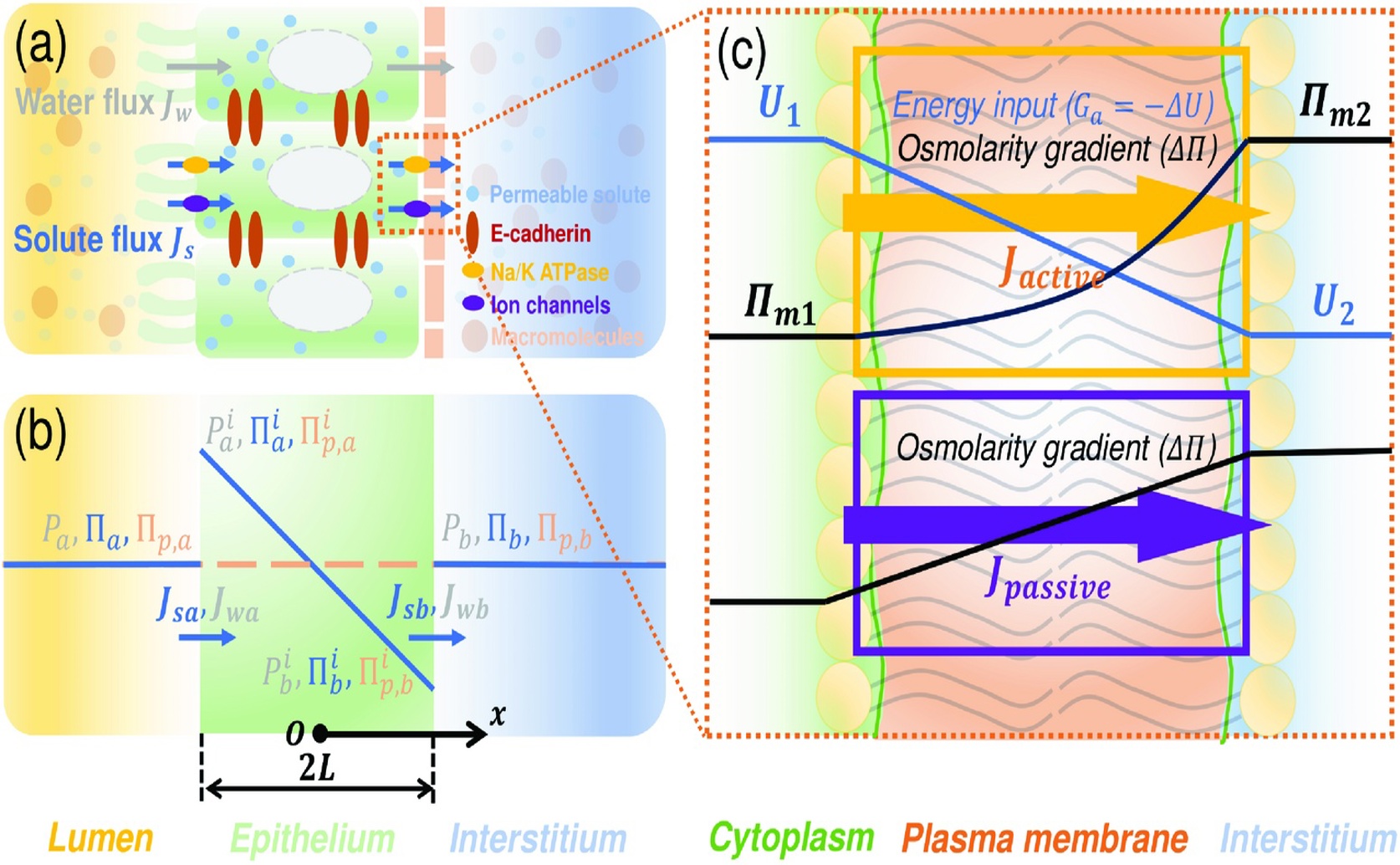
This figure illustrates the study's core cellular model, where active ion pumping (c) establishes osmotic pressure gradients that, in conjunction with hydraulic pressure gradients (a), drive the water and solute fluxes (b) that form the basis for systemic circulation.
Key Findings
- Researchers at Johns Hopkins developed a new mathematical model to better understand how kidneys regulate body fluids and essential substances
- The model shows that cellular pumps maintain pressure and salt concentration differences, connecting cell actions to overall fluid circulation
- These insights could help explain conditions like high blood pressure and improve treatments for kidney-related diseases
References
Main Study
1) Fluid and solute transport by cells and a model of systemic circulation
Published 21st April, 2025
https://doi.org/10.1371/journal.pcbi.1012935
Related Studies
2) Mechanisms of water transport by epithelial cells.
Journal: Quarterly journal of experimental physiology (Cambridge, England), Issue: Vol 74, Issue 4, Jul 1989
3) Kidney epithelial cells are active mechano-biological fluid pumps.
4) Pressure natriuresis and the renal control of arterial blood pressure.
5) Osmosis, from molecular insights to large-scale applications.
Related Articles
 2nd March, 2025 | Greg Howard