Impact of a Common Virus on a Baby's Inner Ear

Jim Crocker
1st April, 2025

Impact of a Common Virus on a Baby's Inner Ear

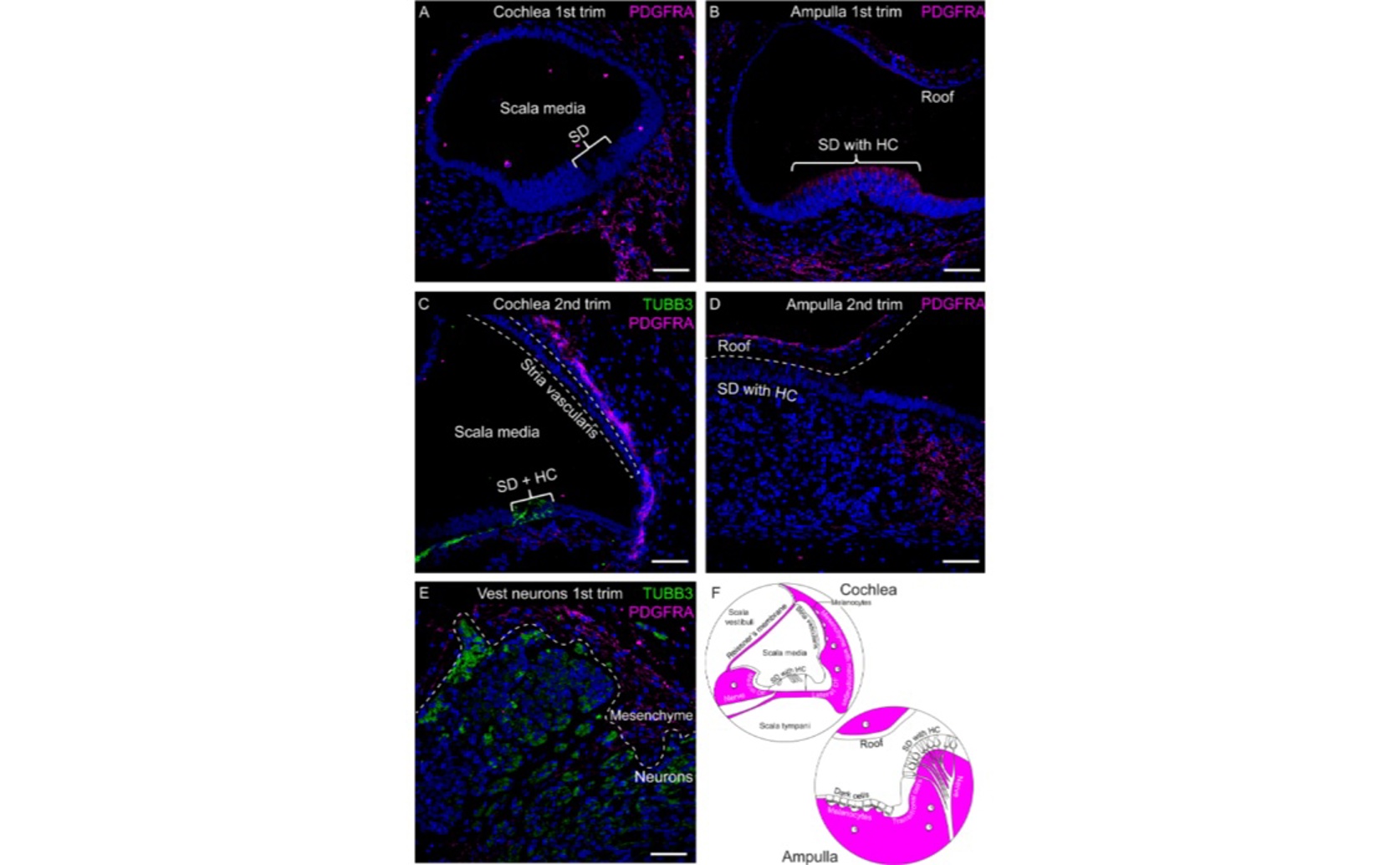
Immunohistochemical analysis shows that the human cytomegalovirus receptor PDGFRA is expressed exclusively in mesenchymal cells within the developing cochlea (a, c) and vestibular organs (b, d, e) throughout the first and second trimesters, identifying these cells as key potential targets for viral infection.

Image adapted from: Grijpink et al. / CC BY (Source)

Key Findings

  • Researchers at Leiden University identified specific cells in unborn ears that the cytomegalovirus targets
  • They discovered the virus uses three key receptors to enter these inner ear cells
  • This understanding helps explain hearing and balance loss in children and may lead to better treatments
Congenital cytomegalovirus (cCMV) infection is recognized as the leading nonhereditary cause of sensorineural hearing loss in children. Understanding how cCMV affects the inner ear is crucial for developing effective interventions. Recent research from Leiden University Medical Center[1] sheds light on the specific cells within the fetal inner ear that are targeted by human cytomegalovirus (hCMV), providing deeper insights into the mechanisms behind hearing and vestibular impairments observed in affected children. Prior studies have established the significant impact of cCMV on hearing and balance functions. A comprehensive review highlighted that approximately 0.58% of newborns in developed countries are infected with cCMV, with about 12.6% of these children experiencing hearing loss[2]. This hearing loss can be severe, often bilateral in symptomatic children and unilateral in those who are asymptomatic. Additionally, research has shown that cCMV can also impair vestibular function, which is essential for balance and spatial orientation. One study involving 130 children found that 64% had inner ear impairments, with vestibular dysfunction being more common than cochlear issues[3]. Another longitudinal study confirmed that vestibular loss is not only prevalent in children with hearing impairments but can also deteriorate over time, even in those who initially passed newborn hearing screenings[4]. Moreover, animal studies have demonstrated that cytomegalovirus can infect specific areas of the inner ear, leading to inflammation and damage[5]. Building on this foundation, the recent study from Leiden University Medical Center aimed to pinpoint the exact cell types within the fetal inner ear that hCMV targets. The researchers focused on three key receptors known to facilitate viral entry into cells: Platelet-derived growth factor receptor alpha (PDGFRA), Neuropilin-2 (NRP2), and Epidermal Growth Factor Receptor (EGFR). These receptors are crucial because they interact with viral glycoproteins, enabling the virus to invade and disrupt cellular functions. Using single-nucleus RNA sequencing data from first-trimester fetal inner ear tissues and immunohistochemistry techniques on samples from both the first and second trimesters, the team mapped the expression patterns of PDGFRA, NRP2, and EGFR. They discovered that PDGFRA is primarily expressed in mesenchymal cells, which are essential for the structural framework of tissues. NRP2 was found in epithelial and endothelial cells, as well as in dendritic cells and leukocytes, which play roles in barrier functions and immune responses. EGFR was present in both epithelial and mesenchymal cells, indicating its widespread role in cellular growth and differentiation. The presence of these receptors in key cell types within the cochlea and vestibular organs suggests that hCMV can directly infect these areas during critical periods of fetal development. This targeted infection likely disrupts the normal formation and function of the inner ear structures, leading to the sensorineural hearing loss and vestibular impairments observed in children with cCMV. Understanding the specific cellular targets of hCMV not only clarifies the pathogenesis of cCMV-related hearing loss but also opens avenues for potential therapeutic interventions aimed at protecting or restoring these vital cells during fetal development. Integrating these findings with previous research, it becomes evident that cCMV’s impact on the inner ear is multifaceted, affecting both auditory and vestibular functions through specific cellular interactions. The identification of PDGFRA, NRP2, and EGFR as key receptors in the fetal inner ear underscores the complexity of cCMV’s effects and highlights the importance of early detection and comprehensive monitoring of both hearing and balance functions in affected children[2][3][4]. Future studies may focus on targeting these receptors to prevent or mitigate the damage caused by hCMV, ultimately improving outcomes for children impacted by this common congenital infection.

MedicineHealthBiochem

References

Main Study

1) Cytomegalovirus host receptor expression in the human fetal inner ear

Published 31st March, 2025

https://doi.org/10.1371/journal.pone.0320605


Related Studies

2) Hearing loss and congenital CMV infection: a systematic review.

https://doi.org/10.1542/peds.2014-1173


3) Audiovestibular Consequences of Congenital Cytomegalovirus Infection: Greater Vulnerability of the Vestibular Part of the Inner Ear.

https://doi.org/10.1097/AUD.0000000000001240


4) Vestibular Function in Children With a Congenital Cytomegalovirus Infection: 3 Years of Follow-Up.

https://doi.org/10.1097/AUD.0000000000000904


5) Pathogenesis of cytomegalovirus-associated labyrinthitis in a guinea pig model.

Journal: Microbes and infection, Issue: Vol 9, Issue 2, Feb 2007


Related Articles

An unhandled error has occurred. Reload 🗙