
Immune Status Influences Proteins on Malaria Parasites
Jim Crocker
29th April, 2025


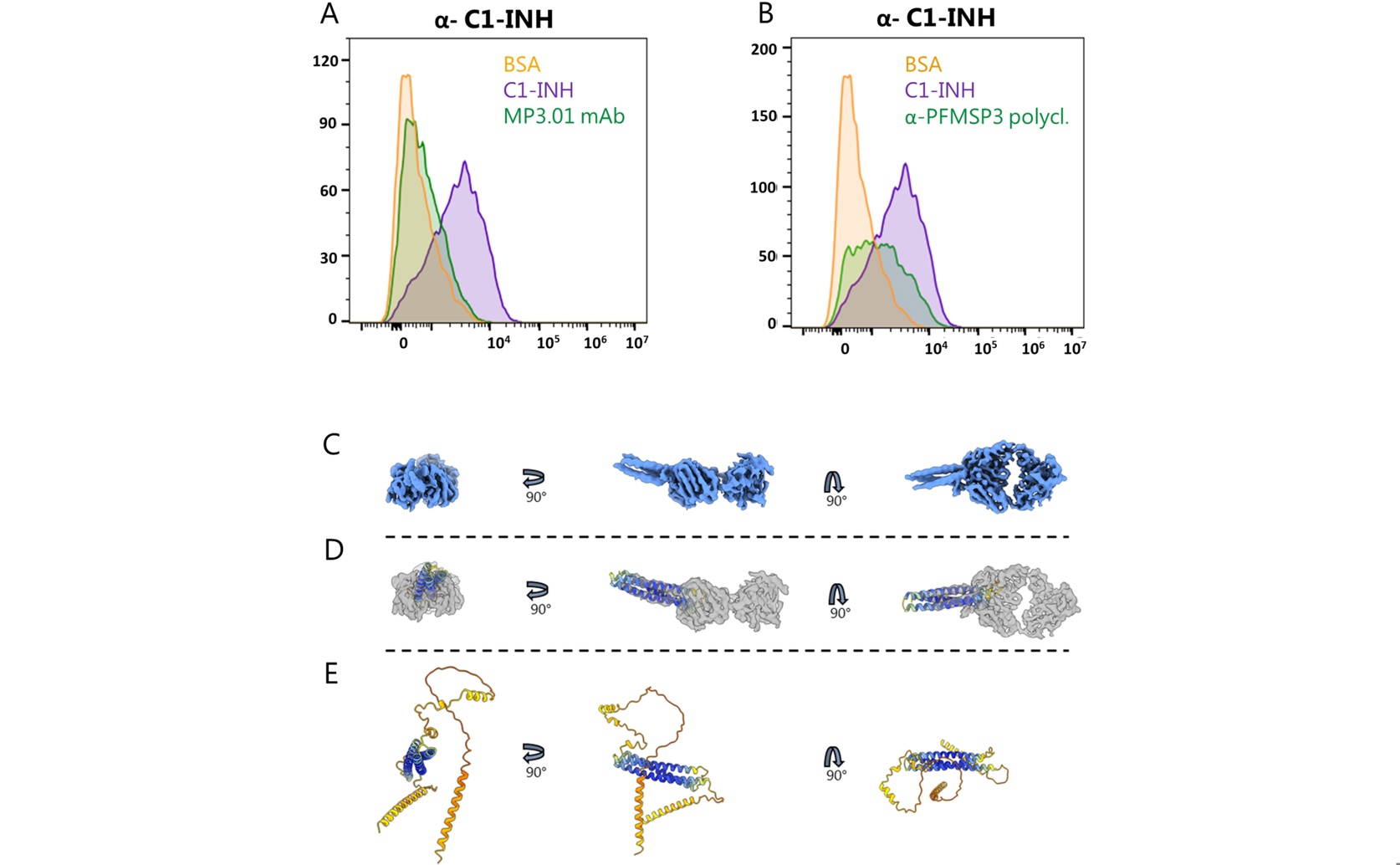
A novel monoclonal antibody targeting PfMSP3 effectively blocks the recruitment of complement inhibitor C1-INH to the Plasmodium falciparum merozoite surface (a, b), a function not achieved by naturally acquired antibodies, with cryo-electron microscopy revealing the structural basis for this interaction (c–e).
Key Findings
- In Ghana, researchers discovered that children’s antibodies fight malaria parasites more effectively than adults’
- Children’s antibodies better activate the immune system to destroy the parasite by blocking its defense tactics
- Scientists developed a new antibody that can enhance malaria vaccines by preventing the parasite from evading the immune response
References
Main Study
1) Deposition of complement regulators on the surface of Plasmodium falciparum merozoites depends on the immune status of the host
Published 28th April, 2025
https://doi.org/10.1371/journal.ppat.1013107
Related Studies
2) Acquired immunity to malaria.
3) Strain-Dependent Inhibition of Erythrocyte Invasion by Monoclonal Antibodies Against Plasmodium falciparum CyRPA.
4) Antibodies against a short region of PfRipr inhibit Plasmodium falciparum merozoite invasion and PfRipr interaction with Rh5 and SEMA7A.
5) Anti-apical-membrane-antigen-1 antibody is more effective than anti-42-kilodalton-merozoite-surface-protein-1 antibody in inhibiting plasmodium falciparum growth, as determined by the in vitro growth inhibition assay.
Related Articles
 1st April, 2025 | Jim Crocker