Effects of Two Proteins on Chemical-Induced Seizures in Lab Models

Jim Crocker
28th April, 2025

Effects of Two Proteins on Chemical-Induced Seizures in Lab Models

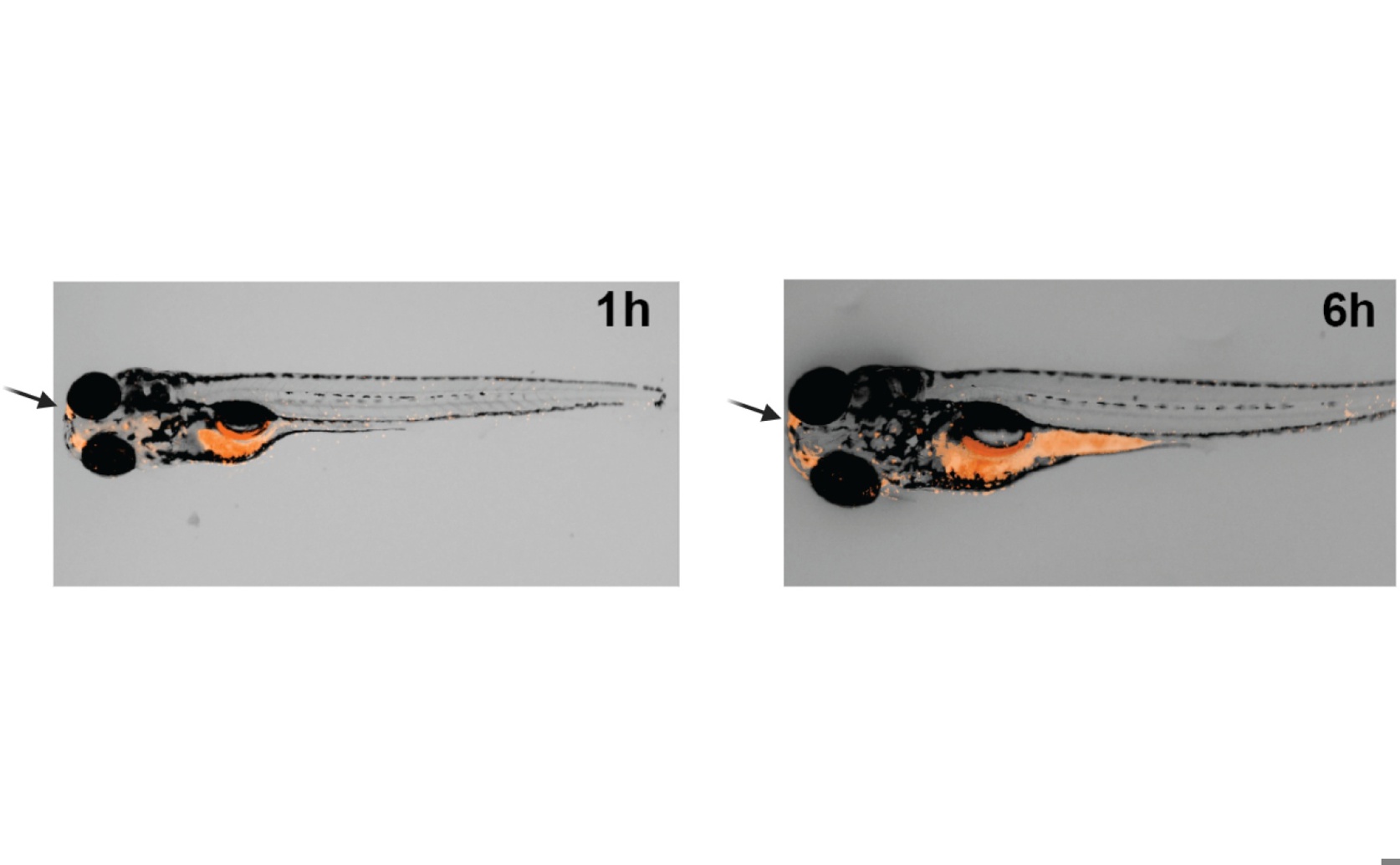
The CX2 peptide efficiently crosses the blood-brain barrier in larval zebrafish (Danio rerio), distributing throughout the brain within 1 to 6 hours post-treatment and confirming its ability to directly modulate the neuroinflammatory pathways associated with seizures.

Image adapted from: Fernández et al. / CC BY (Source)

Key Findings

  • Researchers at UNICAMP used zebrafish to test two new peptides aimed at helping epilepsy patients who don't respond to current drugs
  • The Tripeptide reduced genes linked to brain inflammation and cell death, potentially protecting against seizures
  • The CX2 peptide lowered several inflammation markers and successfully reached the zebrafish brain, indicating it could directly influence seizure activity
Epilepsy affects over 70 million people globally, characterized by recurrent seizures that can significantly impact quality of life. While most individuals respond well to anti-seizure medications, around 30% remain resistant to treatment, a condition known as refractory epilepsy[2][3]. Uncontrolled seizures not only increase health risks but also reduce life expectancy, highlighting the urgent need for new therapeutic options. Researchers at Universidade Estadual de Campinas (UNICAMP) conducted a study to explore potential new treatments for epilepsy using zebrafish, a model organism increasingly valuable in neurological research[1][4]. Zebrafish share many genetic and physiological similarities with humans, making them ideal for studying complex diseases like epilepsy. In this study, scientists focused on two specific peptides, Tripeptide (p-BTX-I) and CX2, to assess their effects on seizure activity. The team utilized a zebrafish model where seizures were induced using pentylenetetrazol (PTZ), a chemical that reliably triggers seizure-like behavior. By treating the zebrafish larvae with Tripeptide and CX2 before inducing seizures, the researchers aimed to observe any protective effects these peptides might have. They measured several outcomes, including the frequency of seizures, swimming activity as an indicator of neurological function, and the expression levels of genes related to inflammation and cell death. Results showed that Tripeptide significantly reduced the expression of inflammatory and apoptotic genes, specifically il1b and casp9. Inflammation and cell death are critical factors that can exacerbate epilepsy, making their reduction a promising therapeutic target[5]. Similarly, CX2 was effective in lowering several inflammatory markers, including il1b, il6, tnfa, and cox1. Importantly, biodistribution analysis confirmed that CX2 successfully reached the zebrafish brain, suggesting it can directly influence brain pathways involved in seizures. These findings build on previous research that has identified the challenges in treating refractory epilepsy and the importance of targeting underlying biological processes[2][3]. By demonstrating that Tripeptide and CX2 can modulate inflammatory and apoptotic pathways, this study offers a potential new avenue for developing anti-epileptic drugs. The use of zebrafish in this research underscores their utility in high-throughput screening and understanding the complex interactions within a living organism, which is often not possible with traditional cell-based assays[4]. Moreover, this study aligns with the growing understanding that epilepsy is not a single disorder but a spectrum of conditions with multiple underlying causes[5]. The ability to target specific molecular pathways involved in seizure generation and propagation could lead to more personalized and effective treatments. Current anti-seizure medications primarily focus on reducing seizure frequency without addressing the long-term progression of the disease[3][5]. In contrast, therapies that can modify disease pathways may offer better outcomes for those with refractory epilepsy. The research also highlights the importance of early intervention. Previous studies have shown that patients with a higher number of seizures before starting treatment are more likely to develop refractory epilepsy[2]. By identifying and testing compounds that can reduce inflammation and prevent cell death, it may be possible to improve treatment responses and prevent the progression to drug-resistant forms of epilepsy. While the results are promising, further research is necessary to determine the long-term efficacy and safety of Tripeptide and CX2 in more complex models and eventually in human trials. Understanding the exact mechanisms by which these peptides exert their effects will be crucial for optimizing their therapeutic potential. Additionally, exploring how these peptides interact with existing anti-epileptic drugs could provide insights into combination therapies that enhance overall treatment efficacy[4]. In summary, the UNICAMP study provides valuable evidence that Tripeptide and CX2 peptides can effectively reduce seizure-related gene expression and mitigate molecular responses associated with epilepsy in a zebrafish model. This advances the search for new treatments for refractory epilepsy, addressing a significant unmet medical need. By leveraging the strengths of zebrafish as a model organism and focusing on molecular pathways involved in epilepsy, this research opens the door to novel therapeutic strategies that could improve outcomes for millions of individuals affected by this challenging condition.

MedicineHealthAnimal Science

References

Main Study

1) Effects of two different peptides on pentylenetetrazole-induced seizures in larval zebrafish

Published 25th April, 2025

https://doi.org/10.1371/journal.pone.0308581


Related Studies

2) Early identification of refractory epilepsy.

Journal: The New England journal of medicine, Issue: Vol 342, Issue 5, Feb 2000


3) The consequences of refractory epilepsy and its treatment.

https://doi.org/10.1016/j.yebeh.2014.05.031


4) Zebrafish disease models in drug discovery: from preclinical modelling to clinical trials.

https://doi.org/10.1038/s41573-021-00210-8


Related Articles

An unhandled error has occurred. Reload 🗙