Good Gut Bacteria BL21 Protects Against Reproductive Issues from Chemotherapy

Jim Crocker
21st April, 2025

Good Gut Bacteria BL21 Protects Against Reproductive Issues from Chemotherapy

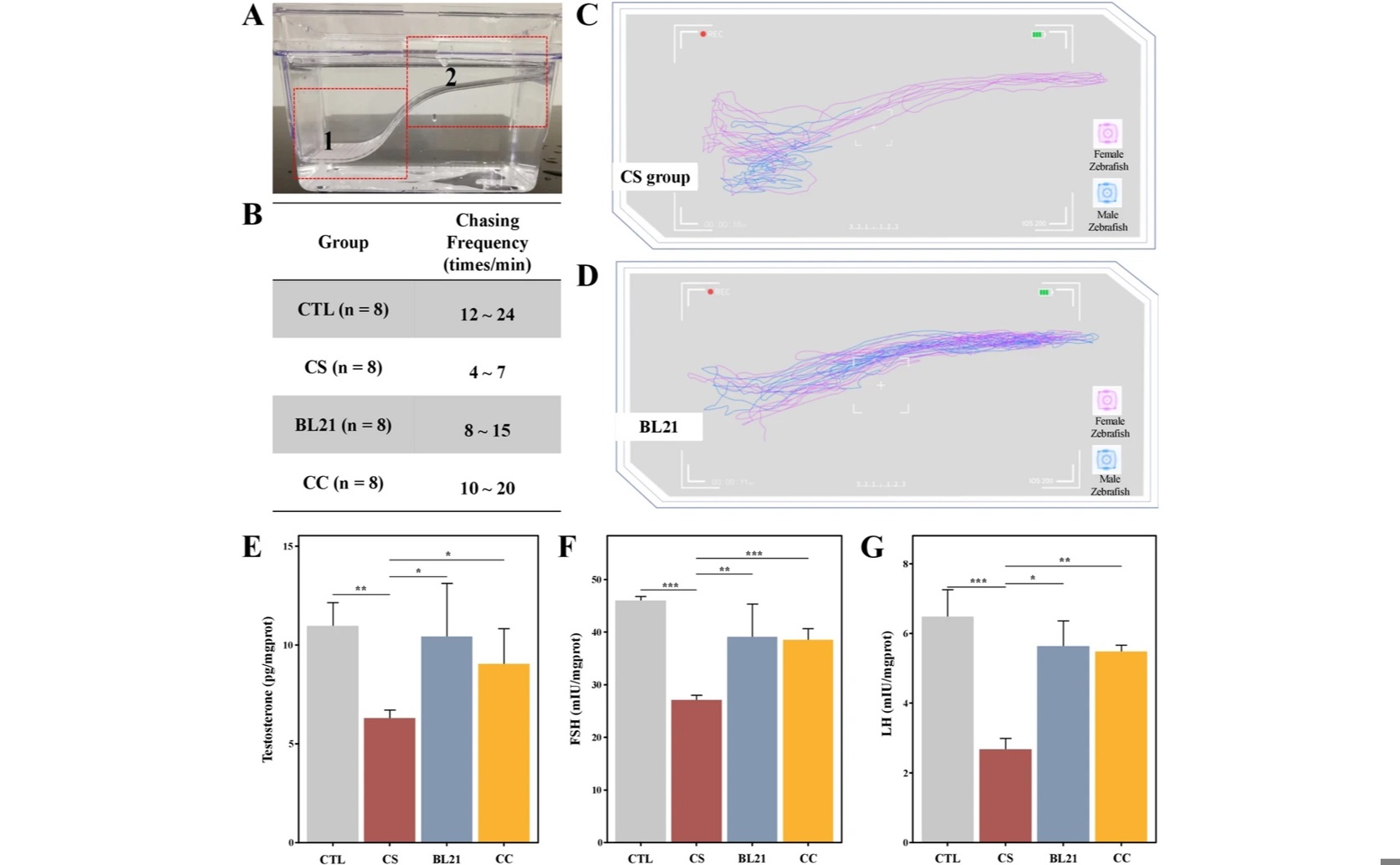
Treatment with the probiotic Bifidobacterium longum subsp. longum BL21 effectively restored key reproductive functions in zebrafish (Danio rerio) by increasing male chasing behavior (b–d) and significantly elevating levels of testosterone (e), follicle-stimulating hormone (f), and luteinizing hormone (g) after cyclophosphamide-induced damage.

Image adapted from: Dong et al. / CC BY (Source)

Key Findings

  • Researchers at Nanjing Agricultural University found that the probiotic BL21 improved reproductive health in zebrafish by increasing testicular weight and sperm count
  • BL21 treatment also boosted hormone levels and enhanced mating behaviors, indicating better overall reproductive function
  • Additionally, the probiotic reduced sperm DNA damage and supported key genetic processes essential for healthy sperm production
Infertility affects approximately 8%-12% of couples worldwide, with male-related issues accounting for half of these cases[2]. Understanding the underlying causes of male infertility is crucial for developing effective treatments. Recent research has begun to explore the role of gut microbiota—the community of microorganisms living in the digestive tract—and their metabolites in influencing male reproductive health[2]. A study conducted by researchers at Nanjing Agricultural University has shed new light on how probiotics might improve reproductive function, offering promising avenues for managing male infertility[1]. The study focused on the effects of a specific probiotic, Bifidobacterium longum subsp. longum BL21, on the reproductive health of zebrafish (Danio rerio). Zebrafish are commonly used in scientific research due to their genetic similarities to humans and their transparent embryos, which make biological processes easy to observe. The researchers aimed to understand how BL21 affects hormonal balance, sperm vitality, and overall reproductive function. To investigate this, adult male zebrafish were divided into four groups: a control group (CTL) with no treatment, a model control group (CS) exposed to cyclophosphamide to induce reproductive dysfunction, a probiotic-treated group (BL21), and a positive control group treated with clomiphene citrate (CC), a drug known to enhance fertility. Cyclophosphamide is a chemotherapy agent that can cause oligospermia, a condition characterized by low sperm count, thereby simulating infertility in the zebrafish. The researchers administered cyclophosphamide to all groups except the control from day 1 to day 9 and then monitored the fish until day 16. They measured various parameters, including body and testicular weight, sperm vitality, courtship behavior, hormone levels, sperm DNA fragmentation, and the expression of specific genes related to sperm production and testicular function. The results were significant. Zebrafish treated with BL21 showed a notable improvement in testicular weight and sperm count and vitality compared to the cyclophosphamide-induced group. This indicates that the probiotic effectively countered the negative effects of cyclophosphamide, enhancing reproductive parameters. Additionally, the BL21-treated fish exhibited increased chasing behavior, a sign of heightened sexual activity, and higher levels of sex hormones compared to both the model control and the positive control group treated with clomiphene citrate. One of the critical findings was that BL21 reduced sperm DNA fragmentation, a measure of sperm quality that can affect fertility and the health of potential offspring. Lower DNA fragmentation suggests healthier sperm, which is crucial for successful fertilization. Moreover, the probiotic treatment upregulated the expression of genes essential for spermatogenesis (the production of sperm) and testicular function, including PCNA, NANOG, ZBTB16, mTOR, DDX4, CYP26A1, and ALDH1A2. These genetic changes indicate that BL21 supports the biological processes necessary for healthy sperm production and testicular maintenance. Metabolomic analysis revealed that BL21 influenced several biochemical pathways. It upregulated mTOR signaling and isoflavone biosynthesis while downregulating the TCA cycle and pyruvate metabolism. The mTOR pathway is involved in cell growth and metabolism, suggesting that BL21 promotes an environment conducive to reproductive health. Isoflavones are compounds found in plants that have antioxidant properties, which can protect cells from damage. By modulating these pathways, BL21 demonstrates a broad biochemical impact that supports reproductive function. These findings align with previous research highlighting the importance of gut microbiota in male reproductive health. Gut bacteria can influence the synthesis of sex hormone-related enzymes and participate in the enterohepatic circulation of sex hormones, affecting the hypothalamic-pituitary-testis axis, which regulates hormone levels and reproductive functions[2]. The study by Nanjing Agricultural University builds on this knowledge by demonstrating that specific probiotics can directly enhance reproductive health through multiple mechanisms, including hormonal modulation, improved sperm quality, and positive effects on reproductive behavior. Probiotic supplementation, as shown in this study, offers a potential therapeutic approach to managing male infertility. By restoring a healthy balance of gut microbiota, probiotics like BL21 can mitigate factors that contribute to reproductive dysfunction, such as testicular damage and disrupted hormone levels[2]. This holistic approach targets various aspects of reproductive health, making it a promising alternative or complement to traditional fertility treatments. Moreover, the use of zebrafish as a model organism provides valuable insights that are likely translatable to humans due to the genetic and physiological similarities between the species. However, further research is necessary to confirm these findings in clinical settings and to understand the precise mechanisms through which probiotics exert their beneficial effects on male reproductive health. In conclusion, the study from Nanjing Agricultural University highlights the significant potential of probiotics in improving male reproductive function. By enhancing sperm quality, regulating hormone levels, and supporting reproductive behavior, probiotics like Bifidobacterium longum subsp. longum BL21 offer a multi-faceted approach to addressing male infertility. This research not only advances our understanding of the gut-reproductive axis but also opens new doors for developing effective probiotic-based therapies for managing reproductive health issues[2].

MedicineHealthAnimal Science

References

Main Study

1) Protective effects of Bifidobacterium longum subsp. longum BL21 against cyclophosphamide-induced reproductive dysfunction in zebrafish

Published 18th April, 2025

https://doi.org/10.1038/s41598-025-97721-w


Related Studies

2) Gut microbiota is involved in male reproductive function: a review.

https://doi.org/10.3389/fmicb.2024.1371667


Related Articles

An unhandled error has occurred. Reload 🗙