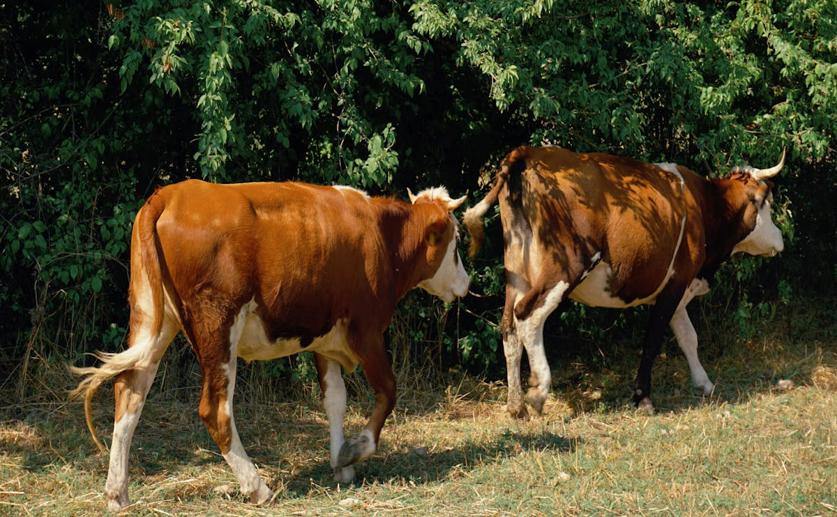
Timely Sample Collection Key to Identifying Causes of Livestock Abortions

Jim Crocker
17th December, 2024

Timely Sample Collection Key to Identifying Causes of Livestock Abortions
Image Source: Yana Kangal (photographer)

Key Findings

  • The study in Tanzania showed that timely and high-quality sample collection is crucial for diagnosing the causes of livestock abortions
  • Vaginal swabs were the most effective samples for detecting infectious agents causing abortions
  • Livestock that had previous abortions were more likely to experience repeated abortions, suggesting an infectious cause
Livestock reproductive losses are a significant concern for farmers globally due to their economic impacts and potential public health risks. Spontaneous abortion in livestock, caused by infections, nutritional deficiencies, or genetic issues, is a critical problem. Identifying the causes of these abortions is challenging in many low- and middle-income countries due to the difficulty in collecting and analyzing high-quality samples. A recent study led by researchers at Washington State University aimed to investigate the feasibility of using livestock abortion surveillance to understand the causes and effects of livestock abortion in Tanzania[1]. The study involved farmers reporting abortion cases to livestock field officers, who then alerted investigation teams to collect samples and conduct questionnaires. This approach allowed the researchers to gather information on livestock breeds, seasonal patterns, and potential pathogens involved in 215 abortion cases in cattle, sheep, and goats. The analysis revealed that the timing and quality of the samples were crucial for successfully identifying the cause of abortion. Specifically, the chances of diagnosis decreased with each day that passed between the abortion and the sample collection. Vaginal swabs were found to be the most effective at detecting abortion-causing infectious agents due to their ease of collection compared to samples from the placenta or aborted fetus. The study also found that many livestock that had experienced an abortion in the previous 12 months had one or more previous abortions, indicating that an infectious agent might be the cause. This suggests that managing these animals by removing them from the herd could improve productivity. Additionally, abortions were more common in non-local breeds of cattle and goats, suggesting that local breeds might have some resistance to abortion. This research builds on previous studies that have highlighted the importance of identifying the causes of livestock abortions. For instance, a study in Ethiopia found that infectious diseases, extreme weather conditions, feed shortage, physical traumas, and plant poisoning were perceived as significant causes of abortion in small ruminant flocks[2]. Another study in Iran identified Toxoplasma gondii, Neospora caninum, and Brucella spp. as important etiological agents of fetal loss in livestock[3]. Furthermore, a survey in California revealed that bacterial, viral, and protozoal infections were common causes of cattle abortions[4]. The findings from Tanzania align with these earlier studies, emphasizing the role of infectious agents in livestock abortions. The study by Lankester et al. demonstrates that livestock abortion surveillance is feasible even in areas with limited resources. By engaging community-based field officers and establishing practical sample collection methods, valuable information on the causes of reproductive losses can be obtained. This information could help direct interventions to prevent abortions and improve livestock health, ultimately enhancing food security and reducing the risk of infection for livestock owners in lower- and middle-income countries. In conclusion, the study highlights the importance of timely and high-quality sample collection for diagnosing the causes of livestock abortions. It also underscores the need for surveillance systems to monitor and manage reproductive losses in livestock. By improving our understanding of the causes of abortions, we can implement effective interventions to enhance livestock productivity and public health.

MedicineHealthAnimal Science

References

Main Study

1) Livestock abortion surveillance in Tanzania reveals disease priorities and importance of timely collection of vaginal swab samples for attribution.

Published 16th December, 2024

https://doi.org/10.7554/eLife.95296


Related Studies

2) Causes and Flock Level Risk Factors of Sheep and Goat Abortion in Three Agroecology Zones in Ethiopia.

https://doi.org/10.3389/fvets.2021.615310


3) Aetiology of livestock fetal mortality in Mazandaran province, Iran.

https://doi.org/10.7717/peerj.5920


4) A survey of causes of bovine abortion occurring in the San Joaquin Valley, California.

Journal: Journal of veterinary diagnostic investigation : official publication of the American Association of Veterinary Laboratory Diagnosticians, Inc, Issue: Vol 2, Issue 4, Oct 1990


Related Articles

An unhandled error has occurred. Reload 🗙