People’s Intention to Prevent Rabies and Willingness to Pay for Vaccines

Jim Crocker
12th March, 2025

People’s Intention to Prevent Rabies and Willingness to Pay for Vaccines

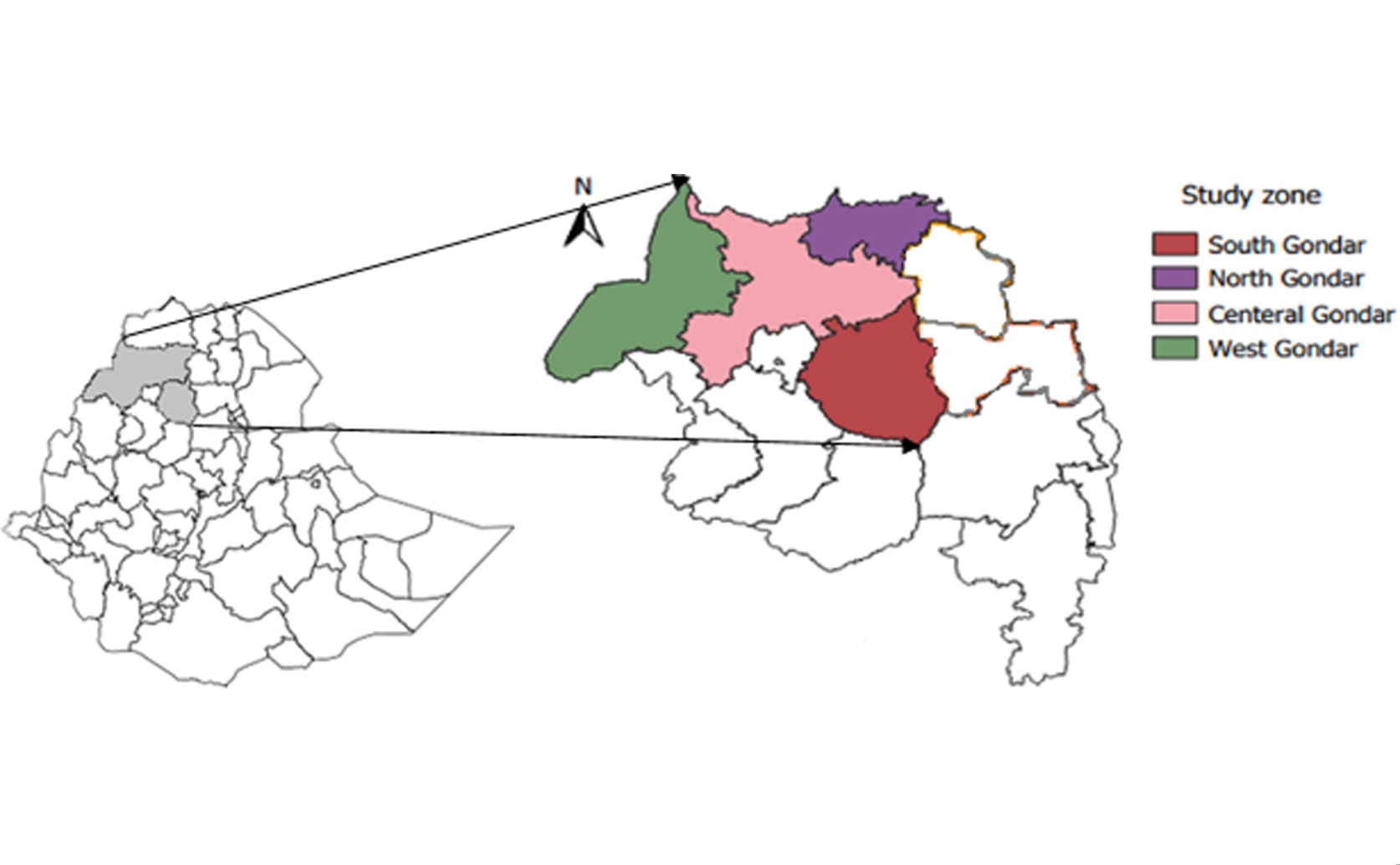
The study area in Northwestern Ethiopia, encompassing West Gondar, North Gondar, Central Gondar, and South Gondar zones (shaded in gray), was selected for investigating dog owners' intention to control rabies and their willingness to pay for rabies vaccine due to the region's high prevalence of animal and human rabies.

Image adapted from: Mengie et al. / CC BY (Source)

Key Findings

  • In North West Ethiopia, nearly all dog owners are eager to vaccinate and leash their dogs to prevent rabies
  • About 97% would vaccinate their dogs for free and 93% at a reasonable cost, while 94% support using leashes
  • Owners with higher incomes are more willing to pay for vaccines, highlighting the role of economic factors in rabies control
Rabies remains a significant public health issue, particularly in low-income countries where it is often underreported and neglected. This viral disease affects both animals and humans, with dog bites being the primary source of human infections. Controlling rabies effectively requires the cooperation of dog owners to implement preventive measures such as vaccination and leashing of dogs. A recent study conducted by the University of Gondar[1] focused on understanding the intentions and willingness to pay (WTP) of dog owners in North West Ethiopia towards rabies control. The researchers surveyed 423 randomly selected dog owners across four Gondar zones to explore their attitudes and behaviors related to rabies prevention. The study employed the Theory of Planned Behavior to assess the intentions of dog owners to vaccinate their dogs and use leashes as preventive measures. Additionally, the contingent valuation method was used to determine the WTP for rabies vaccines, and logistic regression analysis identified factors influencing these intentions and payments. The findings revealed that an overwhelming majority of dog owners were willing to control rabies through vaccination and leashing. Specifically, 97% of respondents intended to vaccinate their dogs if the vaccines were provided free of charge, and 93% were willing to do so at a fair price. Similarly, 94% were in favor of leashing their dogs as a preventive measure. The study also found that positive attitudes and social norms significantly influenced the intention to vaccinate dogs. Male dog owners and those from younger age groups showed a higher propensity to leash their dogs, indicating that demographic factors play a role in rabies control behaviors. Economic factors were also crucial in determining WTP for rabies vaccines. On average, dog owners were willing to pay about 59.25 Ethiopian Birr (approximately 1.14 USD) annually for rabies vaccination. However, willingness to pay decreased as the price of the vaccine increased, highlighting the sensitivity of dog owners to vaccine costs. Monthly income was positively associated with WTP, meaning that dog owners with higher incomes were more likely to pay for vaccines. Conversely, those who had not vaccinated their dogs in the past two years were less inclined to pay for vaccines, suggesting a need for sustained educational and financial incentives. These results align with previous research that underscores the economic burden of rabies in endemic regions. A study by the University of Gondar[2] estimated that globally, canine rabies leads to approximately 59,000 human deaths each year, along with significant economic losses. The high cost associated with post-exposure prophylaxis (PEP) and lost income due to seeking treatment further exacerbates the economic strain on affected communities. The current study complements these findings by highlighting that subsidizing rabies vaccines could enhance participation in vaccination campaigns, thereby reducing both the public health and economic burdens of rabies. Moreover, the effectiveness of rabies control measures is well-documented. For instance, a project in Bohol, Philippines[3] successfully reduced human rabies deaths to zero within 18 months through an integrated approach involving mass dog vaccination, community involvement, and improved surveillance. This success story underscores the importance of coordinated efforts between different sectors, including public health and veterinary services. Similarly, the Ethiopian study emphasizes the need for collaborative investments and improved surveillance to sustain rabies control efforts. Cost considerations are also critical in designing effective rabies control programs. Research from Tanzania[4] demonstrated that the cost per dog vaccinated varied significantly, influenced by factors such as vaccine procurement and program setup costs. The Ethiopian study found that the mean WTP for rabies vaccines was relatively low, suggesting that financial barriers could impede vaccination efforts. By comparing these findings, it becomes clear that optimizing vaccine distribution and reducing costs through subsidies or bulk purchasing could make rabies control more feasible for dog owners in low-income settings. In conclusion, the study by the University of Gondar provides valuable insights into the behavioral and economic factors influencing rabies control among dog owners in North West Ethiopia. The high intention to vaccinate and leash dogs, combined with the willingness to pay for vaccines, highlights the potential for effective rabies prevention strategies. However, financial constraints and the need for supportive interventions to change attitudes and social norms must be addressed to ensure the success and sustainability of rabies control programs. Integrating these findings with previous research emphasizes the importance of a multifaceted approach that includes community engagement, financial incentives, and robust surveillance to eliminate rabies effectively.

MedicineHealthAnimal Science

References

Main Study

1) Dog owners’ intention to control rabies and their willingness to pay for rabies vaccine in Northwestern Ethiopia

Published 11th March, 2025

https://doi.org/10.1371/journal.pgph.0003974


Related Studies

2) Estimating the global burden of endemic canine rabies.

https://doi.org/10.1371/journal.pntd.0003709


3) Implementation of an intersectoral program to eliminate human and canine rabies: the Bohol Rabies Prevention and Elimination Project.

https://doi.org/10.1371/journal.pntd.0001891


4) Towards Canine Rabies Elimination in South-Eastern Tanzania: Assessment of Health Economic Data.

https://doi.org/10.1111/tbed.12463


Related Articles

An unhandled error has occurred. Reload 🗙