
Extreme Environment Bacteria Reveal New Insights into Their Symbiotic Life
Jenn Hoskins
10th April, 2025


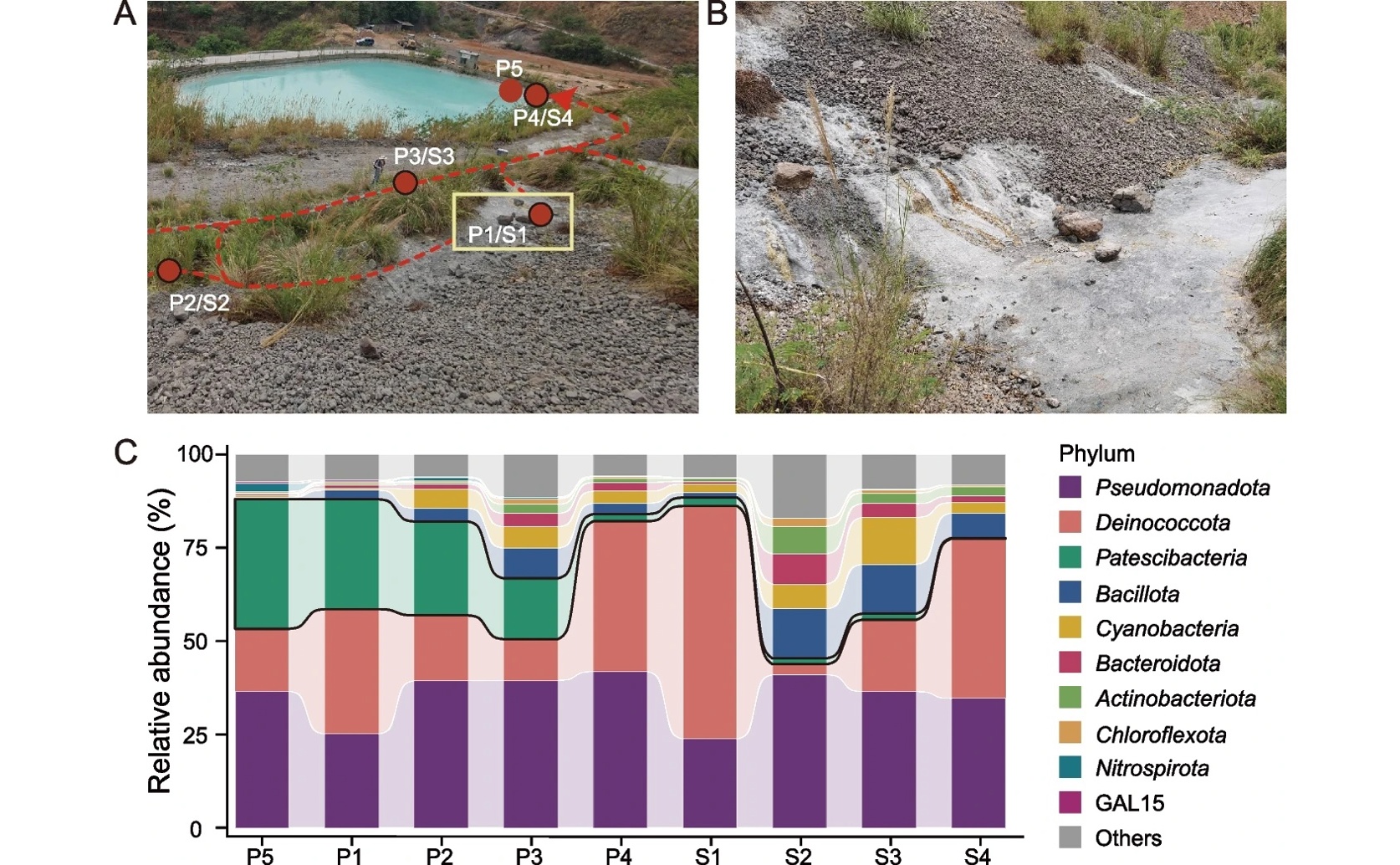
Microbial community analysis of a hyperalkaline environment formed by weathering steel slag deposits (a, b) reveals that symbiotic Candidate Phyla Radiation (CPR) bacteria are highly abundant, comprising up to 34.8% of the total population (c).
Key Findings
- *Researchers in Wuhan explored ultra-alkaline environments and found that CPR bacteria make up up to 35% of the microbial communities there.*
- *These tiny bacteria rely on partner organisms for essential nutrients because they can't produce them on their own.*
- *CPR bacteria supply vital folate compounds to their hosts, highlighting a mutualistic relationship that supports ecosystem stability.*
References
Main Study
1) Candidate Phyla Radiation (CPR) bacteria from hyperalkaline ecosystems provide novel insight into their symbiotic lifestyle and ecological implications
Published 7th April, 2025
https://doi.org/10.1186/s40168-025-02077-y
Related Studies
2) Beyond genomics in Patescibacteria: A trove of unexplored biology packed into ultrasmall bacteria.
3) Unusual biology across a group comprising more than 15% of domain Bacteria.
4) Soil Candidate Phyla Radiation Bacteria Encode Components of Aerobic Metabolism and Co-occur with Nanoarchaea in the Rare Biosphere of Rhizosphere Grassland Communities.
5) Major New Microbial Groups Expand Diversity and Alter our Understanding of the Tree of Life.
Related Articles
 25th March, 2025 | Jenn Hoskins