Impact of Warming and Nitrogen on Plant Diversity in Alpine Meadows

Jenn Hoskins
25th March, 2025

Impact of Warming and Nitrogen on Plant Diversity in Alpine Meadows

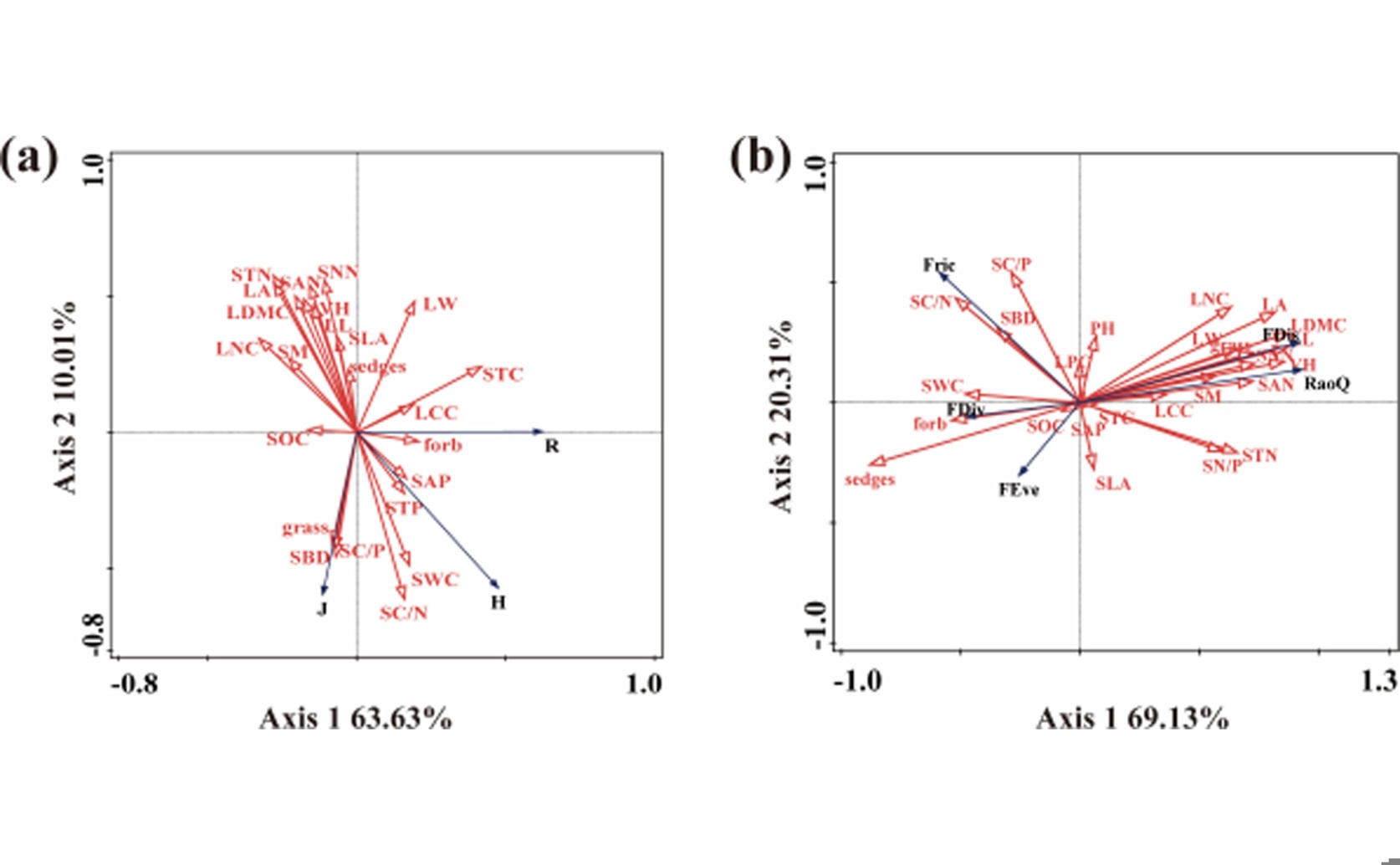
Redundancy analysis of plant species diversity, plant functional diversity, plant functional traits and soil physical and chemical properties under warming and nitrogen deposition.

Image adapted from: Xiang et al. / CC BY (Source)

Key Findings

  • In the Qinghai-Tibet Plateau, rising temperatures and added nitrogen initially increased plant variety but later caused a decline in species diversity
  • Consistent warming and nitrogen levels reduced the range of plant functions, making the ecosystem less stable and resilient
  • Changes in plant characteristics and soil nutrients drove these shifts, highlighting the need for careful ecosystem management
Plant species and their functional diversity are crucial for maintaining the stability and sustainability of grassland ecosystems. However, understanding how these aspects respond to environmental changes such as warming and nitrogen deposition remains limited. A recent study conducted by researchers at Qinghai University and the University of Udine[1] investigated these dynamics in the alpine meadows of the Qinghai-Tibet Plateau, aiming to uncover the changes in species and functional diversity under the influence of warming and nitrogen deposition, as well as the underlying mechanisms. The study found that both warming and nitrogen deposition, along with their combined effects, significantly impacted plant species diversity and functional diversity indices in these alpine meadows. Specifically, the Shannon-Wiener index, which measures species diversity, initially increased with rising temperatures and nitrogen levels but later decreased as these factors continued to escalate. In contrast, functional diversity indices such as functional richness, functional differentiation, functional dispersion, and Rao’s quadratic entropy consistently declined with increasing warming and nitrogen deposition. These findings build upon previous research that has highlighted the complex responses of alpine ecosystems to climatic and anthropogenic pressures. For instance, a study by Qinghai University using satellite data revealed that climate warming has led to earlier phenological events and faster plant growth in alpine grasslands over several decades, without altering the total annual biomass[2]. This aligns with the current study's observation that initial increases in species diversity may be driven by similar shifts in plant growth patterns. Additionally, research from the Aerjin Mountain Nature Reserve demonstrated that long-term warming and nitrogen deposition can enhance biomass accumulation in alpine plant communities, although the effects on diversity vary among different vegetation types[3]. The current study extends these insights by showing that functional diversity, which encompasses the range of different biological traits within a community, tends to decrease even as species diversity may temporarily rise. To explore these relationships, the researchers employed a combination of redundancy analysis and structural equation modeling. These methods allowed them to discern the direct and indirect effects of warming and nitrogen deposition on plant diversity. The analysis revealed that both climatic and soil factors play significant roles. Plant characteristics such as the importance value of grasses, leaf nitrogen content, specific leaf area, leaf area, and leaf weight, along with soil properties like total nitrogen and the soil carbon-nitrogen ratio, were identified as key determinants influencing plant community diversity under changing environmental conditions. The study also highlighted the weakening relationship between species diversity and functional diversity as warming and nitrogen deposition intensified. This suggests that while the number of species may initially increase, the functional roles these species play within the ecosystem become less diverse. Such a decoupling could have long-term implications for ecosystem resilience and function, potentially making these grasslands more vulnerable to further environmental changes. These results are particularly relevant in the context of grazing impacts on alpine ecosystems. Previous research has shown that grazing, especially during the warm season, can significantly reduce nutrient storages in alpine grasslands[4]. The current study’s findings on functional diversity add another layer of understanding, indicating that not only does grazing affect the quantity of forage but also the quality and functional traits of the plant community. Together, these studies underscore the importance of managing both climatic factors and land use practices to preserve the ecological integrity of alpine grasslands. The research underscores the complexity of ecosystem responses to multiple stressors. While warming and nitrogen deposition can initially promote certain aspects of biodiversity, their long-term effects may undermine the functional diversity that supports ecosystem stability. The identification of specific plant and soil factors that mediate these responses provides valuable targets for conservation efforts. By focusing on traits such as leaf nitrogen content and soil nutrient ratios, managers can better predict and mitigate the impacts of environmental changes on alpine grasslands. In conclusion, the study from Qinghai University and the University of Udine advances our understanding of how alpine meadow plant communities respond to warming and nitrogen deposition. By integrating species diversity with functional diversity metrics, the research highlights the nuanced ways in which environmental changes can reshape ecosystem dynamics. This knowledge is essential for developing informed strategies to protect and sustain these vital grassland ecosystems in the face of ongoing global change.

EnvironmentEcologyPlant Science

References

Main Study

1) Effects of warming and nitrogen deposition on species and functional diversity of plant communities in the alpine meadow of Qinghai-Tibet Plateau

Published 24th March, 2025

https://doi.org/10.1371/journal.pone.0319581


Related Studies

2) Alpine grassland plants grow earlier and faster but biomass remains unchanged over 35 years of climate change.

https://doi.org/10.1111/ele.13474


3) Biomass and Species Diversity of Different Alpine Plant Communities Respond Differently to Nitrogen Deposition and Experimental Warming.

https://doi.org/10.3390/plants10122719


4) Response of forage nutrient storages to grazing in alpine grasslands.

https://doi.org/10.3389/fpls.2022.991287


Related Articles

An unhandled error has occurred. Reload 🗙