Combining Different Farm Activities Boosts Small Farmers' Earnings

Jenn Hoskins
7th April, 2025

Combining Different Farm Activities Boosts Small Farmers' Earnings

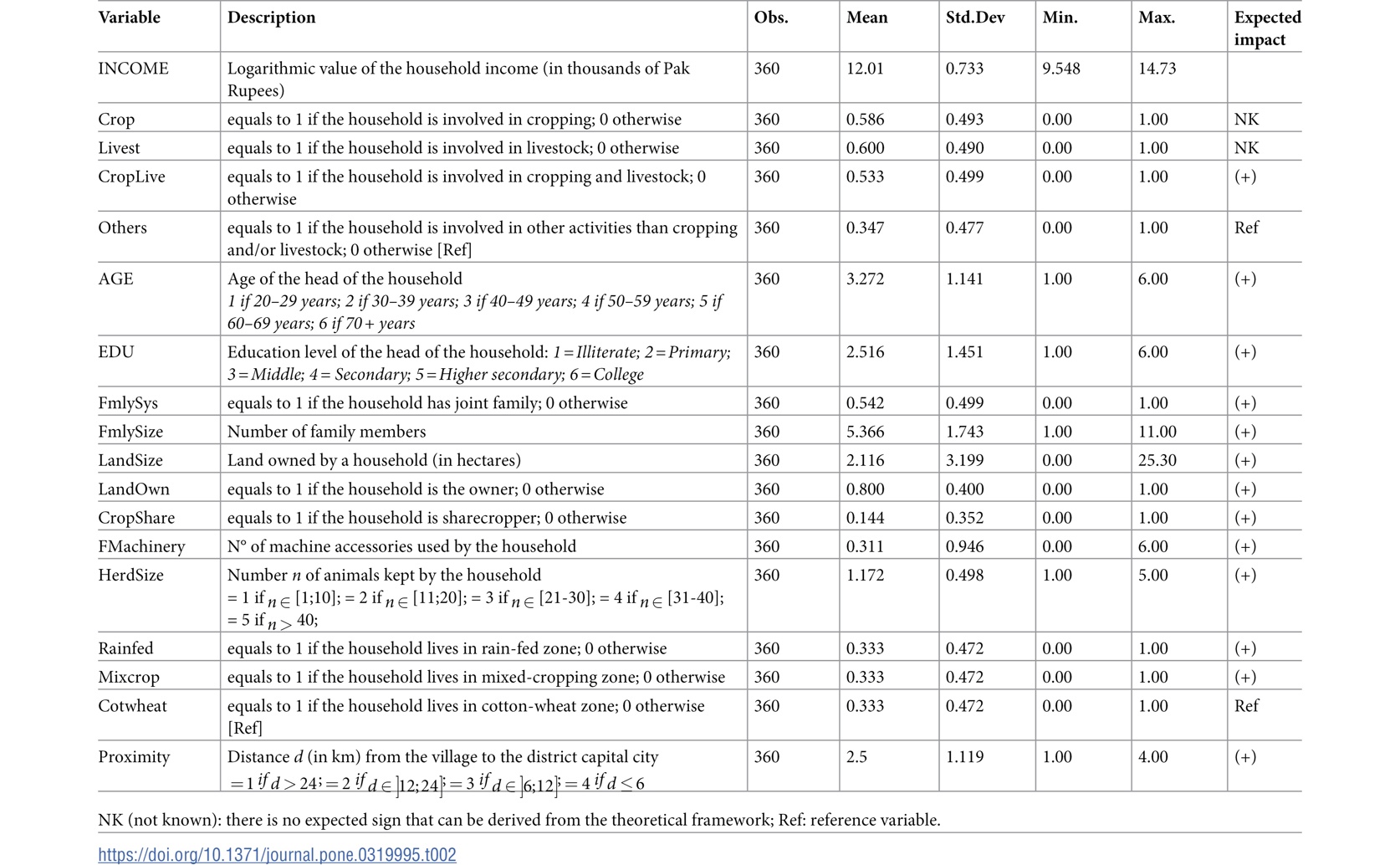
Descriptive statistics of variables.

Image adapted from: Fares et al. / CC BY (Source)

Key Findings

  • In Punjab, Pakistan, farmers who combine crop and livestock farming earn significantly higher incomes
  • Mixed farming diversifies income sources, enhancing resilience against market and environmental challenges
  • Factors like education, access to markets, and larger land and herd sizes further boost farmers’ earnings
Mixed crop-livestock farming is a common practice in less developed countries, where smallholder farmers integrate crop production with raising livestock. This approach has been widely recognized for its agronomic and environmental benefits, but its economic advantages had not been thoroughly examined until recently. A study conducted by The Islamia University of Bahawalpur, Pakistan[1] explores the economic complementarity of mixed farming systems, providing valuable insights into how these practices can enhance the livelihoods of smallholder farmers. The primary challenge facing smallholder farmers today is achieving food security while managing limited resources sustainably. As population growth and climate change exert pressure on agricultural systems, finding ways to produce more food with minimal environmental impact is crucial[2][3]. Traditional specialized farming, whether crop-only or livestock-only, often limits farmers to a single source of income, making them vulnerable to market fluctuations and environmental uncertainties. In contrast, mixed crop-livestock systems offer a diversified income stream and greater resilience against these challenges. The study in Punjab, Pakistan, involved 360 farming households and aimed to determine whether mixed farming could provide higher incomes compared to specialized systems. By applying the theory of supermodularity, the researchers developed empirical predictions and tested them using econometric methods. The results revealed a significant positive complementary effect between crop and livestock activities. On average, farmers who adopted mixed farming earned an additional 791 rupees out of a total income of 12,010 rupees. This finding suggests that mixed farming not only supports agronomic and environmental goals but also plays a crucial role in alleviating poverty among smallholders. Previous research supports these findings by highlighting the multifaceted benefits of mixed crop-livestock systems. For instance, mixed systems enhance nutrient cycling, reduce the need for chemical inputs, and create economies of scope at the farm level[2][4]. These systems leverage the synergies between crops and livestock, where livestock provide manure that enriches the soil, and crop residues serve as feed for animals. This integrated approach leads to more efficient resource use and can lower production costs, as observed in the French 'Coteaux de Gascogne' region where mixed farms had lower costs compared to specialized crop farms[4]. In addition to the economic benefits, the Punjab study identified several factors that contribute to higher incomes for smallholders. Education level of the household head, access to urban markets, herd size, and land size were all significant predictors of increased income. Access to urban markets is particularly important as it enables farmers to sell both crops and livestock products at better prices, enhancing their overall profitability. This aligns with the recommendations of earlier studies, which emphasize the importance of improved market access and the adoption of new technologies to support smallholder farmers[2][3]. Interestingly, the study also found that the positive impact of land expansion on income did not depend on the property rights regime. Whether the additional land was owned or rented through sharecropping, it still contributed to higher incomes. This flexibility is crucial for smallholder farmers who may not have secure land ownership but can still benefit from expanding their farming activities. Policies that support both land ownership and sharecropping arrangements can thus play a vital role in promoting mixed farming systems. The economic resilience of mixed crop-livestock farms is another key advantage highlighted by the study. Mixed farms were found to be less sensitive to fluctuations in input and output prices compared to specialized farms. This stability is essential for smallholders who often face volatile market conditions and limited financial resources. By diversifying their income sources, mixed farmers can better withstand economic shocks and maintain a steady income. Environmental sustainability is another critical aspect where mixed farming systems show promise. The Punjab study demonstrated that mixed crop-livestock systems have a lower potential for nitrogen pollution compared to specialized dairy and crop farming systems. This reduction in environmental footprint is consistent with findings from other regions, where integrated farming practices have been shown to decrease the reliance on synthetic fertilizers and pesticides, thereby mitigating their negative environmental impacts[3][4]. The study by The Islamia University of Bahawalpur also underscores the importance of targeted public policies in supporting mixed farming. To maximize the benefits of mixed crop-livestock systems, policies should focus on improving education, enhancing market access, and supporting both land ownership and sharecropping. By addressing these key factors, policymakers can help smallholder farmers increase their incomes and achieve greater economic and environmental sustainability. In conclusion, the research from Punjab adds significant evidence to the body of knowledge supporting mixed crop-livestock farming as a viable and beneficial practice for smallholder farmers. By providing a direct measure of the economic benefits and identifying the key factors that enhance farm incomes, this study complements earlier research and offers practical insights for policymakers and development practitioners aiming to promote sustainable agriculture and reduce poverty in less developed regions[2][3][4].

AgricultureSustainability

References

Main Study

1) Complementarity in mixed farming systems enhances the smallholders income: Evidence from Punjab, Pakistan

Published 4th April, 2025

https://doi.org/10.1371/journal.pone.0319995


Related Studies

2) Smart investments in sustainable food production: revisiting mixed crop-livestock systems.

https://doi.org/10.1126/science.1183725


3) Integrated farming with intercropping increases food production while reducing environmental footprint.

https://doi.org/10.1073/pnas.2106382118


4) Mixed crop-livestock systems: an economic and environmental-friendly way of farming?

https://doi.org/10.1017/S1751731112000675


Related Articles

An unhandled error has occurred. Reload đź—™