How Freezing and Thawing Affect the Spoilage of Stored Perishable Foods

Greg Howard
7th April, 2025

How Freezing and Thawing Affect the Spoilage of Stored Perishable Foods

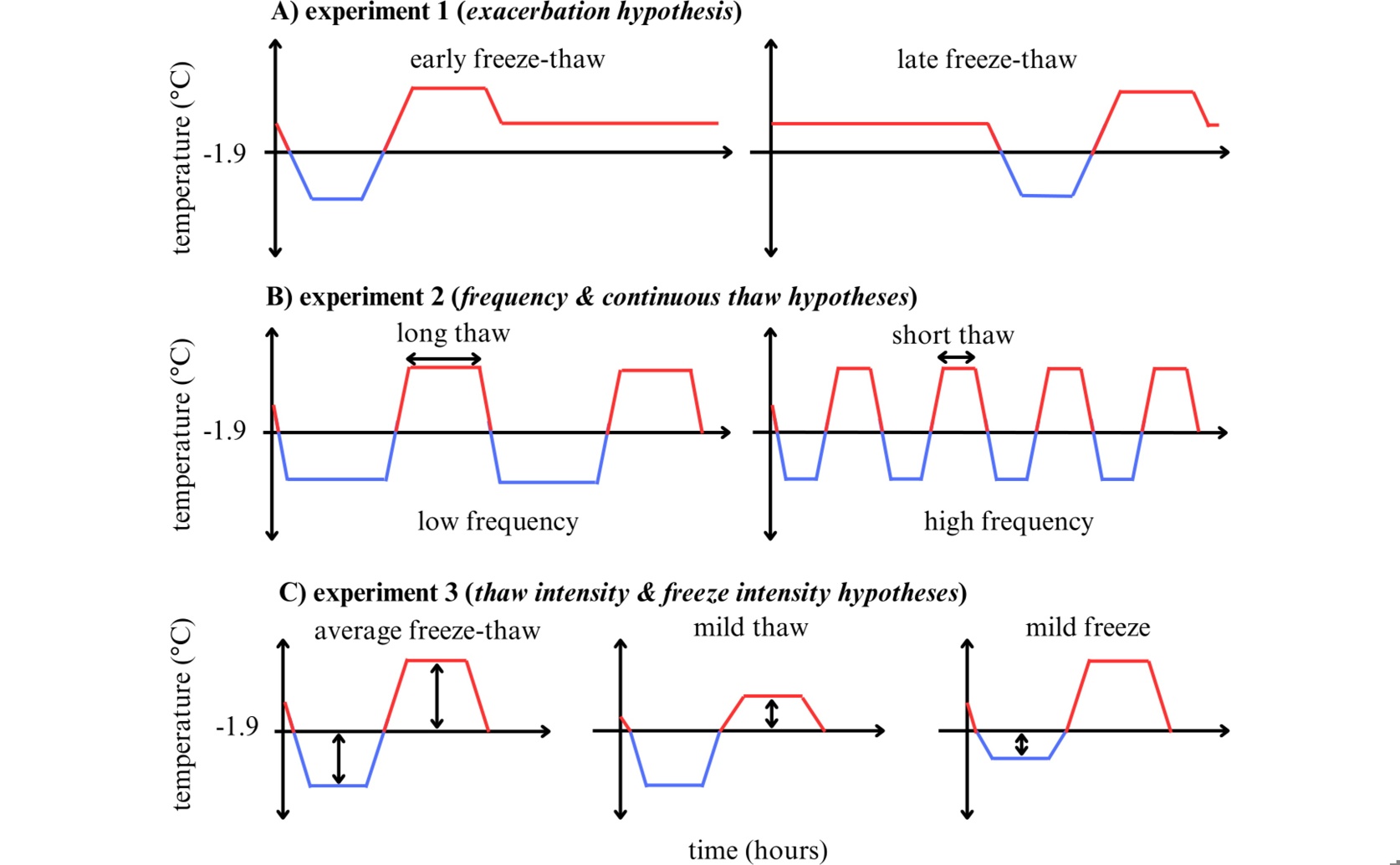
These experimental freezer manipulations tested how the timing (a), frequency and duration (b), and intensity (c) of freeze-thaw cycles affect the spoilage of cached food, a key factor in the decline of species like the Canada jay (Perisoreus canadensis).

Image adapted from: Ong et al. / CC BY (Source)

Key Findings

  • In Algonquin Provincial Park, early freeze-thaw cycles caused more spoilage of stored food for Canada jays
  • Longer thaw periods, rather than the number of freeze-thaw events, lead to greater food degradation
  • Milder freezing conditions reduce the quality of cached food, challenging the survival of Canada jays
Climate change is altering the patterns of temperature fluctuations, which can have significant impacts on wildlife. For species that rely on caching perishable food to survive harsh winters, understanding how these temperature changes affect their stored food is crucial. A recent study conducted by researchers at the University of Guelph[1] sheds light on how freeze-thaw cycles influence the quality of cached food, providing valuable insights into the challenges faced by these animals. The study focused on Canada jays, a bird species that caches raw chicken as a food source to support overwinter survival and breeding. Over the past few decades, populations of Canada jays in Algonquin Provincial Park, Ontario, have declined by more than 70%, raising concerns about the factors contributing to this decline. The researchers aimed to determine how different aspects of freeze-thaw events—such as timing, frequency, duration, and intensity—affect the mass loss of cached food, which serves as a proxy for its caloric content. To simulate natural conditions, the researchers placed raw chicken between pieces of black spruce bark in programmable freezers, mimicking the storage methods of Canada jays. These setups were subjected to various freeze-thaw treatments based on historical weather data from the region. Over a month-long period, the team monitored the mass loss of the cached food under different scenarios. Interestingly, the study found that increasing the frequency of freeze-thaw cycles did not significantly impact mass loss. This suggests that the structural damage caused by ice crystal formation and reformation, often a concern in meat storage[2][3], might not play a major role in the degradation of cached food in this context. Instead, the primary factors influencing mass loss were the duration of individual thaw periods and the timing of these events. Longer thaw periods led to greater mass loss, likely due to increased microbial growth, oxidation, and drip loss[2][4][5]. These processes degrade the quality of the food, making it less nutritious and less likely to support the birds' survival and reproductive needs. Additionally, the study revealed that caches subjected to early freeze-thaw events lost more weight compared to those experiencing similar events later in the storage period. This finding highlights the importance of the timing of temperature fluctuations. Early thaws may provide a longer window for spoilage processes to take effect, further reducing the quality of the stored food. Another notable discovery was that milder freeze conditions resulted in less mass loss. Contrary to expectations, warmer than average thaws following a freeze also led to reduced spoilage. This counterintuitive result suggests that the intensity of the freeze and the subsequent thawing plays a complex role in determining the extent of food degradation. These findings are particularly relevant in the context of climate change, which is expected to bring more unpredictable and variable temperature patterns. As freeze-thaw cycles become more common and intense, the quality of cached food could decline, adversely affecting species like the Canada jay that depend on these reserves. The research aligns with earlier studies that demonstrated how freeze-thaw cycles negatively impact meat quality by increasing microbial counts and promoting oxidation[2][3][4][5]. However, it extends this knowledge to an ecological context, showing how these processes can influence wildlife populations. The implications of this study are far-reaching. For conservation efforts, understanding the specific ways in which climate-induced changes affect food storage can inform strategies to support declining populations. For instance, providing supplemental feeding during critical periods or protecting key caching sites that may offer more stable conditions could help mitigate the negative effects of increased freeze-thaw events. Moreover, the research underscores the importance of considering multiple factors when assessing the impact of climate change on wildlife. It is not just the presence of freeze-thaw cycles, but their duration, timing, and intensity that determine their effect on cached food quality. This nuanced understanding can guide more effective conservation policies and adaptive management practices. In summary, the University of Guelph's study highlights how specific aspects of freeze-thaw cycles contribute to the degradation of cached food, offering a direct link between climate variability and wildlife fitness. By building on previous research that explored the biochemical and microbial changes associated with freeze-thaw cycles[2][3][4][5], this study provides a comprehensive view of the challenges faced by species that rely on perishable food caches. As climate patterns continue to shift, such insights will be critical in developing strategies to protect and sustain vulnerable wildlife populations.

AgricultureSustainability

References

Main Study

1) Experimental evidence demonstrating how freeze-thaw patterns affect spoilage of perishable cached food

Published 4th April, 2025

https://doi.org/10.1371/journal.pone.0319043


Related Studies

2) Effect of frozen and refrozen storage of beef and chicken meats on inoculated microorganisms and meat quality.

https://doi.org/10.1016/j.meatsci.2021.108453


3) Impact of freezing and thawing on the quality of meat: review.

https://doi.org/10.1016/j.meatsci.2012.01.013


4) Effect of multiple freeze-thaw cycles on the quality of chicken breast meat.

https://doi.org/10.1016/j.foodchem.2014.09.095


5) Physicochemical change and protein oxidation in porcine longissimus dorsi as influenced by different freeze-thaw cycles.

https://doi.org/10.1016/j.meatsci.2009.05.003


Related Articles

An unhandled error has occurred. Reload 🗙