Yeast Fermentation Products Help Combat Drug-Resistant Salmonella in Chicken Gut

Jim Crocker
6th April, 2025

Yeast Fermentation Products Help Combat Drug-Resistant Salmonella in Chicken Gut

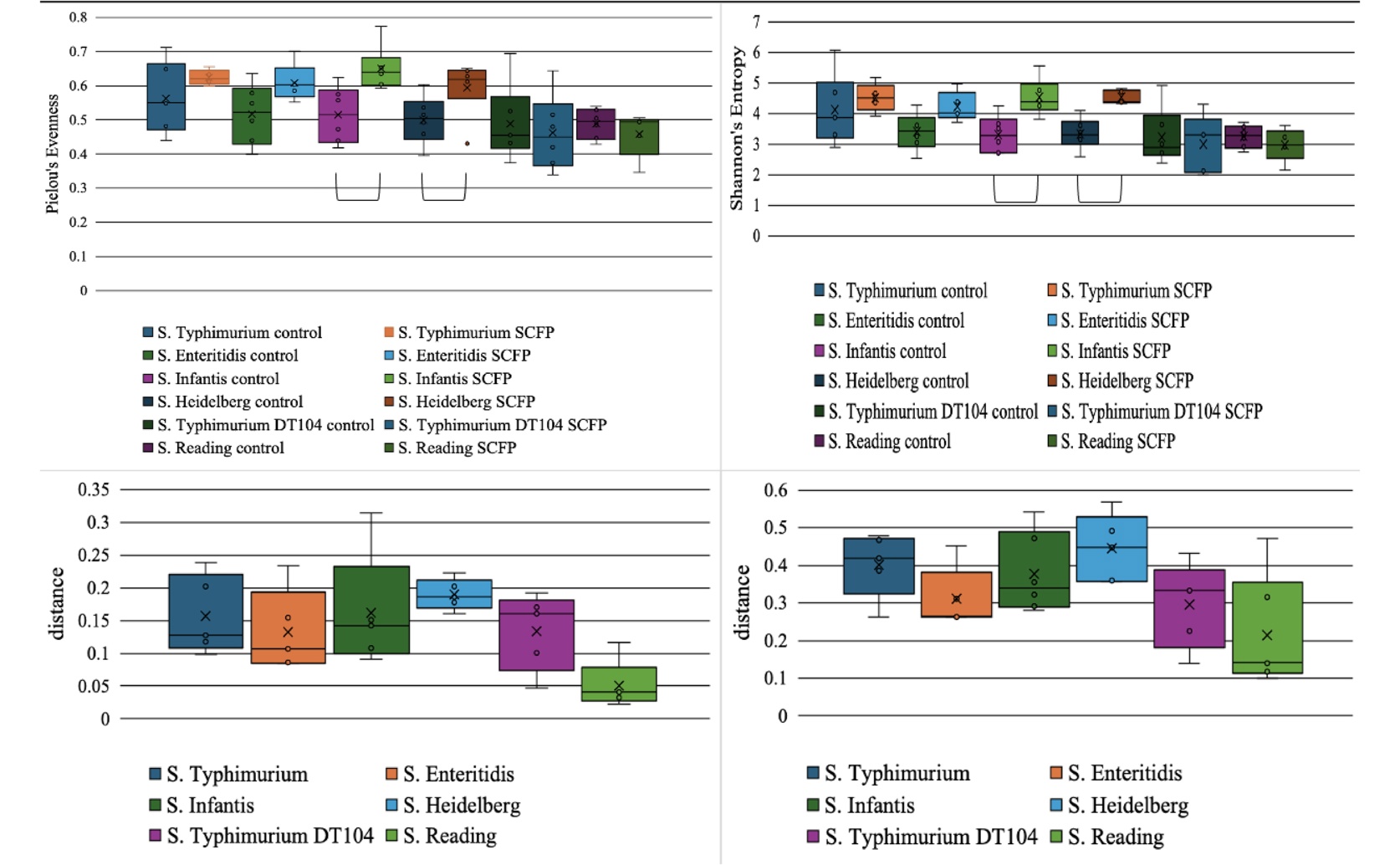
The postbiotic SCFP enhanced cecal microbial diversity and abundance (a–d), particularly in samples inoculated with S. Infantis and S. Heidelberg, providing a key mechanism for its ability to reduce multidrug-resistant Salmonella.

Image adapted from: Olson et al. / CC0 1.0 (Source)

Key Findings

  • Researchers at the University of Wisconsin-Madison added a postbiotic supplement to chicken feed, significantly reducing several drug-resistant Salmonella types
  • The supplement also increased the diversity of beneficial gut bacteria in chickens, promoting healthier intestines
  • This approach can help lower the risk of foodborne illnesses and combat antibiotic resistance in the poultry industry
Salmonella infections in poultry continue to pose significant public health challenges globally. As consumption of chicken remains high, understanding and mitigating Salmonella contamination is crucial to prevent foodborne illnesses. Traditional reliance on antibiotics to control Salmonella has led to the emergence of multidrug-resistant (MDR) strains, complicating treatment and raising concerns about antibiotic resistance spreading through the food supply[2][3]. Addressing this issue requires alternative strategies that enhance poultry health while reducing pathogen loads without contributing to antibiotic resistance. A recent study conducted by researchers at the University of Wisconsin-Madison[1] explored the effectiveness of a postbiotic supplement, Diamond V Original XPC®, derived from Saccharomyces cerevisiae fermentation (SCFP). This supplement is designed to interact with the poultry host to boost immune function, support gut integrity, and maintain a balanced gastrointestinal microbiota. The study aimed to determine whether adding 1.25% SCFP to poultry feed could reduce the presence of MDR Salmonella serovars and influence the microbial communities in the ceca of chickens. The research involved an in vitro poultry cecal model where cecal contents were inoculated with approximately 10^8 colony-forming units of various MDR Salmonella serovars, including S. Typhimurium, S. Enteritidis, S. Infantis, S. Heidelberg, S. Typhimurium DT104, and S. Reading. The samples were then incubated for 24 hours at 37°C under anaerobic conditions. Two treatment groups were compared: a control group receiving standard poultry feed and a treatment group receiving feed supplemented with 1.25% SCFP. Results demonstrated that SCFP significantly reduced the population of five out of the six tested Salmonella serovars. The most substantial reductions were observed in S. Enteritidis and S. Heidelberg, which saw decreases of 3.9 and 3.8 log10 CFU/mL, respectively. Other serovars like S. Infantis and S. Typhimurium ATCC also experienced significant reductions, while S. Reading showed a moderate decrease. Notably, the reduction in S. Typhimurium DT104 was particularly influenced by the incubation time. In addition to reducing Salmonella counts, the study examined changes in the cecal microbiota. Using genomic DNA extraction and sequencing, the researchers found that SCFP treatment enhanced microbial richness and evenness, especially in samples inoculated with S. Infantis and S. Heidelberg. These enhancements suggest that SCFP fosters a more diverse and resilient gut microbiome, which can help suppress pathogen growth. The increase in beneficial bacteria, such as those from the Lachnospiraceae family, indicates that SCFP may promote the production of fermentation end products that inhibit Salmonella. This study builds on previous research that highlights the prevalence of Salmonella in poultry and the challenges posed by antibiotic resistance[2][3]. By focusing on a postbiotic approach, the University of Wisconsin-Madison researchers align with ongoing efforts to find alternatives to antibiotics in poultry production[4]. Prebiotics and postbiotics, like SCFP, are gaining attention for their ability to support gut health and enhance the immune system, thereby reducing the need for antibiotics[4]. Furthermore, the findings relate to strategies discussed in the poultry science symposium[5], which emphasize the importance of understanding Salmonella interactions with poultry and their microbiota. The ability of SCFP to alter the microbial composition and increase diversity aligns with recommended practices for improving gut health and controlling pathogen persistence in poultry environments[5]. This comprehensive approach is essential for developing effective, sustainable methods to manage Salmonella in the poultry industry. The implications of this study are significant for both poultry producers and public health. By reducing the burden of MDR Salmonella in chickens, SCFP supplementation could lower the risk of salmonellosis in humans consuming poultry products. Additionally, enhancing gut microbiota diversity can improve overall poultry health and productivity, offering economic benefits alongside health advantages[4]. In conclusion, the University of Wisconsin-Madison study presents promising evidence that SCFP supplementation in poultry feed can effectively reduce MDR Salmonella serovars and promote a healthier gut microbiome. This aligns with broader research efforts to find antibiotic alternatives and implement comprehensive Salmonella control strategies in poultry production[2][3][4][5]. As the poultry industry continues to seek sustainable and safe methods to ensure food safety, postbiotics like SCFP offer a valuable tool in the ongoing battle against Salmonella and antibiotic resistance.

MedicineAgricultureBiotech

References

Main Study

1) Potential of saccharomyces cerevisiae fermentation-derived postbiotic technology in mitigating multiple drug-resistant Salmonella enterica serovars in an in vitro broiler cecal model

Published 3rd April, 2025

https://doi.org/10.1371/journal.pone.0320977


Related Studies

2) Prevalence and antibiotic resistance of Salmonella in organic and non-organic chickens on the Eastern Shore of Maryland, USA.

https://doi.org/10.3389/fmicb.2023.1272892


3) Salmonellosis: An Overview of Epidemiology, Pathogenesis, and Innovative Approaches to Mitigate the Antimicrobial Resistant Infections.

https://doi.org/10.3390/antibiotics13010076


4) An Introduction to the Avian Gut Microbiota and the Effects of Yeast-Based Prebiotic-Type Compounds as Potential Feed Additives.

https://doi.org/10.3389/fvets.2015.00028


5) Controlling Salmonella: strategies for feed, the farm, and the processing plant.

https://doi.org/10.1016/j.psj.2023.103086


Related Articles

An unhandled error has occurred. Reload 🗙