
Controlled Cancer Transformation in Single Cells Within Living Organisms
Greg Howard
28th March, 2025


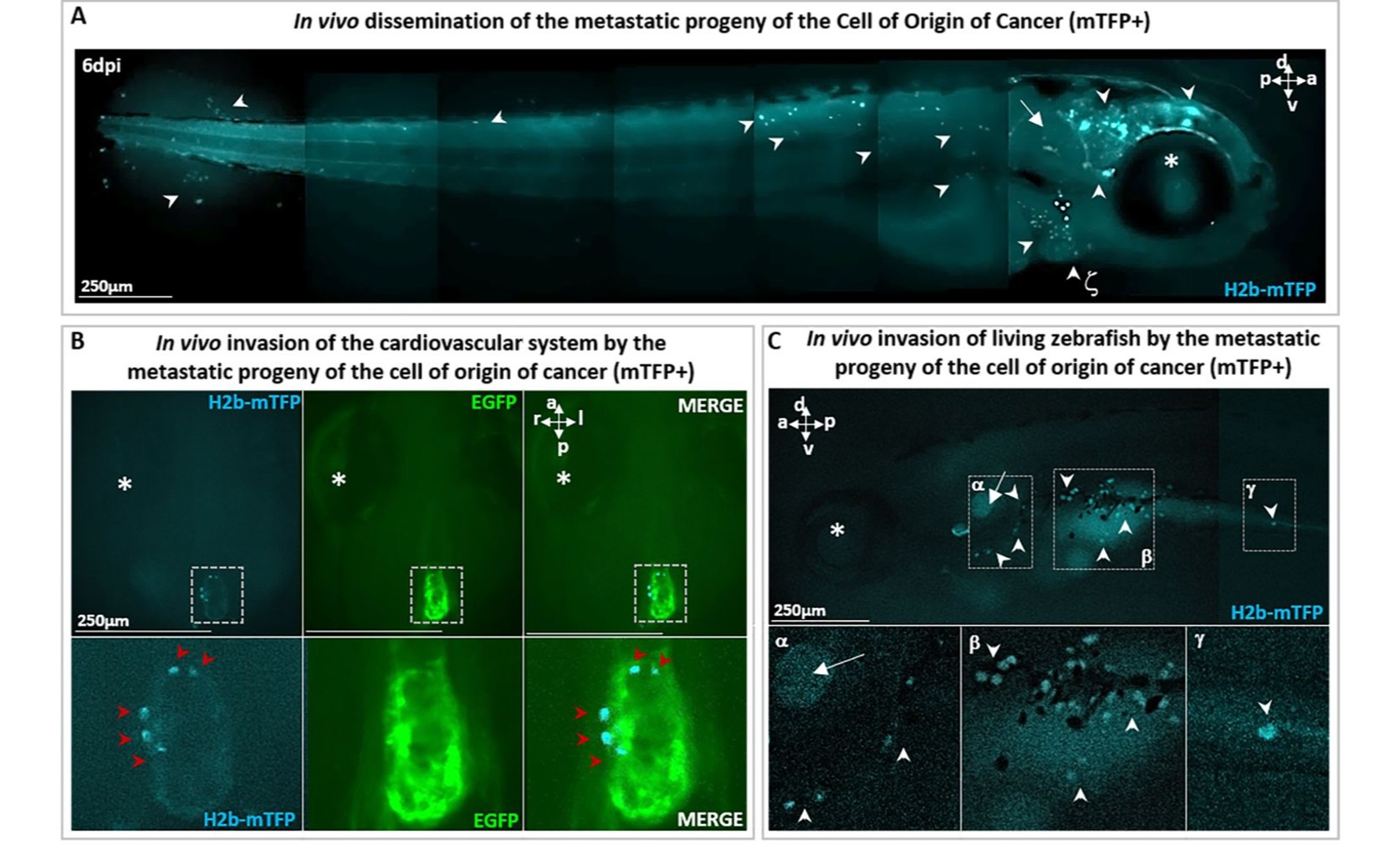
Confirming the malignant nature of the transformation, the progeny of a single cancerous brain cell in a zebrafish (Danio rerio) larva not only formed a primary tumor but also metastasized throughout the body (a), colonizing distant tissues like the heart (b) and digestive tract (c).
Key Findings
- Researchers in Paris used zebrafish to show that activating both a cancer-related gene and a cell-reprogramming factor in one cell can quickly form tumors
- Turning on only the cancer gene KRASG12V didn’t cause cancer, highlighting that both factors are needed for a cell to become malignant
- This controlled method helps scientists better understand how single cells turn cancerous, paving the way for improved cancer treatments
References
Main Study
1) In vivo targeted and deterministic single-cell malignant transformation
Published 25th March, 2025
https://doi.org/10.7554/eLife.97650
Related Studies
2) Human tumor genomics and zebrafish modeling identify SPRED1 loss as a driver of mucosal melanoma.
3) Vertebrate Cell Differentiation, Evolution, and Diseases: The Vertebrate-Specific Developmental Potential Guardians VENTX/NANOG and POU5/OCT4 Enter the Stage.
4) Developmental chromatin programs determine oncogenic competence in melanoma.
Related Articles
 21st June, 2024 | Jenn Hoskins