Black Seed Helps Create and Test Iron Nanoparticles for Health Benefits

Jenn Hoskins
21st June, 2024

Black Seed Helps Create and Test Iron Nanoparticles for Health Benefits

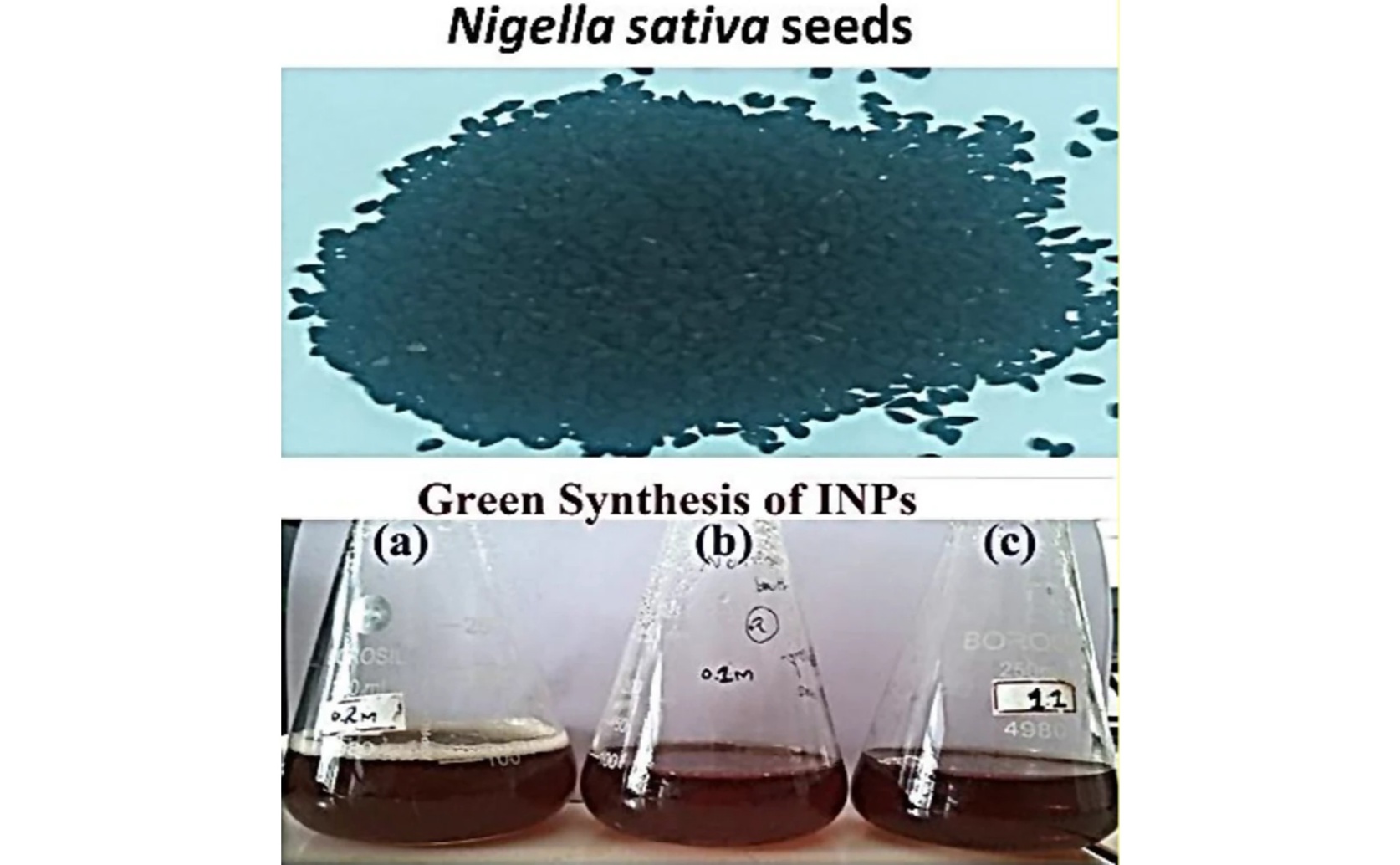
The successful synthesis of iron oxide nanoparticles using Nigella sativa extract is visually confirmed by the distinct color change to dark brown in the reaction mixtures at concentrations of 01:01 (a), 01:04 (b), and 02:04 (c).

Image adapted from: Shanmugam et al. / CC BY (Source)

Key Findings

  • Researchers at the Saveetha Institute synthesized iron oxide nanoparticles using black cumin seed extract
  • These nanoparticles showed strong antibacterial, antifungal, antioxidant, and anti-inflammatory activities
  • The green synthesis method is environmentally friendly and enhances the nanoparticles' antimicrobial efficacy
Antibiotic resistance is a significant global health concern, with bacteria evolving to resist the effects of antibiotics, making infections harder to treat and leading to higher mortality rates and healthcare costs[2][3]. The overuse and misuse of antibiotics, along with environmental stressors and poor hygiene, have accelerated this problem. Traditional antibiotics are becoming less effective, and the development of new antibiotics has not kept pace with the emergence of resistant strains[2][4]. Recent research from the Saveetha Institute of Medical and Technical Sciences presents a promising solution using iron oxide nanoparticles (IONPs) synthesized through a green method involving black cumin seed extract[1]. The study achieved the synthesis of iron oxide nanoparticles using black cumin seed (Nigella sativa) extract as a reducing and capping agent. The synthesis was conducted at three different concentrations: 01:01, 02:04, and 01:04. The nanoparticles were characterized using various techniques, including UV-visible spectroscopy, X-ray diffraction (XRD), Fourier-transform infrared spectroscopy (FTIR), and atomic force microscopy (AFM). UV-visible spectroscopy showed maximum absorbance peaks at 380 nm, 400 nm, and 680 nm for the different concentrations, confirming the formation of iron oxide nanoparticles. AFM analysis revealed the spherical shape of the nanoparticles, while XRD spectra indicated a cubic crystal structure. FTIR analysis identified characteristic peaks indicative of iron nanoparticle synthesis. The black cumin extract-mediated iron oxide nanoparticles demonstrated substantial antibacterial, antifungal, antioxidant, and anti-inflammatory activities in a dose-dependent manner. This aligns with previous studies highlighting the potential of nanoparticles to combat antimicrobial resistance. Nanoparticles can disrupt bacterial cell walls or membranes, effectively eliminating resistant strains and serving as carriers for antibiotics, thus enhancing drug potency and reducing overall antibiotic exposure[2][3][4]. The study's green synthesis approach using black cumin seed extract is particularly noteworthy. This method is environmentally friendly and leverages natural compounds, reducing potential toxicity and side effects associated with synthetic chemicals. The use of black cumin seed extract not only facilitates the reduction and stabilization of nanoparticles but also imparts additional bioactive properties to the nanoparticles, enhancing their antimicrobial efficacy. Nanotechnology, as highlighted in previous studies, offers a promising avenue to address antibiotic resistance. Nanoparticles can be engineered to target and disrupt bacterial mechanisms, providing a novel approach to overcoming resistance. By understanding the selective pressures that drive bacterial resistance, researchers can design more effective interventions. The synergy between nanotechnology and evolutionary theory offers a powerful strategy for developing new treatments and preserving existing antibiotics[2][3]. The current study from the Saveetha Institute of Medical and Technical Sciences builds on these findings by demonstrating the practical application of iron oxide nanoparticles synthesized through a green method. The substantial antimicrobial activity observed in the study suggests that these nanoparticles could be a valuable addition to the arsenal against antibiotic-resistant bacteria. This research not only supports previous findings but also expands on them by providing a sustainable and effective method for nanoparticle synthesis. In conclusion, the green synthesis of iron oxide nanoparticles using black cumin seed extract presents a promising solution to the growing problem of antibiotic resistance. By leveraging the unique properties of nanoparticles and the bioactive compounds in black cumin, this approach offers a sustainable and effective strategy for combating resistant bacterial strains. This study, along with previous research, underscores the potential of nanotechnology in developing new antimicrobial therapies and preserving the efficacy of existing antibiotics[2][3][4].

MedicineHealthBiotech

References

Main Study

1) Black seed assisted synthesis, characterization, free radical scavenging, antimicrobial and anti-inflammatory activity of iron oxide nanoparticles.

Published 20th June, 2024

https://doi.org/10.1186/s12906-024-04552-9


Related Studies

2) Nanotechnology-A Light of Hope for Combating Antibiotic Resistance.

https://doi.org/10.3390/microorganisms11061489


3) Antimicrobial Resistance and Inorganic Nanoparticles.

https://doi.org/10.3390/ijms222312890


4) Combatting antibiotic-resistant bacteria using nanomaterials.

https://doi.org/10.1039/c7cs00748e


Related Articles

An unhandled error has occurred. Reload 🗙