A Machine Learning Approach to Understanding Anthrax Disease

Jim Crocker
2nd April, 2025

A Machine Learning Approach to Understanding Anthrax Disease

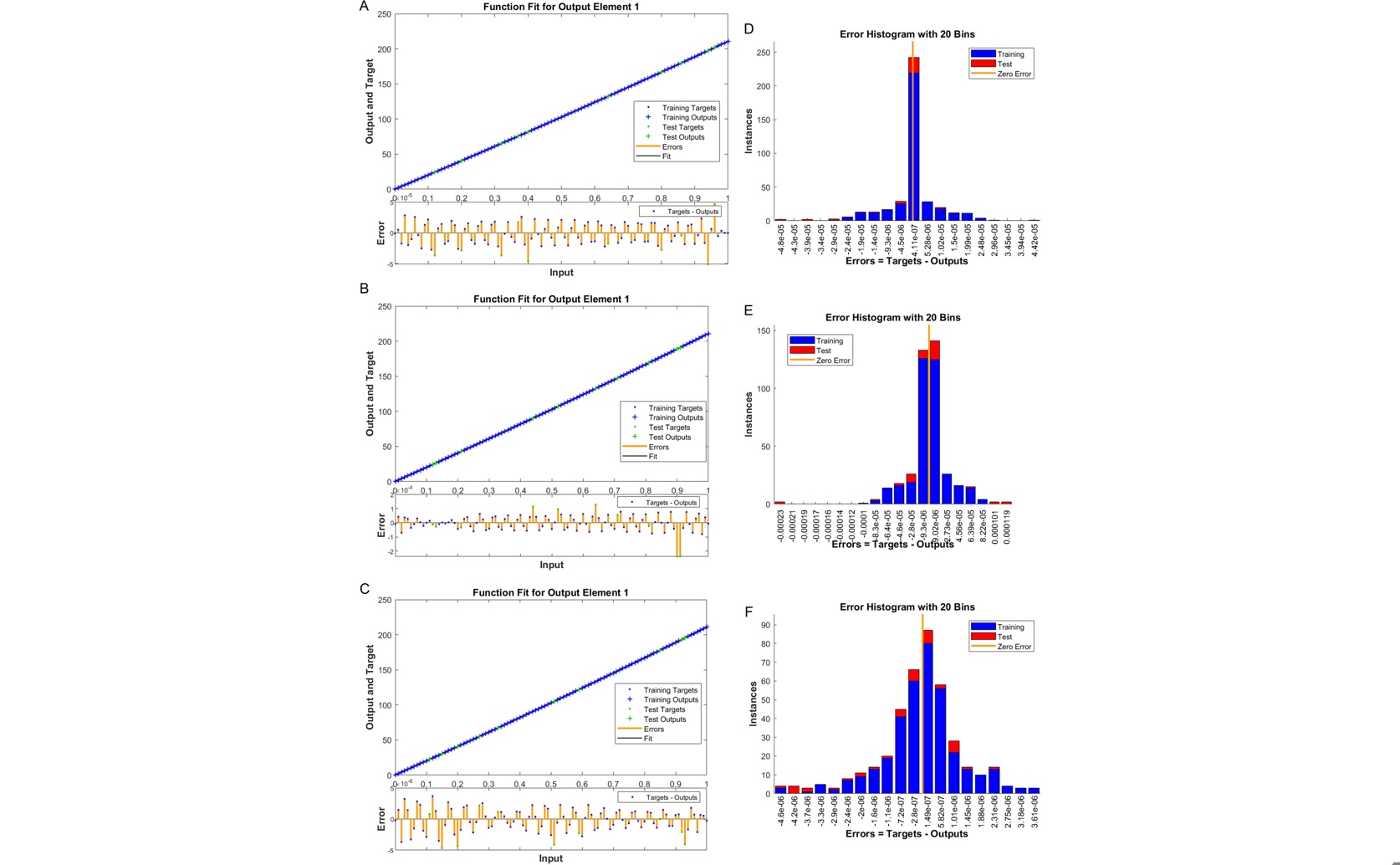
The proposed machine learning model accurately predicts anthrax disease dynamics, demonstrated by the close alignment between predicted and reference data in the function fit plots (a–c) and the very small, centrally-peaked distribution of errors in the error histograms (d–f).

Image adapted from: Sabir et al. / CC BY (Source)

Key Findings

  • Researchers from Lebanese American University and partners used machine learning to accurately predict anthrax outbreaks in animals
  • Their model grouped animals into susceptible, infected, recovered, and vaccinated categories, achieving very precise predictions
  • This approach can improve vaccination strategies and biosecurity measures, helping to better control and prevent anthrax outbreaks
Anthrax remains a significant threat to livestock and human health in various regions worldwide. Caused by the bacterium Bacillus anthracis, this disease can persist in soil for decades, leading to sudden outbreaks when environmental conditions become favorable[2]. Traditional methods to control anthrax involve antibiotic treatments like penicillin and oxytetracycline, alongside measures such as vaccination and biosecurity[2]. However, accurately predicting and managing anthrax outbreaks in animal populations continues to be a challenge for researchers and veterinarians alike. Recent advancements in machine learning offer promising solutions to enhance our understanding and prediction of infectious diseases like anthrax. A study conducted by researchers at Lebanese American University, King Abdulaziz University, and the University of Delhi introduced a novel approach by applying a stochastic machine learning procedure to model the anthrax disease system in animals[1]. This research leverages numerical methods to provide more precise insights into the dynamics of anthrax transmission and control. The study categorizes the anthrax disease system into four compartments: susceptible, infected, recovered, and vaccinated. By using a Runge-Kutta solver, the researchers generated a comprehensive dataset, effectively reducing the mean square error through a strategic division of data into training (78%), testing (12%), and verification (10%) sets. This meticulous data preparation ensures that the model can learn accurately from historical patterns and make reliable predictions about future outbreaks. Central to the researchers' approach is the use of a logistic sigmoid activation function within a single hidden layer neural network consisting of twenty-seven neurons. The optimization of this network was achieved through Bayesian regularization, a technique that enhances the model's ability to generalize from the training data while preventing overfitting. Overfitting occurs when a model learns the training data too well, including its noise and outliers, which can degrade its performance on new, unseen data. Bayesian regularization mitigates this by adjusting the network weights to balance accuracy and complexity. The effectiveness of this machine learning model was validated by comparing the predicted outcomes with actual case data. The results demonstrated a high degree of accuracy, with absolute errors ranging from 10^-5 to 10^-8 across different scenarios of the anthrax model. Additionally, the model achieved impressive training performance metrics between 10^-10 and 10^-12, indicating its robustness and precision. Statistical evaluations, including regression coefficients, error histograms, and state transition values, further confirmed the reliability of the proposed approach. This innovative method builds on previous research that utilized neural networks for modeling disease spread and environmental factors. For instance, studies on the Zika virus employed radial basis neural networks to simulate virus transmission dynamics, achieving low mean square errors and reliable regression coefficients[3]. Similarly, research on predicting fine particulate matter (PM2.5) concentrations in Shanghai utilized artificial neural networks and wavelet-ANNs, demonstrating high accuracy in forecasting air pollution levels[4]. By integrating these advanced machine learning techniques, the current study extends their applicability to the domain of animal health and infectious disease management. The introduction of machine learning into the study of anthrax offers several advantages. Traditional epidemiological models often rely on simplifying assumptions and may not capture the complex interactions between different factors influencing disease spread. In contrast, machine learning models can handle large datasets and identify intricate patterns that may be missed by conventional methods. This capability is crucial for diseases like anthrax, where environmental conditions and animal interactions play significant roles in outbreak dynamics[2]. Moreover, the use of Bayesian regularization in the neural network model ensures that the predictions are not only accurate but also statistically sound. This is particularly important for making informed decisions in the field, where timely and reliable information can significantly impact the control and prevention of anthrax outbreaks. By providing a more nuanced understanding of disease dynamics, this approach can help in designing targeted vaccination strategies and implementing effective biosecurity measures. The breakthrough presented by this study lies in its novel application of a stochastic machine learning framework to an anthrax disease system in animals. Prior research has laid the groundwork by demonstrating the potential of neural networks in various biomedical and environmental applications[3][4]. Building on these foundations, the current study showcases how these advanced computational techniques can be tailored to address specific challenges in animal health, offering a robust tool for predicting and managing anthrax outbreaks. In conclusion, the integration of machine learning into the study of anthrax disease systems represents a significant advancement in veterinary epidemiology. The collaboration between Lebanese American University, King Abdulaziz University, and the University of Delhi has yielded a powerful model that enhances our ability to predict and control anthrax in animal populations. By leveraging numerical solutions and sophisticated neural network architectures, this research not only aligns with but also expands upon existing methodologies, paving the way for more effective disease management strategies in the future.

MedicineBiotechAnimal Science

References

Main Study

1) A machine learning computational approach for the mathematical anthrax disease system in animals

Published 1st April, 2025

https://doi.org/10.1371/journal.pone.0320327


Related Studies

2) Review of anthrax: A disease of farm animals.

https://doi.org/10.5455/javar.2022.i599


3) A novel radial basis neural network for the Zika virus spreading model.

https://doi.org/10.1016/j.compbiolchem.2024.108162


4) Predicting of Daily PM2.5 Concentration Employing Wavelet Artificial Neural Networks Based on Meteorological Elements in Shanghai, China.

https://doi.org/10.3390/toxics11010051


Related Articles

An unhandled error has occurred. Reload 🗙