Identifying and Understanding Soybean Genes Responding to Environmental Stresses

Jim Crocker
26th March, 2025

Identifying and Understanding Soybean Genes Responding to Environmental Stresses

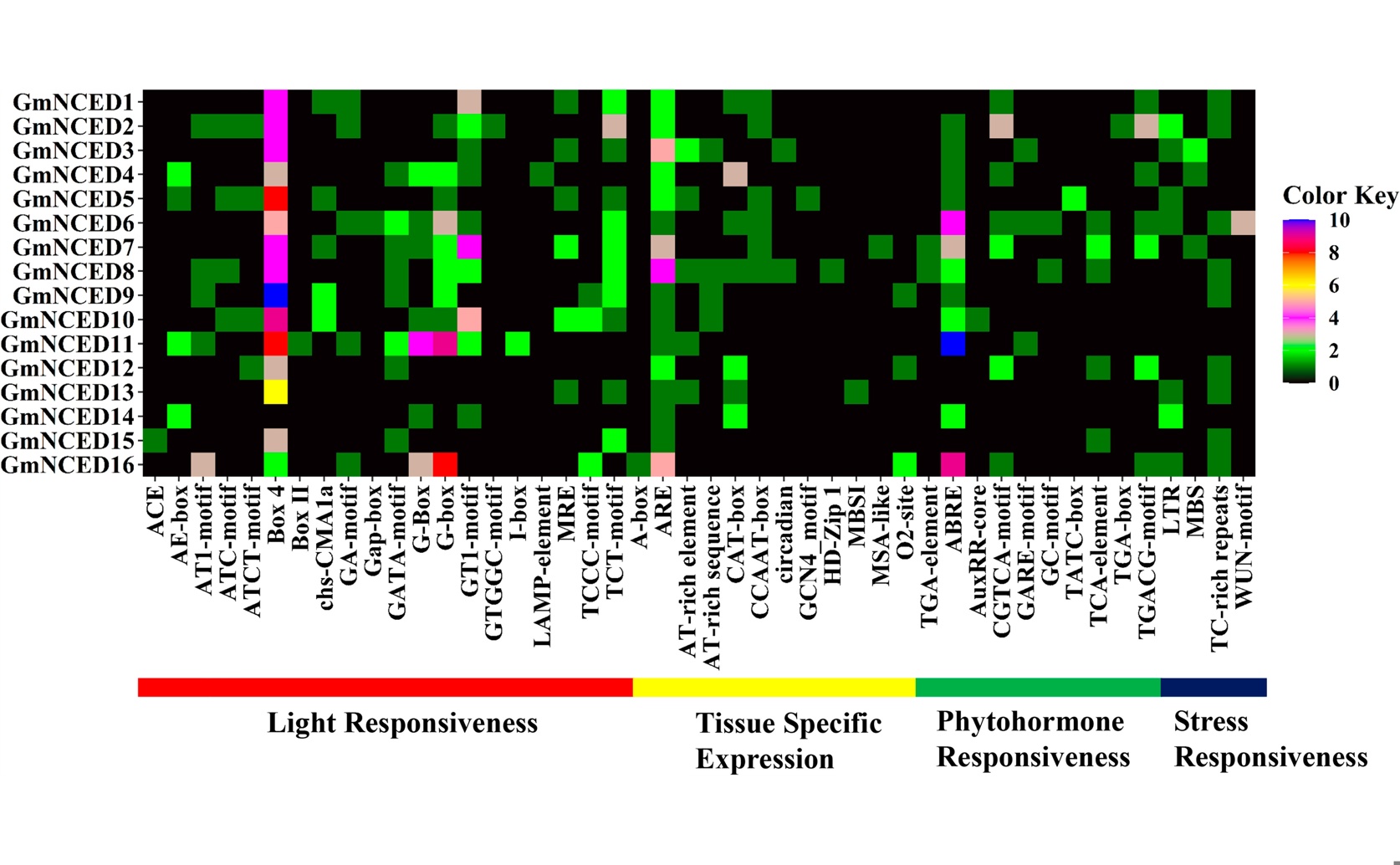
Analysis of the promoter regions for the soybean (Glycine max) NCED gene family revealed a high abundance of regulatory elements associated with responses to stress and phytohormones, providing a molecular basis for their crucial role in abiotic stress tolerance.

Image adapted from: Islam et al. / CC BY (Source)

Key Findings

  • A study by Gauhati University in India identified 16 soybean genes that produce a key hormone vital for plant growth and stress protection
  • These genes help soybeans resist drought, salty conditions, and high temperatures by managing hormone levels and responding to environmental challenges
  • Discovering these genes supports the development of more resilient soybean varieties, enhancing crop productivity and food security
Abscisic acid (ABA) is a crucial plant hormone that regulates growth, development, and responses to environmental stresses such as drought, salinity, and extreme temperatures. Understanding the genetic basis of ABA synthesis and regulation can help improve crop resilience and productivity. The NCED (9-cis-epoxycarotenoid dioxygenase) enzyme is a key player in ABA biosynthesis, and the NCED gene family has been studied in various plants to elucidate its functions. Previous research identified NCED genes in cotton[2], litchi[3], and Forsythia suspensa[4], revealing their roles in ABA production and stress responses. However, comprehensive studies on the NCED gene family in soybean, an economically important legume, were lacking. A recent study conducted by researchers at Gauhati University, India[1] addressed this gap by performing a genome-wide identification and characterization of the NCED gene family in soybean (Glycine max L.). The study aimed to understand how these genes contribute to ABA biosynthesis and help soybean plants cope with abiotic stresses such as dehydration, salt, and drought. The researchers identified 16 NCED genes in the soybean genome, designated as GmNCED1 to GmNCED16. These genes were unevenly distributed across nine different chromosomes, indicating a complex genetic arrangement. By analyzing the intron-exon structures, the GmNCED genes were grouped into six categories, showing similarities with NCED genes in grapevine. This phylogenetic relationship suggests a conserved evolutionary pathway among different plant species[2][3][4]. Evolutionary analysis revealed that segmental gene duplication and purifying selection have played significant roles in the expansion and maintenance of the GmNCED gene family. Segmental duplication refers to the process where large sections of chromosomes are duplicated, leading to multiple copies of a gene within the genome. Purifying selection indicates that these gene copies have been preserved over time due to their beneficial functions, particularly in stress responses. The study also examined the regulatory elements controlling GmNCED gene expression. Cis-acting elements, which are regions of non-coding DNA that regulate the transcription of nearby genes, were found to be predominantly associated with light response and stress response pathways. Additionally, key transcription factors such as ERF, MYB, bZIP, and LBD were identified as major regulators of GmNCED genes. These transcription factors are known to play roles in various plant processes, including growth, development, and responses to environmental cues[2][3][4]. Protein-protein interaction analysis showed that GmNCED proteins interact closely with proteins in Arabidopsis thaliana, a model plant species. This interaction network suggests that GmNCED genes may have similar functions in soybean as their counterparts in Arabidopsis, particularly in ABA biosynthesis and stress response mechanisms. MicroRNA (miRNA) analysis further highlighted the involvement of GmNCED genes in regulating plant growth, development, and responses to abiotic stresses. miRNAs are small non-coding RNA molecules that play critical roles in post-transcriptional regulation of gene expression. The study identified several miRNA target sites within GmNCED genes, indicating that these genes are finely tuned by miRNAs to respond to changing environmental conditions. Expression profiling of the GmNCED genes under various stress conditions provided insights into their specific roles. GmNCED2, GmNCED11, and GmNCED12 were significantly expressed during dehydration and sodium salt stress, suggesting their direct involvement in mitigating these stresses. Meanwhile, GmNCED14 and GmNCED15 showed increased expression under drought conditions, highlighting their potential as key players in drought tolerance. Furthermore, GmNCED13 and GmNCED14 were up-regulated during seed germination under high temperatures, indicating their role in helping soybean seeds germinate successfully in warm environments. Notably, GmNCED14 emerged as a promising candidate for enhancing drought resistance and improving seed germination at elevated temperatures. This finding aligns with previous studies in other plants where specific NCED genes were linked to stress tolerance and developmental processes[2][3][4]. Overall, the study by Gauhati University significantly advances the understanding of the NCED gene family in soybean. By identifying and characterizing 16 GmNCED genes, the research provides valuable insights into the genetic mechanisms underlying ABA biosynthesis and stress response in soybeans. These findings not only build upon earlier studies in other plant species but also pave the way for developing soybean varieties with enhanced resilience to environmental stresses, ultimately contributing to agricultural sustainability and food security.

AgricultureGeneticsPlant Science

References

Main Study

1) Genome-wide identification and characterization of NCED gene family in soybean (Glycine max L.) and their expression profiles in response to various abiotic stress treatments

Published 25th March, 2025

https://doi.org/10.1371/journal.pone.0319952


Related Studies

2) Genome-wide identification and expression analysis of the NCED family in cotton (Gossypium hirsutum L.).

https://doi.org/10.1371/journal.pone.0246021


3) Genome-wide identification and expression analysis of carotenoid cleavage oxygenase genes in Litchi (Litchi chinensis Sonn.).

https://doi.org/10.1186/s12870-022-03772-w


4) Genome-wide analysis of the carotenoid cleavage dioxygenases gene family in Forsythia suspensa: Expression profile and cold and drought stress responses.

https://doi.org/10.3389/fpls.2022.998911


Related Articles

An unhandled error has occurred. Reload 🗙