Gene Regulator Controls When Apples Bloom

Jenn Hoskins
14th February, 2025

Gene Regulator Controls When Apples Bloom

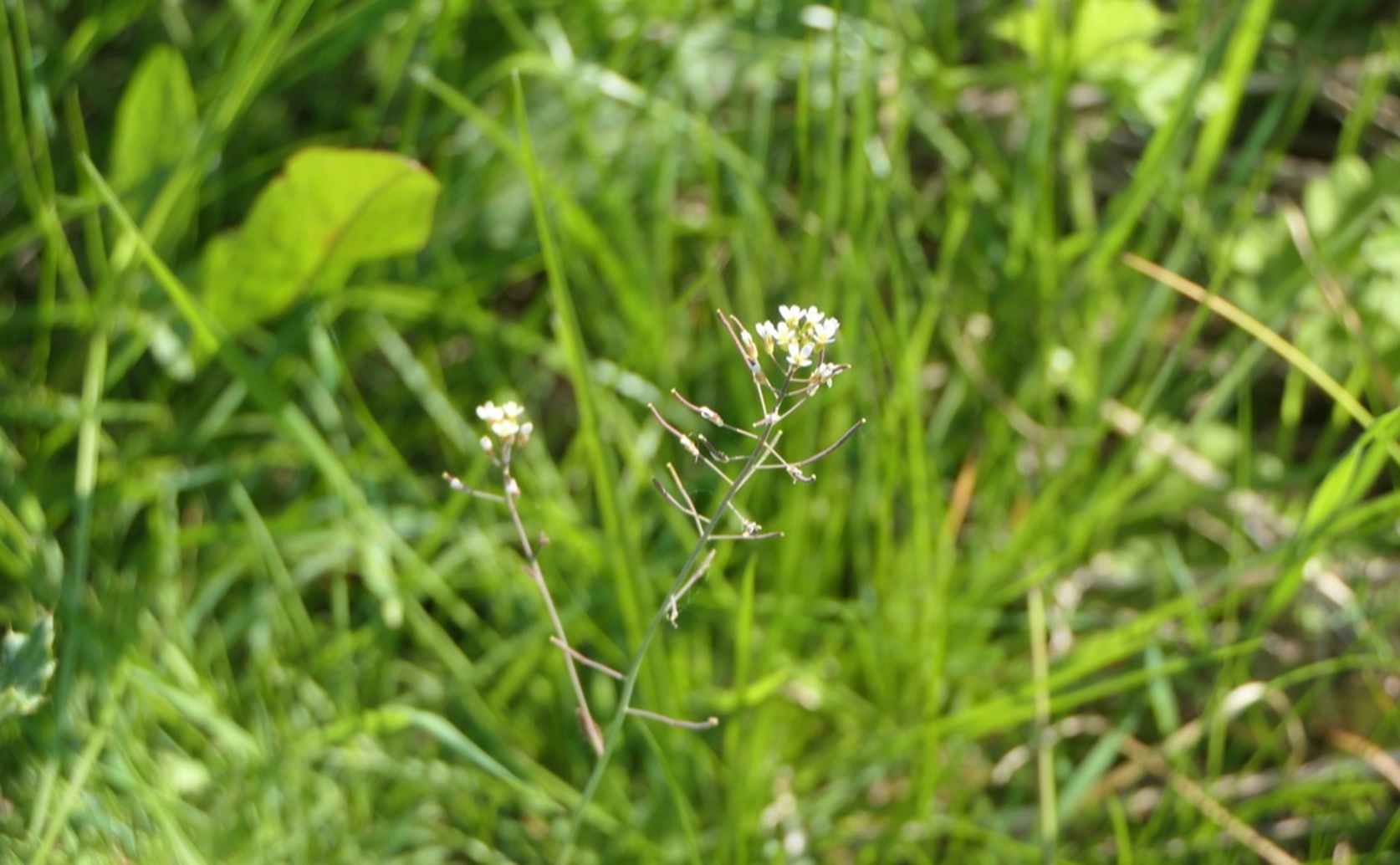
Mouse-ear cress (Arabidopsis thaliana)

Photo adapted from: Pete Bradshaw / CC BY (Source)

Key Findings

  • In Shandong, China, researchers discovered that the protein MdWRKY71 controls flowering time in red-fleshed apple trees
  • Boosting MdWRKY71 levels caused apple cells and model plants to flower earlier by activating essential flowering genes
  • This finding could help farmers improve apple yields and adapt crops to various environmental conditions
Flowering is a critical phase in the life cycle of plants, marking the transition from vegetative growth to reproductive development. This process is essential for the production of seeds and fruits, which are vital for both natural ecosystems and agricultural productivity. Understanding the mechanisms that regulate flowering time can lead to significant improvements in crop yields and adaptability to varying environmental conditions. Recent research from Dezhou University in Shandong, China, has shed light on the role of a specific transcription factor, MdWRKY71, in controlling flowering time in red-fleshed apple trees[1]. Transcription factors are proteins that help turn specific genes on or off by binding to nearby DNA. The WRKY family of transcription factors is plant-specific and known to play important roles in various biological processes, including stress responses and developmental transitions. The study focused on MdWRKY71, a member of the subgroup IIc of the WRKY family, which was found to have a significant impact on the flowering process. The researchers discovered that the sequence of MdWRKY71 shares similarities with AtWRKY71 from Arabidopsis thaliana, a model organism widely used in plant biology research. In their experiments, the team analyzed the expression levels of MdWRKY71 in apple trees during the flower transition stage. They found a strong positive correlation between MdWRKY71 expression and key genes involved in the transition to flowering. This suggests that MdWRKY71 acts as a regulator, promoting the activation of these essential flowering genes. Supporting this finding, previous studies have highlighted the importance of transcription factors in controlling flowering time. For instance, study[2] demonstrated that the overexpression of a WRKY gene in wintersweet led to early flowering in Arabidopsis, aligning with the observations made for MdWRKY71. To further investigate the role of MdWRKY71, the researchers conducted overexpression experiments in apple calli and Arabidopsis thaliana. In apple calli, increasing the levels of MdWRKY71 led to the upregulation of several flower transition genes, reinforcing the idea that MdWRKY71 is a key player in initiating flowering. When MdWRKY71 was ectopically expressed in Arabidopsis, the plants flowered earlier than usual. This early flowering phenotype was accompanied by increased expression of floral pathway integrators and floral meristem identity genes, which are crucial for the development of flowers. The ability of MdWRKY71 to bind directly to the promoters of floral pathway integrators indicates that it can directly influence the expression of these genes. By interacting with these promoters, MdWRKY71 enhances their activity, thereby accelerating the flowering process. This mechanism is similar to what was observed in earlier studies on other plant species, where WRKY transcription factors were shown to influence flowering time by regulating key genetic pathways[3][4]. Study[3] emphasized the complexity of flowering time regulation in crops, highlighting that changes in a single flowering time regulator can significantly alter flowering initiation. This aligns with the findings on MdWRKY71, where altering the expression of this single transcription factor had a profound effect on flowering time. Additionally, study[4] explored the genetic and environmental factors influencing flowering in apple trees, identifying several differentially expressed genes related to flowering induction. The current study builds on this foundation by pinpointing MdWRKY71 as a crucial regulator within this network. The implications of these findings are significant for agricultural practices. By manipulating the expression of MdWRKY71, it may be possible to control the timing of flowering in apple trees, leading to more predictable and optimized fruit production. This could be particularly beneficial in adapting crops to new geographical and climatic conditions, where the timing of flowering needs to be adjusted to suit different growing seasons and environmental stresses. Moreover, understanding the role of MdWRKY71 contributes to the broader knowledge of how transcription factors regulate complex developmental processes in plants. The methods used in this study were robust and multi-faceted. The researchers employed quantitative real-time PCR (qRT-PCR) and microarray analysis to examine gene expression patterns in apple trees. These techniques allowed them to identify genes that were differentially expressed during the flower transition stage. By overexpressing MdWRKY71 in both apple calli and Arabidopsis, they were able to observe the direct effects of this transcription factor on flowering time and gene expression. Additionally, the use of promoter binding assays demonstrated the direct interaction between MdWRKY71 and the promoters of key floral genes, providing clear evidence of its regulatory role. This study not only highlights the importance of MdWRKY71 in regulating flowering time but also integrates previous findings to present a comprehensive understanding of the genetic control of flowering in apple trees. By connecting the dots between transcription factor activity, gene expression, and environmental responses, the research from Dezhou University offers valuable insights that could lead to practical applications in crop improvement and agricultural sustainability.

AgricultureGeneticsPlant Science

References

Main Study

1) WRKY transcription factor MdWRKY71 regulates flowering time in apple.

Published 13th February, 2025

https://doi.org/10.1007/s11103-024-01544-8


Related Studies

2) CpWRKY71, a WRKY Transcription Factor Gene of Wintersweet (Chimonanthus praecox), Promotes Flowering and Leaf Senescence in Arabidopsis.

https://doi.org/10.3390/ijms20215325


3) Flowering time regulation in crops—what did we learn from Arabidopsis?

https://doi.org/10.1016/j.copbio.2014.11.023


4) Analysis of transcripts differentially expressed between fruited and deflowered 'Gala' adult trees: a contribution to biennial bearing understanding in apple.

https://doi.org/10.1186/s12870-016-0739-y


Related Articles

An unhandled error has occurred. Reload 🗙