Studying Alfalfa Seeds and Genetics to Improve Farming and Protect the Plant

Jenn Hoskins
5th March, 2025

Studying Alfalfa Seeds and Genetics to Improve Farming and Protect the Plant

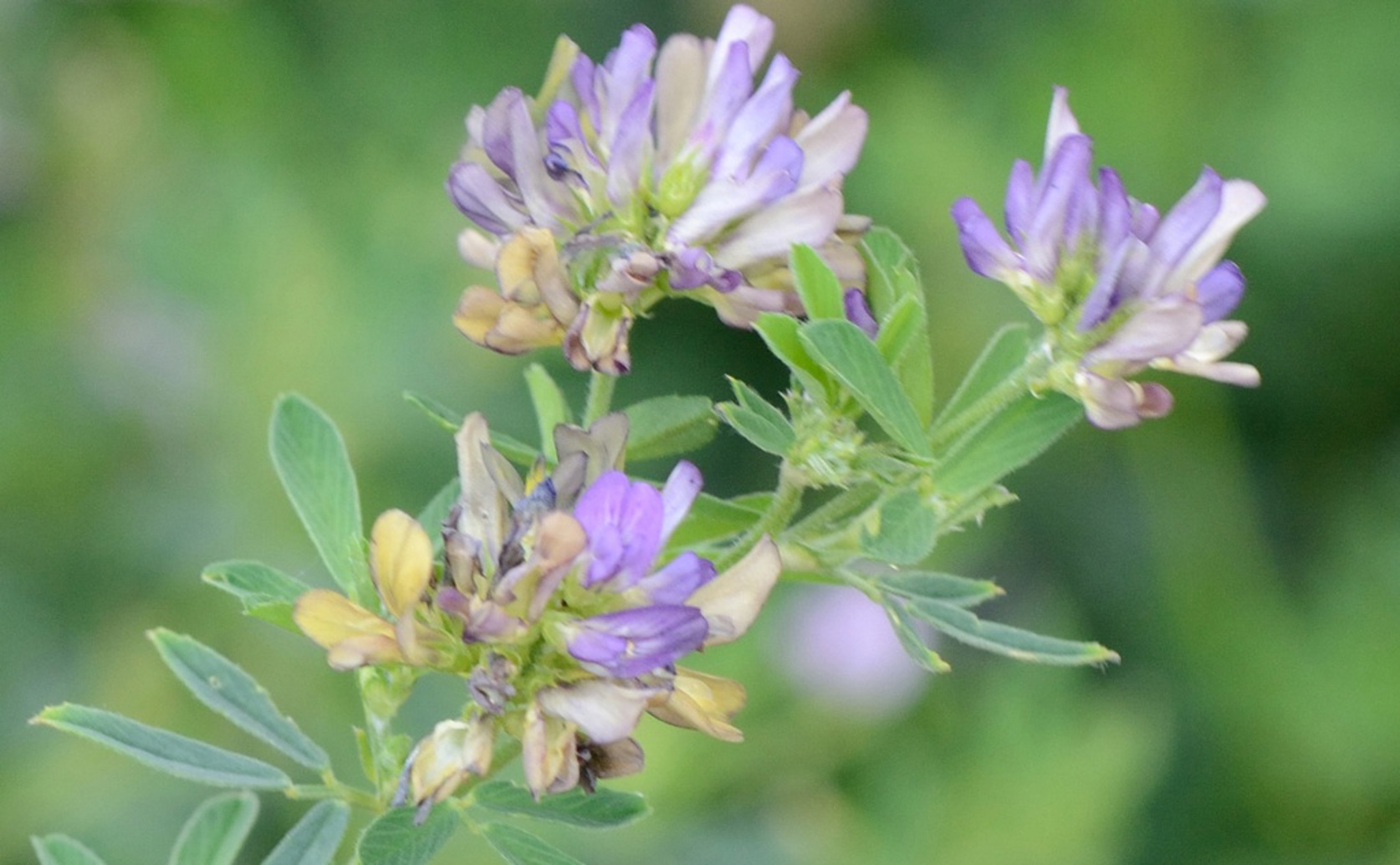
Alfalfa (Medicago sativa)

Photo adapted from: Fyodor Pudovikov / CC BY (Source)

Key Findings

  • A USDA study examined Medicago seeds from 31 countries, using machine learning to connect seed traits with their geographic origins
  • Seed size, shape, and color were key to predicting where seeds came from and how well they can grow, achieving up to 80% accuracy
  • The research identified 20 genetic groups and specific genes related to environmental adaptation, aiding conservation and crop improvement
Seed morphology and color play crucial roles in the success of Medicago species, impacting how well seeds can germinate and establish seedlings in various environments. Understanding the relationship between these seed traits, their geographic origins, and the underlying genetic diversity is essential for effective conservation of genetic resources and for breeding programs aimed at improving crop performance. A recent study conducted by the United States Department of Agriculture[1] provides a comprehensive analysis of these factors using advanced machine learning techniques. The study examined seed size, shape, and color from 318 different Medicago accessions, which included 29 species or subspecies from 31 countries. By applying machine learning models such as Neural Boost, Bootstrap Forest, and Support Vector Machines, the researchers were able to classify the accessions based on their seed traits and geographic origins with up to 80% accuracy. This high level of precision underscores the potential of machine learning in categorizing and predicting seed characteristics based on complex data sets. A significant finding of the study was the ability to accurately predict seed size using a combination of species information, geographic origin, and shape descriptors, achieving an R-squared value greater than 0.80. This suggests a strong relationship between these factors and seed size, which is a vital trait for plant establishment and overall vigor[2]. Hierarchical clustering of 189 Medicago sativa accessions using 8,565 SNP markers revealed 20 distinct genetic clusters, indicating considerable population structure within the species. This genetic diversity is crucial for breeding programs aiming to enhance seed traits and adapt crops to different environmental conditions. Building on previous research[3][4], the study utilized a machine learning-based genome-wide association study (GWAS) to identify specific SNPs associated with geographic origin. Notably, SNPs located on chromosomes 1, 6, and 8 were found to be highly important for predicting the seed's geographic origin. Many of these significant SNPs were near genes involved in stress response and genome stability, highlighting their potential role in local adaptation. This aligns with earlier findings that identified genes related to stress tolerance and environmental adaptation in Medicago species[5]. Furthermore, the study successfully addressed the challenge of missing genetic data by using multiple machine learning approaches to impute missing SNP genotypes. The imputation was highly accurate, achieving over 70% accuracy overall and more than 80% for individual nucleotides (A, T, C, G). This advancement enhances the utility of genomic datasets, making it easier to work with incomplete data and facilitating more comprehensive genetic analyses. The integration of phenotypic, genetic, and geographic data, combined with machine learning-based GWAS, offers valuable insights into the diverse patterns observed within Medicago species. This approach not only supports germplasm characterization and trait prediction but also improves the accuracy of genomic data through effective imputation methods. The identified candidate genes associated with geographic origin provide a foundation for future studies aimed at understanding the functional mechanisms behind local adaptation. Additionally, the study's findings have significant implications for seed trait improvement and germplasm management. By leveraging the genetic diversity within Medicago spp., breeders can develop varieties with enhanced seed traits, such as improved size, color, and stress tolerance, which are essential for successful crop establishment and yield. The use of machine learning in this research demonstrates its powerful application in agricultural science, particularly in handling complex genetic and phenotypic data. Overall, this study represents a significant advancement in the understanding of seed morphology and color in Medicago species. It builds upon previous research by incorporating genetic diversity and geographic factors, providing a more comprehensive view of the traits that contribute to successful plant establishment and adaptation. The United States Department of Agriculture's work paves the way for future research and breeding programs aimed at improving legume crops, which are vital for food security and sustainable agriculture.

AgricultureGeneticsPlant Science

References

Main Study

1) Integrative analysis of seed morphology, geographic origin, and genetic structure in Medicago with implications for breeding and conservation

Published 3rd March, 2025

https://doi.org/10.1186/s12870-025-06304-4


Related Studies

2) Seed vigour and crop establishment: extending performance beyond adaptation.

https://doi.org/10.1093/jxb/erv490


3) Analyzing Medicago spp. seed morphology using GWAS and machine learning.

https://doi.org/10.1038/s41598-024-67790-4


4) Genome-wide association study identified candidate genes for seed size and seed composition improvement in M. truncatula.

https://doi.org/10.1038/s41598-021-83581-7


5) The genome of a wild Medicago species provides insights into the tolerant mechanisms of legume forage to environmental stress.

https://doi.org/10.1186/s12915-021-01033-0


Related Articles

An unhandled error has occurred. Reload 🗙