Discovering Water Conservation Trends in Dry Areas with Water Models and AI

Jenn Hoskins
21st March, 2025

Discovering Water Conservation Trends in Dry Areas with Water Models and AI

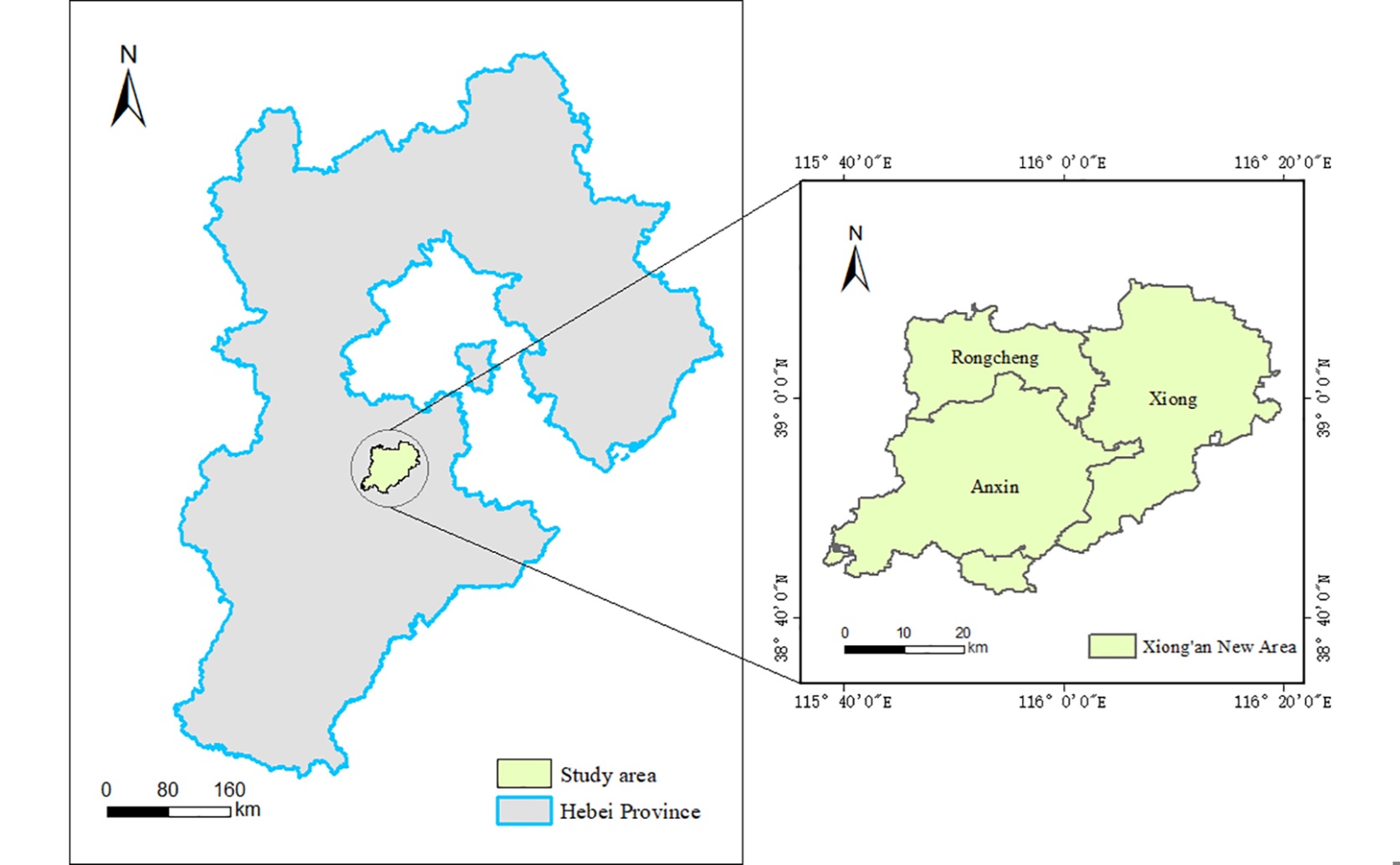
The study area encompasses Xiong'an New Area in Hebei Province, China, a semi-arid region featuring China's largest northern freshwater wetland, where complex interactions among limited precipitation, high evaporation, and diverse land uses create significant water conservation challenges.

Image adapted from: Zhang et al. / CC BY (Source)

Key Findings

  • In China’s Xiong’an New Area, water conservation improved by 74% from 2000 to 2020, with benefits varying across different regions
  • Expanding forests and grasslands through ecological restoration significantly boosted the area’s ability to conserve water
  • Land use changes, rainfall patterns, and drought were key factors influencing water conservation, identified using advanced deep learning techniques
Water conservation is critical in semi-arid regions, where limited water resources are increasingly strained by global climate change. Effective management of these resources requires understanding the complex interactions among vegetation, soil, and topography. A recent study by the North China Institute of Aerospace Engineering[1] has introduced a novel approach to assess and enhance water conservation in the Xiong’an New Area (XNA), a newly developed metropolis in China. The study utilized the Integrated Valuation of Ecosystem Services and Tradeoffs (InVEST) model, a tool that helps evaluate various ecosystem services, including water conservation. By analyzing data from 2000 to 2020, the researchers found that water conservation depth in XNA increased by an average of 74%. This increase displayed an inverted “V” spatial distribution, indicating significant variations across different regions within the area. The InVEST model, combined with spatiotemporal transfer of Water Conservation Reserves (WCR) and deep learning techniques, provided a comprehensive view of how water conservation patterns evolved over two decades. Spatiotemporal analysis revealed that the WCR in XNA primarily shifted from areas with the lowest WCR to regions with slightly higher WCR. Additionally, potential enhancement areas for WCR were concentrated in the northern part of XNA, suggesting targeted regions for future conservation efforts. By identifying key protection areas, the study offers valuable insights for policymakers and stakeholders aiming to maintain and improve water conservation in rapidly developing urban areas. Deep learning played a crucial role in this research by managing the complexity of the data and identifying the main factors influencing water conservation. The study highlighted that land use, precipitation, and drought were the most critical factors affecting WC. This aligns with previous research in the Danjiang River Basin, where land use changes and climate factors were found to significantly impact water conservation[2]. The integration of deep learning allows for more precise predictions and better-informed decisions regarding water management. The findings of this study build upon earlier research, such as the work on the Yellow River Basin (YRB)[3], which demonstrated how ecological restoration projects can enhance water yield. In the YRB, converting cropland to forest and grassland led to a substantial increase in water yield, similar to how land use changes in XNA contributed to improved water conservation. Additionally, the study by Langfang Digital Space Technology Co.[4] on the application of deep learning in water resources management complements the current research by providing advanced methods to handle large-scale water-related data effectively. Another relevant study from the Hebei Collaborative Innovation Center[5] examined the hydrological conditions of Lake Baiyangdian, the largest natural freshwater wetland in XNA. It emphasized the importance of maintaining adequate water resources to support both ecological functions and urban development. The current study reinforces this by demonstrating how improved water conservation can support the growing demands of a new metropolis like XNA. The innovative approach of combining InVEST modeling with deep learning offers a robust framework for analyzing water conservation. The InVEST model assesses the capacity of ecosystems to provide water-related services, while deep learning techniques handle the vast and varied data sets to uncover underlying patterns and drivers. This combination allows for a detailed understanding of how different factors interact to influence water conservation, enabling the development of personalized WC zones and effective management strategies. One of the significant contributions of this study is its ability to identify specific regions within XNA that require priority protection. By pinpointing areas with high potential for water conservation enhancement, the research provides actionable information for targeted interventions. This is particularly important in regions facing rapid urbanization, where sustainable water management is essential to prevent resource depletion and maintain ecological balance. The study also emphasizes the importance of considering both natural and anthropogenic factors in water conservation efforts. Climate variables such as precipitation and drought are critical, but land use changes driven by human activities also play a significant role. By integrating these factors into their analysis, the researchers offer a holistic view of water conservation dynamics, which is essential for developing comprehensive water management policies. Moreover, the use of deep learning in this context highlights the potential of advanced computational techniques to transform water resources management. As the volume of water-related data continues to grow, the ability to analyze and interpret this information efficiently becomes increasingly important. Deep learning models can uncover complex relationships within the data, providing deeper insights and more accurate predictions than traditional methods. The study by the North China Institute of Aerospace Engineering not only advances our understanding of water conservation in XNA but also sets a precedent for similar research in other semi-arid regions. By leveraging sophisticated modeling techniques and machine learning, researchers can develop more effective strategies to address water scarcity and ensure sustainable water management in the face of climate change. In conclusion, this research offers a comprehensive and innovative approach to water conservation in semi-arid urban areas. By integrating InVEST modeling, spatiotemporal analysis, and deep learning, the study provides valuable insights into the patterns and drivers of water conservation in the Xiong’an New Area. Building on previous studies, it highlights the critical role of land use, climate factors, and advanced data analysis techniques in enhancing water conservation efforts. As urban areas continue to expand, such research is essential for developing sustainable water management practices that balance ecological needs with human demands.

EnvironmentSustainability

References

Main Study

1) Uncovering water conservation patterns in semi-arid regions through hydrological simulation and deep learning

Published 20th March, 2025

https://doi.org/10.1371/journal.pone.0319540


Related Studies

2) Evaluation of water conservation function of Danjiang River Basin in Qinling Mountains, China based on InVEST model.

https://doi.org/10.1016/j.jenvman.2021.112212


3) Assessing impacts of the Ecological Retreat project on water conservation in the Yellow River Basin.

https://doi.org/10.1016/j.scitotenv.2022.154483


4) A comprehensive review of deep learning applications in hydrology and water resources.

https://doi.org/10.2166/wst.2020.369


5) Could the hydrological conditions of Lake Baiyangdian support a booming metropolis?

https://doi.org/10.1016/j.scitotenv.2023.161764


Related Articles

An unhandled error has occurred. Reload 🗙