How City Parks Help Cool Down Urban Areas and Improve Them

Jenn Hoskins
8th March, 2025

How City Parks Help Cool Down Urban Areas and Improve Them

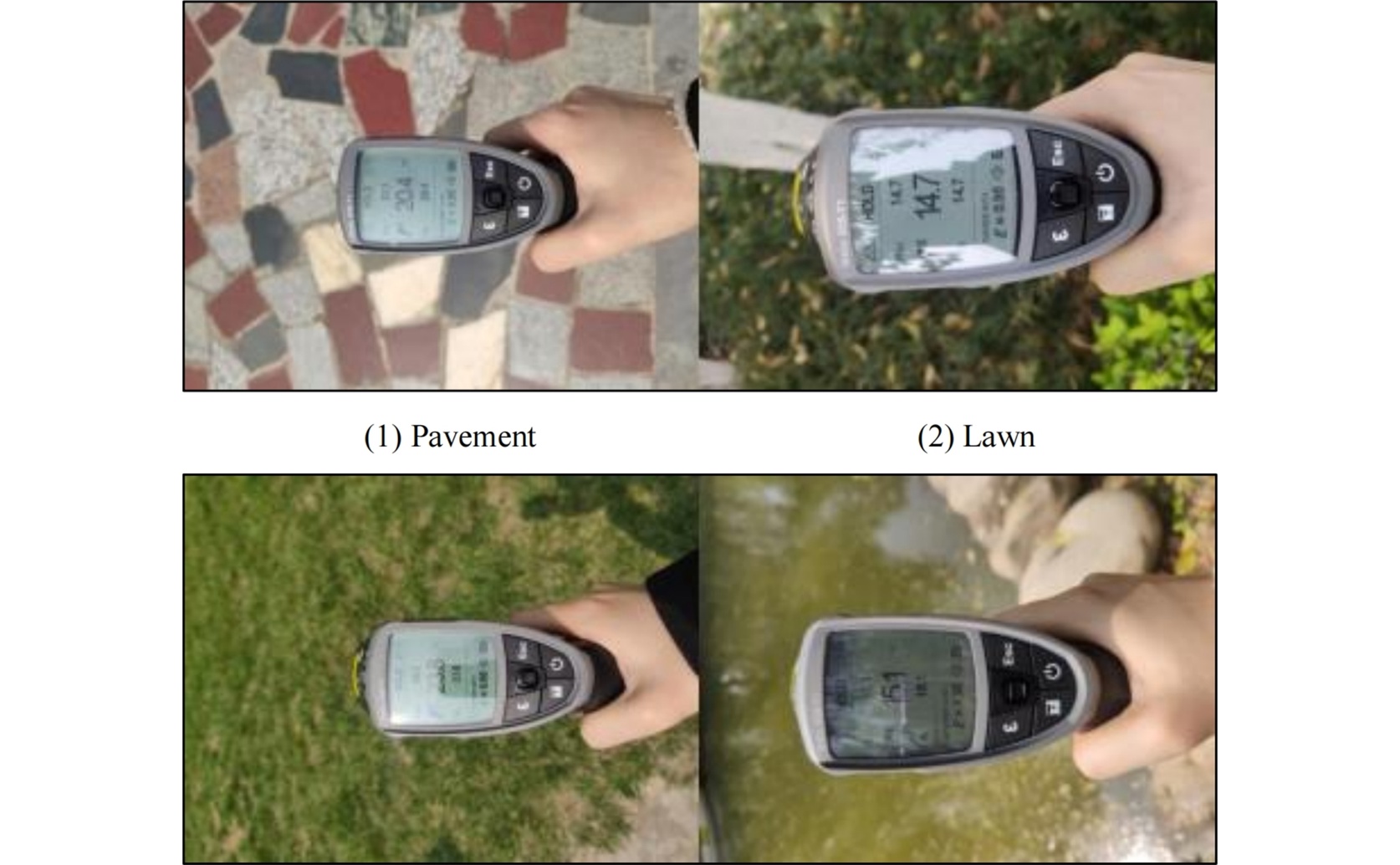
Surface temperature measurements were collected using a Testo 835-T1 handheld infrared thermometer to validate the accuracy of remote sensing-derived land surface temperatures used in analyzing the cooling effects of urban park cold islands.

Image adapted from: Yang et al. / CC BY (Source)

Key Findings

  • *In Xi’an, China, larger city parks effectively lower surrounding temperatures, helping to cool the urban area.*
  • *Parks with more trees and water features enhance their cooling benefits, making neighborhoods more comfortable.*
  • *Placing parks in densely built areas maximizes their ability to reduce local heat, improving residents' quality of life.*
Rapid urbanization has transformed living environments worldwide, bringing with it challenges such as the urban heat island effect (UHIE). UHIE occurs when urban areas become significantly warmer than their rural surroundings due to factors like concrete structures, reduced greenery, and increased energy usage. This temperature disparity can affect the quality of life, contributing to health issues and higher energy consumption for cooling. A recent study conducted by researchers at Xi’an Jiaotong University and Chang’an University[1] addresses this issue by exploring how urban parks can mitigate the UHIE in Xi’an, Shaanxi, China. Utilizing remote sensing data and field surveys, the study investigates the cooling characteristics of urban parks, referred to as the cold island effect, within the built-up areas of the city. The study found that several factors influence the effectiveness of urban parks in cooling their surroundings. Key among these are the area and perimeter of the park, the size and boundary of water bodies within the park, and the extent of tree coverage. Specifically, larger parks with greater perimeters tend to produce a more substantial cooling effect. Additionally, water bodies and extensive tree areas within parks further enhance this cooling. Interestingly, the density of surrounding buildings and the building plot ratio also play a role. Higher building density and plot ratios were positively correlated with the cooling effect, suggesting that parks in more densely built areas can be particularly effective in reducing local temperatures. This aligns with findings from previous research[2], which highlighted the importance of tree diversity and canopy coverage in mitigating UHIE. By incorporating a variety of tree species and ensuring adequate canopy coverage, urban parks can maximize their cooling potential. To determine the relative importance of each factor, the researchers developed a comprehensive scoring model and applied principal component analysis. This statistical method helped identify that the area of green space parks has the greatest influence on the cooling effect. This insight is critical for urban planners aiming to design parks that effectively reduce urban temperatures. The study also examined the optimal characteristics of green spaces for cooling. It was determined that parks with areas between 0.6-0.7 square kilometers and perimeters ranging from 4000 to 4500 meters achieve the lowest internal temperatures. Additionally, water bodies within these parks should ideally cover 0.3-0.4 square kilometers with perimeters around 5000 meters to maximize cooling. These findings build on earlier research[3], which suggested similar optimal ranges for green space areas and perimeters in Xi’an to enhance thermal comfort. Furthermore, the presence of trees significantly contributes to the cooling effect. This study reinforces the recommendations from previous studies[2][4], which emphasized the role of tree arrangement and species diversity in regulating the outdoor thermal environment. For instance, arranging trees effectively can reduce temperatures in semi-outdoor spaces, as demonstrated in Guangdong Province[4]. Combining these strategies within larger urban parks can lead to more pronounced cooling benefits. Based on their findings, the researchers proposed several optimization strategies for urban parks in Xi’an. These include expanding green space areas, increasing water body surfaces, and enhancing tree coverage and diversity. Additionally, they suggest integrating parks strategically within densely built-up areas to maximize their cooling impact. By implementing these measures, urban planners can improve the overall thermal environment, making cities more comfortable and resilient to rising temperatures. In summary, the study by Xi’an Jiaotong University and Chang’an University provides valuable insights into how urban parks can effectively mitigate the urban heat island effect. By focusing on the size, perimeter, water bodies, and tree coverage of parks, and considering their placement within densely built areas, cities like Xi’an can enhance their green spaces to create cooler, more livable environments. These findings not only support but also expand upon previous research, offering practical guidelines for urban planners and policymakers aiming to combat the challenges posed by rapid urbanization and climate change.

EnvironmentSustainabilityEcology

References

Main Study

1) The impact of urban parks on the thermal environment of built-up areas and an optimization method

Published 6th March, 2025

https://doi.org/10.1371/journal.pone.0318633


Related Studies

2) Tree species richness and diversity predicts the magnitude of urban heat island mitigation effects of greenspaces.

https://doi.org/10.1016/j.scitotenv.2021.145211


3) Influencing factors of the thermal environment of urban green space.

https://doi.org/10.1016/j.heliyon.2022.e11559


4) The impact of tree species and planting location on outdoor thermal comfort of a semi-outdoor space.

https://doi.org/10.1007/s00484-023-02532-1


Related Articles

An unhandled error has occurred. Reload 🗙