Predicting Changes in Land Use and Cover in a Nature Reserve

Jenn Hoskins
17th February, 2025

Predicting Changes in Land Use and Cover in a Nature Reserve

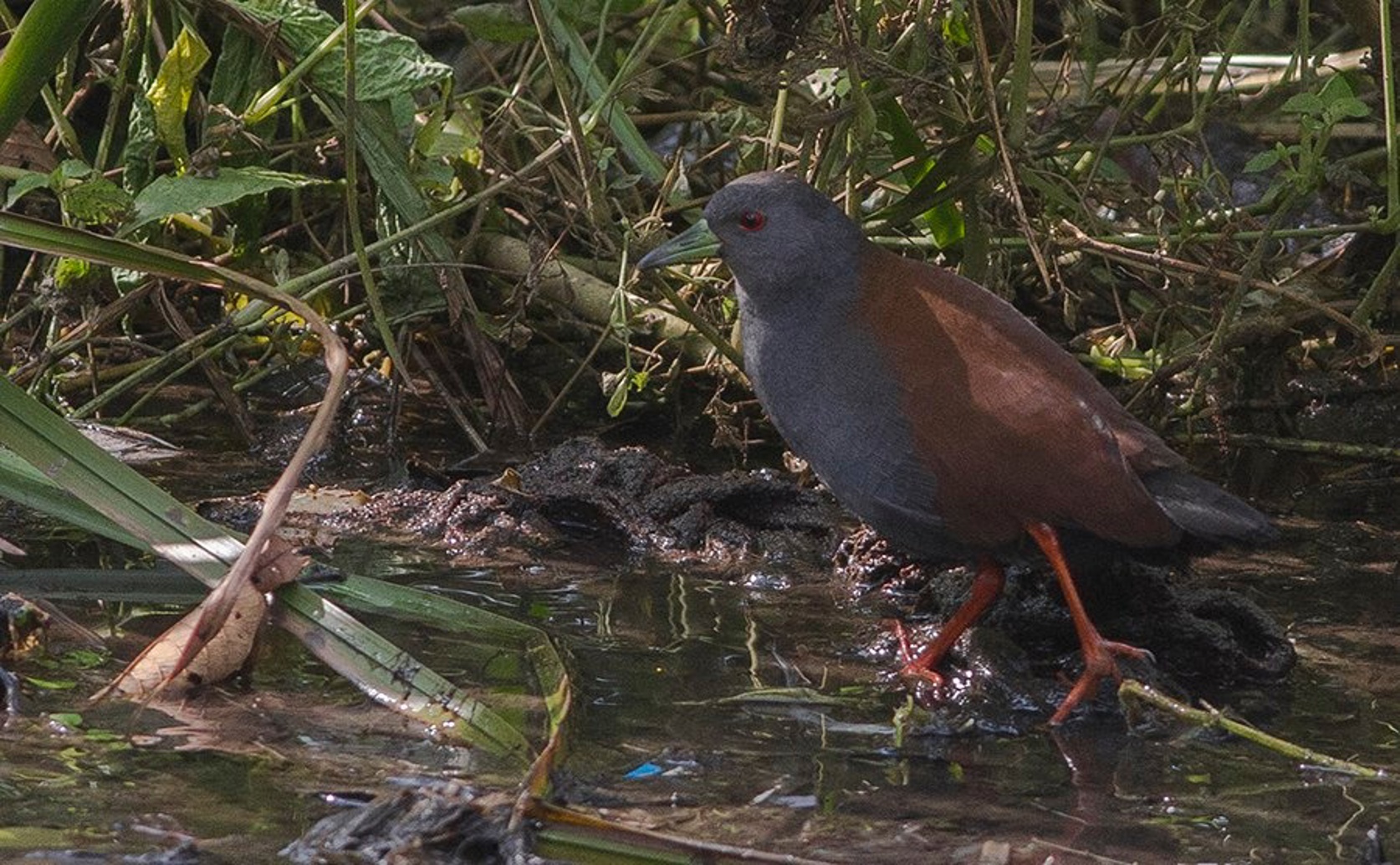
Photograph of a Black-tailed Crake from Khangchendzonga Biosphere Reserve.

Photo adapted from: Dibyendu Ash / CC BY SA (Source)

Key Findings

  • In the Khangchendzonga Biosphere Reserve, dense forests decreased by 15% from 1992 to 2022
  • Open forests and rocky areas grew by 20% due to farming, construction, and natural events
  • By 2032, further forest loss and urban expansion are expected, threatening local biodiversity and climate stability
Global land use and land cover changes (LULCC) are significantly impacting biodiversity and ecological stability across the world. One critical area facing these challenges is the Khangchendzonga Biosphere Reserve (KBR) in the Indian Himalayas. Home to the third-highest peak globally, KBR is renowned for its glaciers and diverse ecosystem. A recent study conducted by Fakir Mohan University[1] delves into the LULCC within KBR from 1992 to 2022 and projects future trends up to 2032. The study aimed to understand how natural factors and human activities are altering the landscape of KBR. By analyzing satellite images from Landsat and utilizing advanced modeling techniques like the Cellular Automata-Markov (CA-Markov) model and the support vector machine (SVM) for image classification, researchers were able to map changes in land cover over three decades. The validation of their models using the receiver operating characteristic (ROC) curve confirmed an accuracy rate of 85%, ensuring the reliability of their projections. Over the past thirty years, the study observed a 15% reduction in dense forest cover within KBR. Concurrently, there was a 20% increase in open forests and rocky areas. These changes are primarily driven by both human activities, such as agriculture and construction, and natural disturbances like landslides and erosion. Looking ahead, the projections indicate a further 10% decline in dense forests and an additional 12% rise in open forests and rocky areas by 2032. Moreover, agricultural land is expected to expand by 5%, and built-up areas will grow by 3%, highlighting ongoing pressures on the region’s landscape. The methodologies employed in this study echo those used in previous research on land use changes. For instance, a study on the Northern Tamil Nadu coast[2] utilized tools like Google Earth Engine and the CA-Markov model to analyze LULC changes, achieving high accuracy in their predictions. Similarly, Fakir Mohan University’s research leverages the CA-Markov model to forecast future changes, demonstrating its effectiveness in different ecological contexts. Beyond mapping changes, the study emphasizes the importance of these findings for policy and conservation efforts. The reduction in dense forests not only threatens biodiversity but also affects carbon sequestration, a critical component in mitigating climate change. This aspect aligns with research focused on forest preservation as a climate change mitigation strategy[3]. Identifying and preserving forests with high carbon sequestration potential and low vulnerability to threats can significantly contribute to reducing greenhouse gas emissions while supporting biodiversity. Additionally, the study’s approach to integrating various modeling techniques to predict land-use changes mirrors advancements in urban growth simulations[4]. By incorporating multiple socio-economic and environmental variables, researchers can create more accurate and comprehensive models. In the case of KBR, understanding how different factors contribute to land cover changes allows for more informed decision-making and the development of strategies that balance ecological preservation with necessary development. The findings from Fakir Mohan University’s study highlight the urgent need for proactive strategies to manage land use in KBR. Policymakers and conservationists can use this data to implement measures that protect dense forests and regulate the expansion of agricultural and built-up areas. Such strategies are essential for maintaining the ecological integrity of KBR, safeguarding its biodiversity, and ensuring the resilience of its ecosystems in the face of ongoing environmental changes. Future research should aim to enhance the accuracy of LULCC projections by incorporating additional factors such as climate change impacts. Integrating climate models with land use studies can provide a more comprehensive understanding of how changing weather patterns and extreme events might further influence land cover dynamics. This holistic approach will enable more effective planning and conservation efforts, ensuring that regions like KBR can sustain their ecological and environmental functions amidst global changes. In summary, the study by Fakir Mohan University offers valuable insights into the land use and land cover changes occurring in the Khangchendzonga Biosphere Reserve. By employing robust modeling techniques and validating their results, the researchers have provided a clear picture of past trends and future projections. These findings are crucial for developing strategies that balance human activities with the need to preserve critical ecosystems, ultimately contributing to the sustainability and resilience of one of the world’s most important natural reserves.

EnvironmentSustainabilityEcology

References

Main Study

1) Exploring shifting patterns of land use and land cover dynamics in the Khangchendzonga Biosphere Reserve (1992-2032): a geospatial forecasting approach.

Published 15th February, 2025

https://doi.org/10.1007/s10661-025-13710-6


Related Studies

2) Assessment of land use and land cover change detection and prediction using remote sensing and CA Markov in the northern coastal districts of Tamil Nadu, India.

https://doi.org/10.1007/s11356-021-15782-6


3) Carbon sequestration and biodiversity co-benefits of preserving forests in the western United States.

https://doi.org/10.1002/eap.2039


4) Improving land-use change modeling by integrating ANN with Cellular Automata-Markov Chain model.

https://doi.org/10.1016/j.heliyon.2020.e05092


Related Articles

An unhandled error has occurred. Reload 🗙